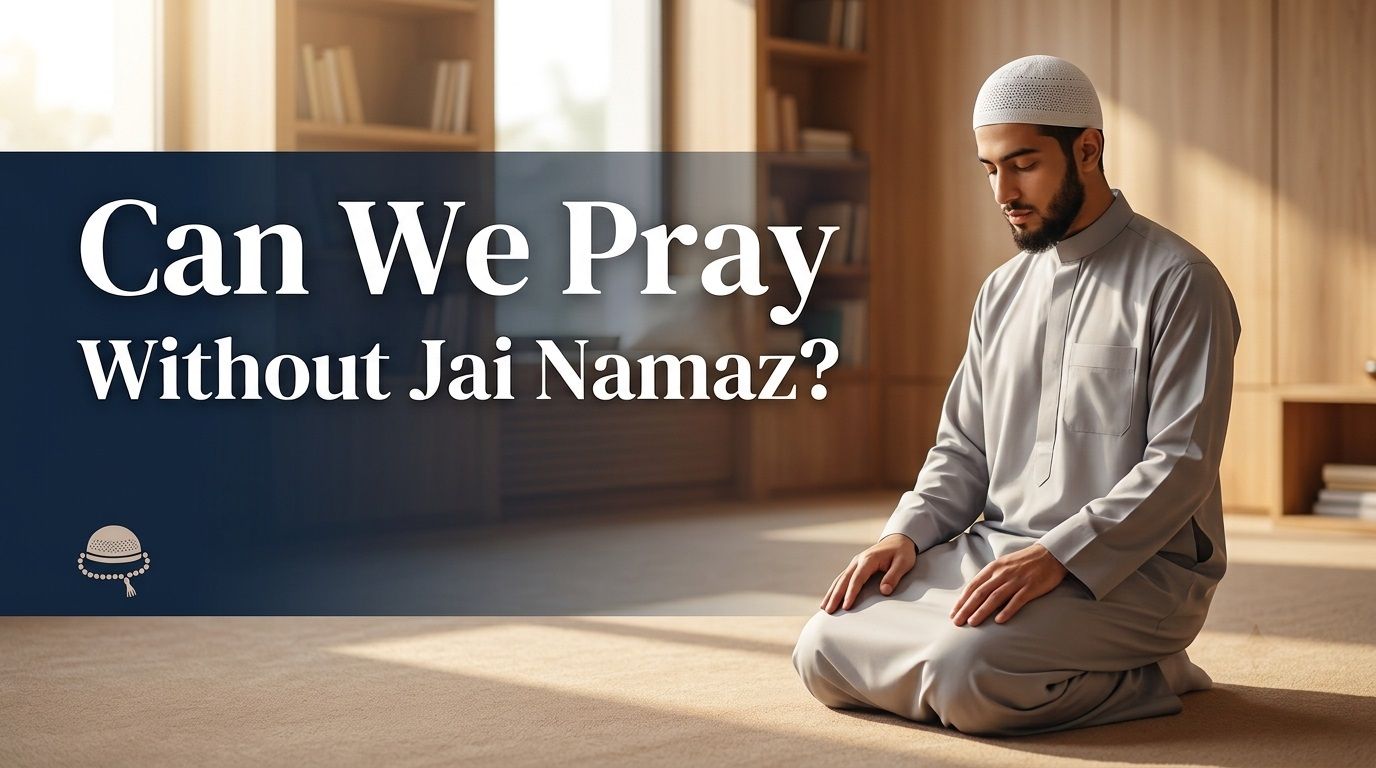
Can We Pray Without Prayer Mat or Jai Namaz? What Islamic Scholars Say
Is a prayer mat mandatory for Islamic prayer? Scholars explain whether you can pray without Jai Namaz and what really matters in Salah. Prayer mats (Jai Namaz) are not mandatory in Islam. Islamic scholars across all schools of jurisprudence agree that the real requirement is praying in a clean place. You can pray on a carpet, clean ground, or any pure surface. The prayer mat is a practical tool to ensure cleanliness, especially outdoors - not a religious obligation. Whether you have a mat or not, what matters is that your prayer space is clean and you offer your Salah on time.
Can You Really Pray Without a Prayer Mat?
Here's what most Muslims wonder: Does God care if you're using an expensive woven prayer mat or just the clean floor in your bedroom? The short answer, straight from Islamic scholarship, is no. The mat itself doesn't make your prayer count. A clean location does.
This surprises people who grew up seeing ja namaz as almost sacred objects. But when you look at what the Prophet Muhammad (PBUH) actually did, and what Islamic scholars have consistently taught across centuries, the picture becomes clear: prayer mats are helpful, not holy.
What Islamic Scholars Actually Say
Islamic jurisprudence across the four major schools - Hanafi, Maliki, Shafi'i, and Hanbali - maintains that prayer is valid in any clean place. The requirement is Tahir (ritual purity), not a specific type of surface.
Sheikh Assim Al-Hakeem, a respected contemporary Islamic scholar, addresses this directly in his Islamic Q&A sessions: the jai namaz has no special significance. It's a practical invention to keep the prayer area clean, especially when praying outdoors or in public spaces.
The evidence comes from the Prophet's own practice. Historical records show Muhammad (PBUH) prayed:
On sandy roads
In homes without dedicated prayer spaces
In open fields during battles
On borrowed carpets or cloth
None of these accounts mention ja namaz as a requirement. What they consistently mention is the Prophet's concern for cleanliness before and during prayer.
The Real Requirement: Cleanliness, Not Carpet
Islam's emphasis on prayer spaces centers on one principle: the location must be clean (Tahir in Islamic terminology). This applies to:
Your body: You perform ablution (Wudu) before prayer to purify yourself.
Your clothes: They should be clean, free from impurities.
Your location: The ground, carpet, or mat you pray on should be clean.
A jaye namaz helps achieve this cleanliness, especially in uncertain environments. But it's a means to an end, not the end itself. If you can ensure cleanliness without it, you've met the requirement.
What About Different Prayer Situations?
Praying at Home
Most Muslims pray at home on carpeted floors without a prayer mat, and Islamic scholars confirm this is completely acceptable. Your living room carpet, a clean bedroom floor, or even a clean wooden surface, all valid. A Supreme Memory jai namaz becomes purely a matter of personal preference or habit, not an obligation.
Praying at Work or in Public
This is where prayer mats gain practical value. Public spaces might have unknown contaminants, so using a mat gives assurance of cleanliness. But if you can verify the location is clean, the mat remains optional. Many working professionals pray at their desks, in break rooms, or even outdoors - all permissible when the space is clean.
Praying While Traveling
Travel often puts you in situations without access to a jaye namaz. Islamic jurisprudence handles this with flexibility. You can pray on:
Airplane seats (if bending is possible and space allows)
Hotel room floors
Airport clean corners
Park benches (adjusting the prayer movements as needed)
The principle remains: cleanliness matters; prayer mats don't.
Women and Prayer Mats
Some cultural practices treat ja namaz differently for women, but Islamic scholarship shows no gender-specific requirement. Women and men share the same basic rules: pray in a clean place, on time, with proper intention. Women have the same option to pray with or without a mat.
When a Prayer Mat Becomes Practical (Not Mandatory)
A prayer mat becomes genuinely useful in specific scenarios:
Praying on uncertain surfaces: Public restrooms, parks, or streets where cleanliness is questionable. The mat acts as a barrier, ensuring you know your prayer space is clean.
Defining your prayer space: In crowded homes or offices, a mat marks your designated prayer area, helping family members and colleagues understand not to disturb you.
Protecting your clothes: Practical benefit: kneeling on concrete or rough ground won't damage your clothes if you use a mat.
Establishing routine: Psychologically, a jaye namaz can help you transition into prayer focus, similar to how a prayer space in a mosque does.
These are all practical, not religious, reasons.
The Bottom Line
Asking whether you can pray without a prayer mat is like asking whether you can cook without a fancy kitchen. The tools help, but they're not the essence of what matters.
Islamic prayer (Salah) is fundamentally about:
Cleanliness: Your body, clothes, and location
Intention: Performing prayer for God alone
Correct movements: The prescribed postures and recitations
Tming: Praying within the designated time windows
A jai namaz contributes to #1 (cleanliness), but it's not the only way to achieve it. Centuries of Islamic teaching, from the Prophet's own practice through contemporary scholarship, confirm this. Whether you're in a mosque, your home, an office, or anywhere else - if the location is clean and your intention is sincere, your prayer counts.
Use a prayer mat if it helps you, but don't stress if you don't have one. God looks at the heart behind the prayer, not the fancy rug beneath the knees.
Also Read: What Direction Should Your Bed Face?
Also Read: What Goes Under a Mattress?
Frequently Asked Questions (FAQs)
1. Is a prayer mat mandatory for prayer in Islam?
No, a prayer mat (Jai Namaz) is not mandatory according to Islamic scholars across all schools of thought. What matters is praying in a clean place. The Prophet Muhammad (peace be upon him) prayed in various locations - on roads, in homes, and in open spaces - without always using a mat. Many Islamic scholars affirm that the core requirement is cleanliness of the location, not the mat itself.
2. What is the Islamic requirement for a place of prayer?
The essential requirement is that the place where you pray must be clean (Tahir). This applies to your clothes and body as well. Whether you pray on a jaye namaz, carpet, ground, or even concrete - as long as the surface is clean - your prayer is valid. Islamic jurisprudence emphasizes purity and cleanliness, which can be achieved in any suitable location without a dedicated ja namaz.
3. Can women and men pray without a prayer mat?
Yes, both men and women can pray without a prayer mat as long as they maintain cleanliness. Some Islamic scholars note that jaye namaz became common for practical reasons - to ensure a clean prayer area, especially when praying in public places or outdoors. Women have the same flexibility as men regarding jai namaz requirements. The mat is a tool for maintaining cleanliness, not a religious obligation.
4. What should I do if I don't have a prayer mat when it's prayer time?
You can pray without a ja namaz if the location is clean. Many Muslims pray on carpeted floors, clean ground, or any clean surface. If you're outdoors or in public, you can use alternatives like a tissue, scarf, handkerchief, or even cardboard to mark your prayer space and ensure cleanliness. The Prophet Muhammad's example shows flexibility - what matters is answering the call to prayer on time with proper intention and a clean place, regardless of whether a formal jaye namaz is available.
5. Does praying without a prayer mat make my Salah invalid?
No, praying without a prayer mat does not make your Salah invalid. What determines validity is the cleanliness of your body, clothes, and prayer location - not the presence of a ja namaz. Thousands of Muslims throughout Islamic history and today pray without mats and their prayers are completely valid according to Islamic law. A jai namaz is optional; cleanliness and proper prayer form are what matter.
Appreciate the creator