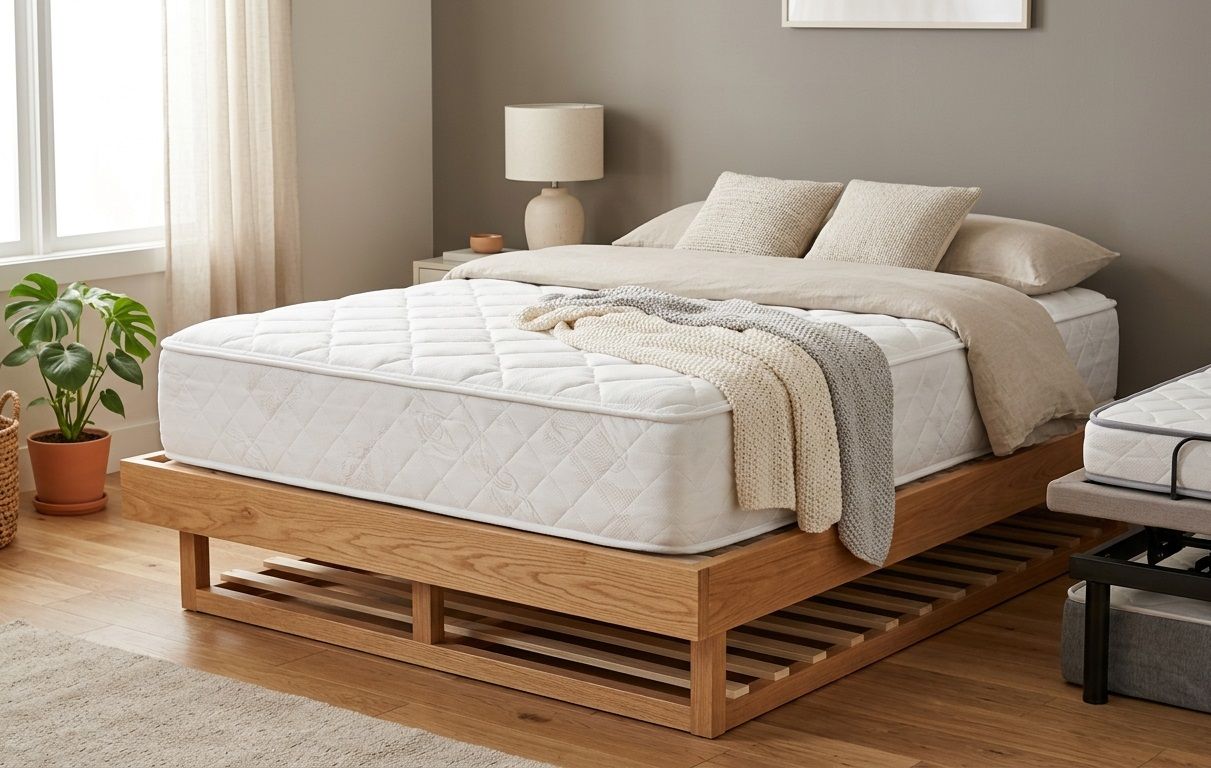
What Goes Under a Mattress? Best Support Options
Does your mattress feel off after a few months, even when it’s brand new? Sometimes the mattress isn’t the problem, but what’s underneath it. The foundation supporting your mattress plays a crucial role in comfort, durability, and sleep quality. Choosing the right support can mean the difference between restful nights and constant tossing and turning. Here is a quick guide on what should go underneath your mattress for enhanced support.
Why Do Mattresses Require Support?
A mattress without proper support can sag, wear unevenly, and even impact your posture and back health. The support system distributes your weight evenly, keeps it stable, and can extend its lifespan. Before you invest in a new mattress, it’s worth evaluating the foundation options to ensure maximum comfort and durability.
Common Under-Mattress Options for Support
Box Springs
Traditional box springs are the most recognizable type of mattress support. They consist of a wooden frame filled with springs or coils and are designed to absorb shock while providing a firm base. Box springs are ideal for innerspring models, but may not be necessary for memory foam or hybrid beds.
Slatted Bed Frames
Slatted frames feature wooden or metal slats spaced evenly across a frame. They provide excellent airflow, reducing moisture and mold risks. Adjustable slatted frames are also gaining popularity for customizable firmness. Ensure that the slats are no more than 3 inches apart for optimal support, especially for a memory foam mattress.
Platform Beds
Platform beds combine a solid foundation with style, offering both aesthetic appeal and sturdy support. These beds usually feature a solid or slatted surface that eliminates the need for a box spring. Platform beds are compatible with most mattress types, particularly foam and hybrid models.
Bunkie Boards
Bunkie boards are thin, flat boards that provide firm support without adding height. They are especially useful for low-profile beds or situations where a box spring isn’t ideal. Bunkie boards prevent sagging and help maintain proper shape.
Adjustable Bases
For those seeking ultimate flexibility, adjustable bases allow you to elevate the head or feet, improving circulation and reducing back or leg pain. Many modern mattresses, especially memory foam and hybrid types, are compatible with these bases.
Plywood Sheets
Simple and cost-effective, a sheet of plywood can prevent sagging on older or unsupported beds. It’s important to use smooth, sanded plywood and place it between the mattress and the existing foundation to avoid damage.
Choosing the Right Support for Your Mattress Type
Memory Foam & Latex: Best on slatted frames, bunkie boards, or platform beds. Avoid traditional box springs unless designed specifically for foam.
Spring: Work well with box springs, slatted frames, or platform beds with strong slats.
Hybrid: Require sturdy foundations; slatted frames with close spacing, platform beds, and adjustable bases are recommended.
Tips for Mattress Longevity
Check the Warranty: Some warranties require specific support systems. Using the wrong foundation could void your warranty.
Ensure Proper Fit: The foundation should match the size of your mattress exactly. Gaps or mismatched sizes can cause uneven wear.
Maintain Airflow: Proper ventilation prevents moisture buildup, especially for foam or latex.
Conclusion: Choose the Right Support
Choosing the right foundation for your mattress is more than a matter of aesthetics. It can enhance comfort, health, and durability. Whether you go for a slatted frame, a traditional box spring, or a high-tech adjustable base, the right support system will enhance your sleep quality and extend the life of your mattress. Know your mattress type, consider your comfort preferences, and make sure it supports restful, rejuvenating sleep night after night.
FAQs
1. Can I put a mattress directly on the floor?
Yes, you can place it directly on the floor, but it’s not always recommended. Floor placement can reduce airflow, increase moisture retention, and invite dust mites or mold. If you choose this option, consider using a breathable mattress protector.
2. How often should I check my mattress support?
It’s good practice to inspect your mattress support every 6 to 12 months. Look for sagging, broken slats, or uneven surfaces to ensure it stays properly supported and maintains comfort.
3. Are adjustable bed frames good for all mattress types?
Adjustable bases are compatible with most memory foam, latex, and hybrid models. Traditional models may require flexible edges or a special design to work effectively with adjustable bases.
Appreciate the creator