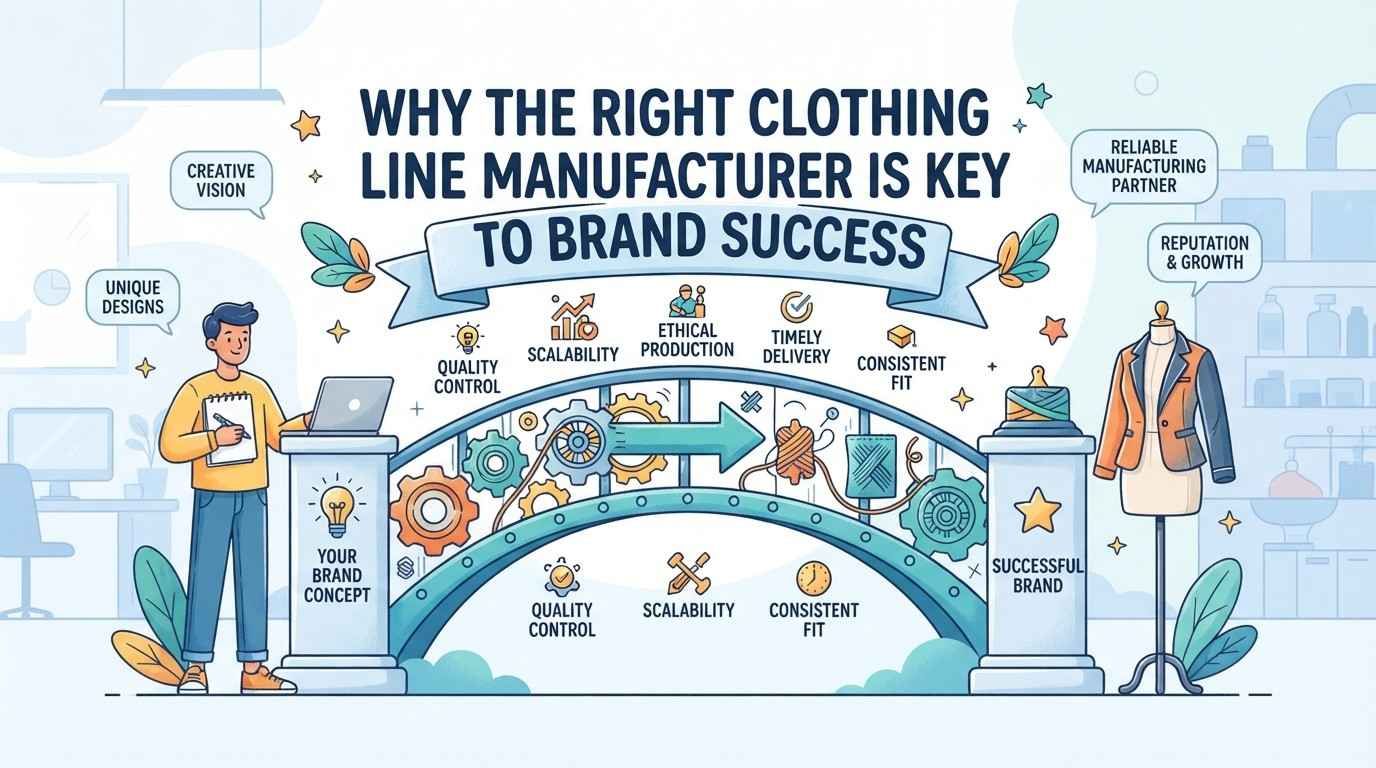
Why the Right Clothing Line Manufacturer Is Key to Brand Success
Choosing a production partner can shape every part of a fashion brand, from product quality and pricing to delivery speed and customer trust. The best clothing line manufacturers do more than stitch garments. They help founders turn ideas into consistent products that shoppers feel confident buying, wearing, recommending, and purchasing again.
A strong manufacturer gives a young label structure. Samples arrive with clearer measurements, materials match expectations, and production issues are identified before they become expensive mistakes. Reliable clothing line manufacturers also explain minimum orders, lead times, fabric limits, and finishing options in language a business owner can actually use confidently.
Product quality sets the foundation
Product quality is the first test customers notice. Uneven seams, weak zippers, color variation, or poor sizing can damage trust after one order. Experienced clothing line manufacturers use defined inspection steps, approved samples, and production checks to reduce these problems before finished items reach a warehouse, shop, or customer doorstep.
Consistency matters just as much as the first sample. A brand cannot grow if every batch fits differently or uses slightly different fabric. Dependable clothing line manufacturers document specifications, preserve approved patterns, and repeat tested methods, giving customers the same experience across sizes, colors, seasons, and future product releases worldwide.
Better cost control protects margins
Cost control starts long before an invoice arrives. Fabric yield, pattern efficiency, trims, packaging, labor, and shipping all affect margin. Skilled clothing line manufacturers can point out where a design is expensive to produce and suggest practical changes that protect its look while keeping the final price commercially realistic enough.
Clear communication prevents costly confusion. Founders need quick answers about samples, approvals, substitutions, delays, and shipment dates. Professional clothing line manufacturers keep records, confirm changes in writing, and raise concerns early. That habit helps brands plan launches, manage cash flow, and avoid making promises they cannot keep to customers later.
Sampling and sourcing reduce production risk
Sampling reveals how well a supplier understands both design and construction. A useful sample should test fit, movement, fabric behavior, stitching, trims, and wash performance. Capable clothing line manufacturers treat sampling as problem solving, not ceremony, and use feedback to improve the product before larger quantities are cut and sewn.
Material sourcing can separate an average collection from one customers remember. The fabric must suit the garment, target price, climate, care expectations, and desired feel. Knowledgeable clothing line manufacturers can compare weight, stretch, shrinkage, durability, and availability, then recommend materials that make sense for the intended market and sales channel.
Capacity and ethics shape brand reputation
Production capacity should match a brand's current needs and next stage of growth. A small label may need flexible runs, while an established business needs dependable volume. Suitable clothing line manufacturers are honest about capacity, machinery, staffing, and schedules, reducing the risk of missed launches or rushed quality control failures.
Ethical production is also part of brand reputation. Customers increasingly ask where products are made and how workers are treated. Responsible clothing line manufacturers maintain safer workplaces, fair processes, and transparent records. Those practices help a brand answer questions honestly instead of relying on vague claims that can weaken credibility.
Accessories can extend the collection
Accessories often extend a collection and raise average order value. A manufacturer with broader capabilities may help a brand add bulk cross body bags (https://rayscreations.co/product-category/goods-and-accessories/bags-and-wallets/cross-body-bags/) without managing a second supplier. Flexible clothing line manufacturers make coordinated product development easier, especially when colors, materials, labels, and packaging need to match across categories.
Tote styles can support retail, events, gifting, and merchandise programs. Adding bulk tote bags (https://rayscreations.co/product-category/goods-and-accessories/bags-and-wallets/tote-bags/) may give customers a lower-priced entry point into the brand. Versatile clothing line manufacturers can align fabric, prints, hardware, and branding so the accessory feels connected to the main apparel collection rather than added randomly later.
For workwear or professional collections, bulk laptop bags (https://rayscreations.co/product-category/goods-and-accessories/bags-and-wallets/laptop-bags/) can create a useful extension with strong everyday value. Multi-category clothing line manufacturers can coordinate protective materials, storage details, logo placement, and color choices, helping the new item fit the brand's visual identity while meeting practical customer expectations for comfort and durability.
Details and deadlines affect the customer experience
Branding details turn a generic product into something recognizable. Woven labels, printed neck marks, custom hardware, hangtags, packaging, and care labels should follow one system. Detail-focused clothing line manufacturers check placement, spelling, color, and finish, preventing small errors that can make an otherwise strong collection feel careless or unfinished overall.
Deadlines affect marketing, photography, wholesale appointments, and customer expectations. A late production run can disrupt an entire season. Organized clothing line manufacturers build realistic timelines, account for approvals, and report changes quickly. That gives the brand room to adjust campaigns, inventory plans, or launch dates before problems become publicly visible.
Plan for growth before demand rises
Scalability should be discussed before demand jumps. A supplier may handle five hundred units comfortably but struggle at five thousand. Growth-ready clothing line manufacturers explain how capacity changes, which lead times expand, and what new costs appear at higher volume, allowing the brand to scale without losing control or quality.
Frequently asked questions
What should a manufacturing agreement cover?
Intellectual property deserves careful attention. Patterns, artwork, tech packs, and custom designs should remain protected. Trustworthy clothing line manufacturers discuss ownership, confidentiality, storage, and reuse before production begins. Clear agreements reduce the chance of copied designs, unauthorized overruns, or disputes that can drain money and distract a growing team internally.
How should a brand compare potential suppliers?
References and test orders reveal more than a polished sales pitch. Founders should ask about communication, defect handling, delivery accuracy, and repeat-order consistency. Proven clothing line manufacturers can explain their process clearly and support claims with samples, records, or client feedback, making the decision less dependent on promises alone overall.
Should price be the main deciding factor?
The right partner should fit the brand, not simply offer the lowest quote. Founders need compatible quality standards, order sizes, communication habits, and growth plans. The strongest clothing line manufacturers (https://rayscreations.co/) become reliable operational partners, helping brands make better products, protect margins, and serve customers with consistency across every sales season.
Build your next collection with the right partner
Your manufacturer influences every promise attached to your label. Choose carefully, ask specific questions, and test the relationship before committing to volume. Rays Creations works with brands that value dependable development and production. Speak with experienced clothing line manufacturers today to discuss your collection, sourcing needs, and next production step.
Appreciate the creator