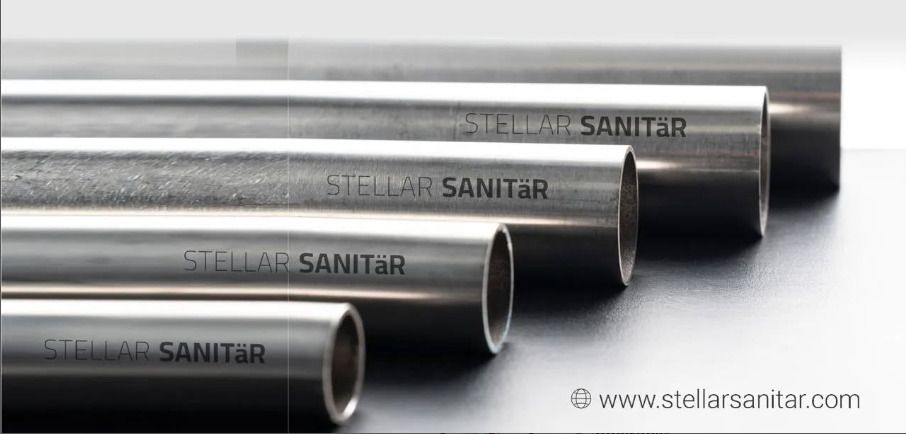
Why Stainless Steel Pipes Are a Long-Term Investment
Cheap-costing material looks good on the sheet of paper, but real costs show up later in the form of labour, in the mess of tearing out corroded lines and starting over again. This creates a long list of bills for you that hurt your wallet.
A piping system, if not made up of the right material and fit in a chemical plant, can put you in a circumstance where it perhaps needs replacement three times in under a decade. That is why investing in stainless steel pipes is so important. This blog will show you why stainless steel pipes are a long-term investment.
What Actually Makes Stainless Steel Different
Stainless steel is not any steel that just doesn’t rust. It is a steel which has chromium in it, and this chromium reacts with oxygen present in the environment and creates a layer which is thin and invisible in appearance. Whenever any scratches or damage are created on the steel, this layer heals itself instantly, given a bit of oxygen.
This self-repairing quality of steel sets it apart from ordinary carbon steel because, to keep carbon steel away from corrosion, a coating or paint is also used.
Stainless steel is not a single material; it has dozens of grades, and each one of them is built for a different job and used in industries and plants for different purposes. That is why picking the right stainless steel pipes (https://www.stellarsanitar.com/ss-pipe-manufacturer.php) is so important and a future investment also.
How Service Life Influences the True Cost of Stainless Steel Pipes
Industries which have a piping system that carries water, chemicals, or anything that has moisture and salt in it are more prone to corrosion compared to industries whose piping system carries the other materials.
This is where grade selection stops being a technicality and starts being a decision that saves you money.
Grade 304 is used for general use, but if your environment involves chlorides- think coastal air, cleaning agents, or certain industrial fluids- grade 316 holds up noticeably better, thanks to the molybdenum in its makeup. Choosing the wrong grade for the wrong environment is one of the quiet reasons pipes fail years before they should.
Looking at the Full Cost, Not Just the First One
Here's a question worth asking before you buy: what happens the day this pipe needs replacing? Add the labour, the shutdown time, the disruption to whatever the pipe was serving, and the cost of the new material itself. Once you look at it that way, a pipe that lasts twice as long, even at a higher upfront price, often works out cheaper. This isn't a claim that stainless steel always wins on price.
Why Compatible Pipes and Fittings Matter for System Performance
A pipeline isn't just a pipe. Other things like pipe, plus elbows, tees, reducers, and couplings all work together to make a fitting that lasts long. If the fittings don't match the pipe in grade, dimension, or finish. It creates a weak point in an otherwise strong system.
This is exactly why the manufacturer behind your fittings deserves as much attention as the manufacturer behind your pipe.
What to Look for in a Reliable SS Pipe Manufacturer
Not every supplier delivers what they promise on paper. Before you make any commitment with a manufacturer, ask about the grade certification, wall thickness accuracy, surface finish, and whether they provide testing and inspection records for every batch.
Consistency matters. A supplier who gets it right once but not every time will cost you more in the long run than one who charges slightly more and delivers reliably.
Knowing When the Investment Makes Sense
A stainless steel piping system is used in industries like food processing, pharmaceuticals, water treatment, and chemical handling. These piping systems are the best fit for industries where keeping corrosion at bay is essential, and prioritising hygiene is not optional.
But the right piping system that can fulfil your needs totally depends upon the kind of fluid flowing in the piping, at what temperature and pressure, along with how long you want your system to last without touching it again.
Summing Up
The smartest piping decision isn't about brand loyalty to a material. It's the right grade, matched with well-made fittings, sourced from a manufacturer who can prove their quality, built for exactly what your project needs.
Get those three things right, and your pipes stop being a recurring expense and start being infrastructure you don't have to think about again.
Appreciate the creator