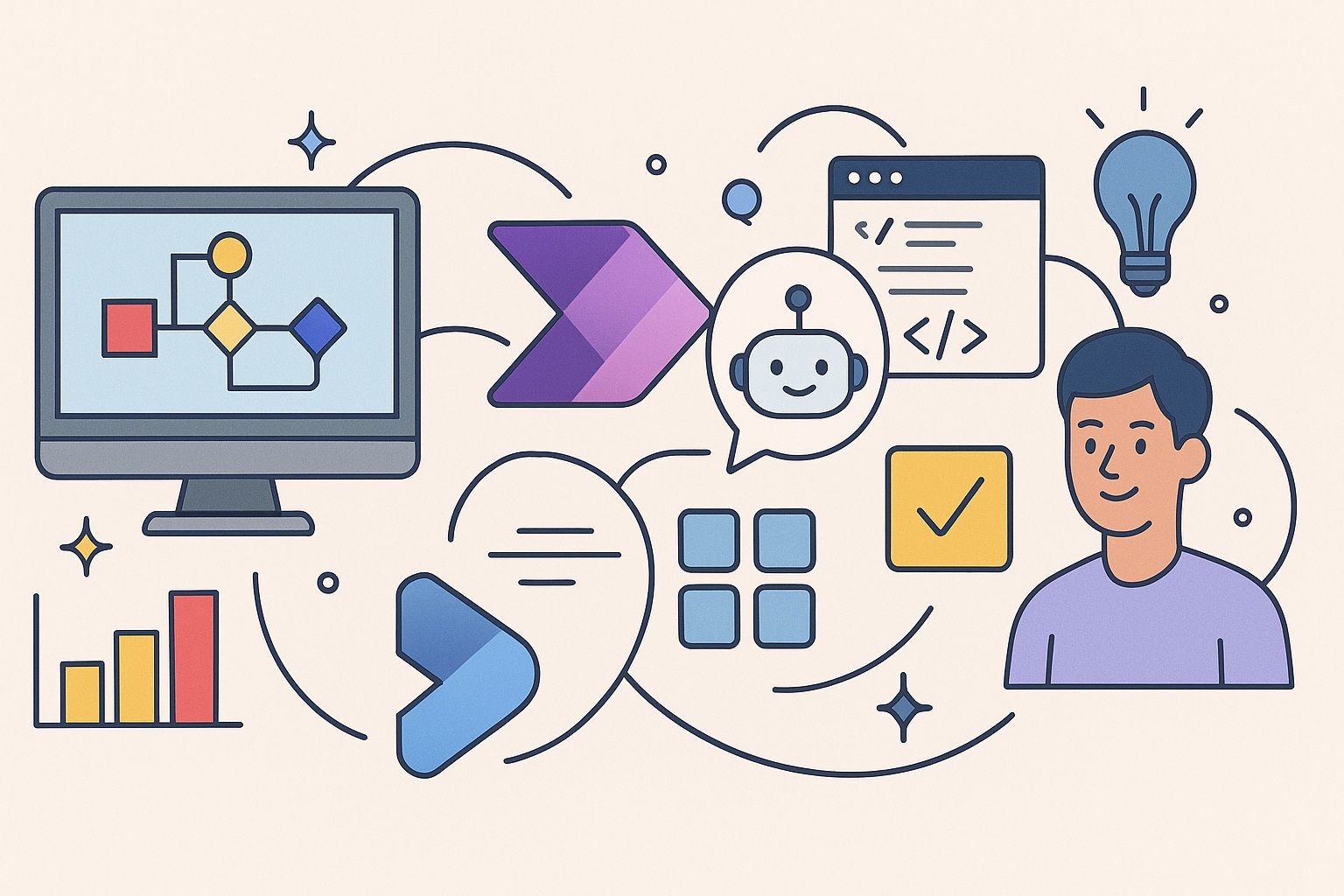
Why Power Platform and Copilot Studio Stand Out Among Low-Code Platforms
Organizations today face unprecedented pressure to innovate and that too at a rapid pace. The market requires hyper personalization for customers and intelligent processes for employees. This translates into pushing the limits of traditional IT capabilities. The need for a high speed to market also reveals significant limitations in traditional application development models. This challenge extends far beyond front end apps, into the heart of enterprise operations, where complex tasks are in dire need of automation. The most important factor in this new paradigm is developer amplification and democratization.
This leads us to a discussion about how the Microsoft Power Platform and Copilot Studio can directly address this mandate. You see, these technologies provide a scalable ecosystem for app development and enterprise automation through low-code principles and integrated AI capabilities.
In this blog, I will discuss how these Microsoft Power Platform services stand to facilitate low code development and enterprise automation.
Why Do We Need Quicker App Building and Enterprise Automation in the First Place?
Today the business landscape is defined by the demand for digital transformation and an urgent need for business agility. This need for rapid iteration has put a strain on traditional IT departments. Plus, the push for enterprise automation has increased as well. To meet these demands, companies must take up solutions that dramatically accelerate app development and integrate sophisticated AI capabilities to automate complex tasks. Smart decision making is another plus, of course.
Hence the growing need for tools that are both simple for business users and robust enough for professional IT to manage and scale in this environment.
How Power Platform and Copilot Studio Facilitate Low Code Development?
The rise of low-code platforms is transforming how businesses build applications faster, smarter, and with less complexity. Microsoft Power Platform and Copilot Studio are at the forefront of this shift, empowering teams to create powerful solutions using intuitive, AI-assisted tools that accelerate development, streamline workflows, and enhance productivity across every function.
Let’s discuss some of the potential use cases;
AI builder for integration of intelligence into workflows: AI Builder from the Power Platform suite of solutions enables citizen developers to incorporate ready to use AI capabilities into their solutions. All of this is accomplished without the need to write code or have data science expertise. The platform includes prebuilt models for commonly used tasks such as form processing and sentiment analysis. Users can connect their business data to these models with a point and click interface. This enables an automated workflow to make intelligent decisions. Say, you could automatically route incoming emails based on their language and sentiment.
Automate business processes at pace: Another super offering from the Power Platform collection, Power Automate, allows you to quickly automate complex business processes. The platform uses Robotic Process Automation (RPA) to automate tasks in legacy systems and Digital Process Automation (DPA) for cloud-based apps. This approach enables organizations to automate entire processes, regardless of where the data or system is stored. The low code interface, when combined with a large library of pre-built connectors, significantly reduces the time required to deploy a fully functional automation workflow.
Streamlined workflows with AI assistance: One could describe the app or workflow they want to automate in natural language, i.e. plain text. The platform will then create the initial components and structure, among all other things needed for the app. Copilot Studio specializes in developing custom AI agents and conversational experiences that can autonomously execute tasks across multiple systems.
Enterprise grade governance: Power Platform is preloaded with the necessary tools in this context. Features like Data Loss Prevention (DLP) policies keep developers from combining sensitive business data with external services. Managed environments provide centralized control, allowing IT administrators to apply consistent security rules and oversee the Application Lifecycle Management (ALM) of low code solutions throughout the organization. This framework strikes a balance between the need for rapid innovation among business users and the IT requirement for compliance.
Final Words
Clearly, Microsoft Power Platform bring much to the table for any modern enterprise. Now, all you need is a trusted expert to kick start your project.
Appreciate the creator