Why Modern Hearing Aids Are Nothing Like Old Hearing Devices
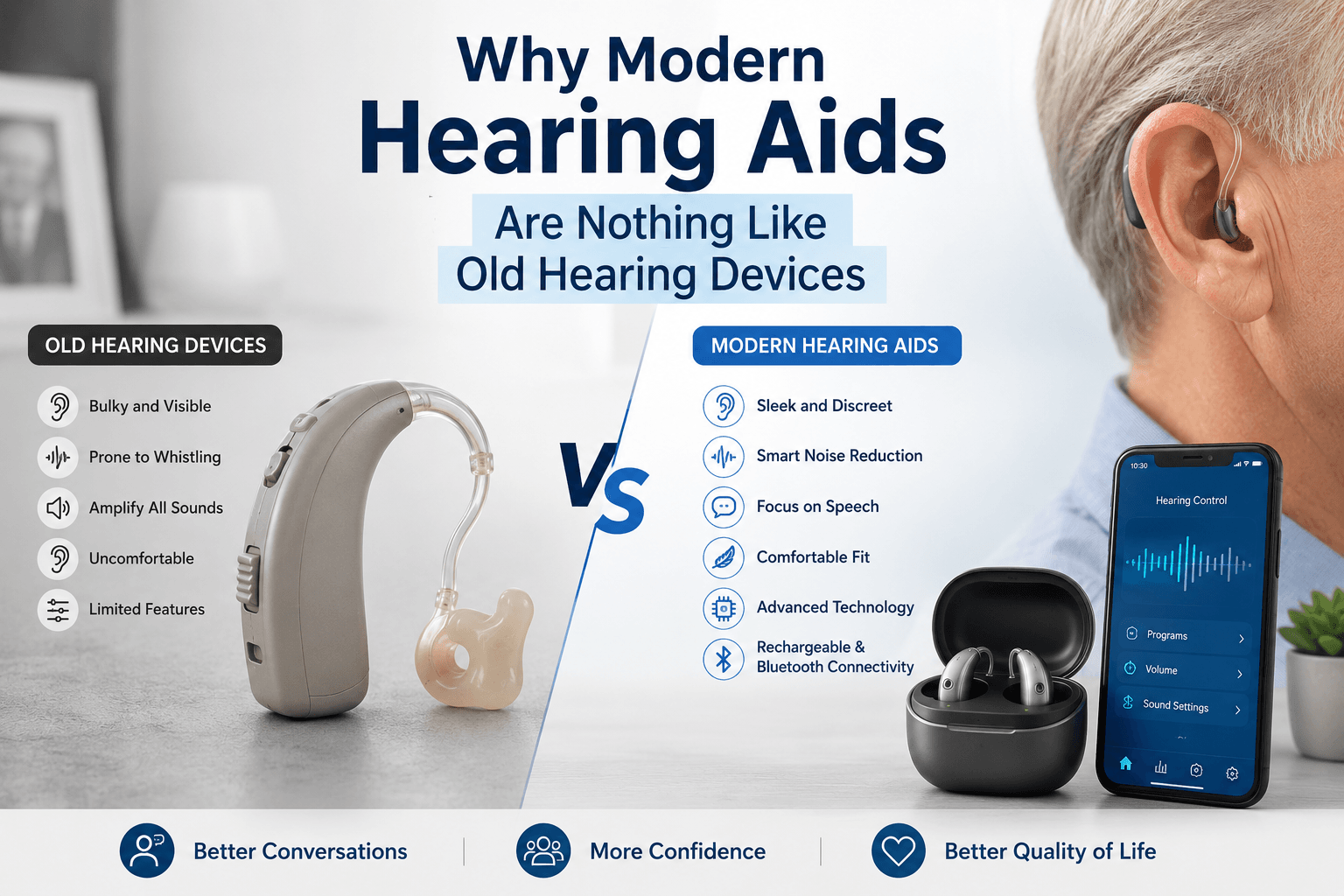
Someone remembers their grandfather's hearing aid whistling every time he leaned in too close at family dinner, the device visibly clipped behind his ear, everyone politely ignoring it. That memory alone has kept plenty of people from getting their hearing tested decades later — a reasonable instinct, but one based on technology that stopped being made long ago.
The Picture Most People Still Have in Their Head
Ask someone to imagine a hearing aid, and most describe something bulky, prone to feedback squeals, hard to hide. That image isn't wrong exactly — it's just old, reflecting analog devices that amplified all sound equally, whether a voice across the table or a chair scraping the floor. People who tried those early devices and found them frustrating often never went back.
What Actually Changed, and Why It Matters Now
The direct answer: modern hearing aids don't just make sound louder — they process it. Digital devices distinguish speech from background noise, adjust automatically as environments change, and target the specific frequencies where hearing loss occurs rather than boosting everything indiscriminately. Old devices treated hearing loss as one uniform problem; modern ones treat it as the specific, personal pattern it actually is, which is why two people with "hearing loss" on paper can end up with different solutions.
From Making Everything Louder to Making Speech Clearer
This distinction explains why some people tried a hearing aid once and gave up. Amplifying every sound equally, including background noise, doesn't necessarily make conversation easier — sometimes it makes a noisy room harder to tolerate. Modern devices use directional microphones and noise-processing to prioritise speech over clutter, particularly in restaurants or family gatherings. The goal has shifted from volume to clarity, explaining much of why outcomes look different today.
Why the Hesitation Still Lingers
Old associations are hard to shake, and many delay a hearing evaluation because of how the last generation of devices looked and felt. Some also assume hearing aids are only for severe hearing loss, when addressing mild changes earlier makes adaptation easier. Dr. Manish Prakash notes the biggest barrier is rarely the technology anymore — it's the outdated assumption that walks into the room before the hearing test does.
What This Means Beyond Just Older Adults
While hearing aids are commonly linked with ageing, this isn't only a concern for grandparents. Children with hearing loss benefit from many of the same advances, though needs differ — growing ear canals, developing speech, and classroom environments shape what device and support works. Pediatric hearing loss treatment in Gurgaon (https://www.entgurgaon.com/pediatric-hearing-screening.php) typically involves closer monitoring and more frequent adjustments than adult care, since a child's needs change as they grow, and getting this right early affects speech and language development.
How the Right Device Actually Gets Chosen
Choosing a hearing aid isn't about picking the newest model. It depends on the type and degree of hearing loss, lifestyle, dexterity, and cosmetic preference, since some patients want a nearly invisible device while others prefer one simpler to handle. Consulting a hearing aid specialist in Gurgaon (https://www.entgurgaon.com/hearing-aid.php) makes a genuine difference over a generic retail purchase — proper fitting calibrates the device to an individual's hearing test results, not just picking a model off a shelf.
What a Modern Fitting Actually Involves
The process usually starts with a hearing test mapping which frequencies are affected and by how much. From there, device options are narrowed by lifestyle and hearing pattern, followed by a fitting where the device is programmed for that individual's results. Follow-up adjustments are common in the following weeks, since the brain needs time to adapt to sounds it may not have registered clearly in years — part of why hearing loss treatment in Gurgaon (https://www.entgurgaon.com/pediatric-hearing-screening.php) looks more like an ongoing process than a single purchase.
If old memories of clunky, whistling devices have held you back from getting tested, it's worth setting that image aside and finding out what your hearing looks like today. Dr. Manish Prakash and the team at ENT Gurgaon can walk you through options suited to your hearing pattern and lifestyle, rather than a one-size-fits-all device from another era.
Frequently Asked Questions
Are modern hearing aids noticeable to other people? Many current devices are discreet, with some sitting almost entirely within the ear canal. Visibility depends on the device chosen, typically discussed based on your needs and preference during fitting.
Do hearing aids work well in noisy environments now? Yes, considerably better than older models. Directional microphones and noise-processing help modern devices prioritise speech over background noise, though performance varies by device type and severity.
How do I know if my hearing loss is severe enough for a hearing aid? There's no fixed cutoff. Even mild hearing loss can benefit from early intervention, since untreated changes make later adaptation harder. A hearing test gives the clearest picture of whether treatment would help.
Can children wear the same hearing aids as adults? Not the same models typically. Children's devices account for growing ear canals and need more frequent adjustments as hearing and development change, which is why pediatric care involves closer monitoring.
Will I need multiple visits to get my hearing aid working properly? Usually, yes. An initial fitting is followed by adjustments as your brain adapts to processing sound differently — a normal part of the process, not a sign anything went wrong.
Appreciate the creator