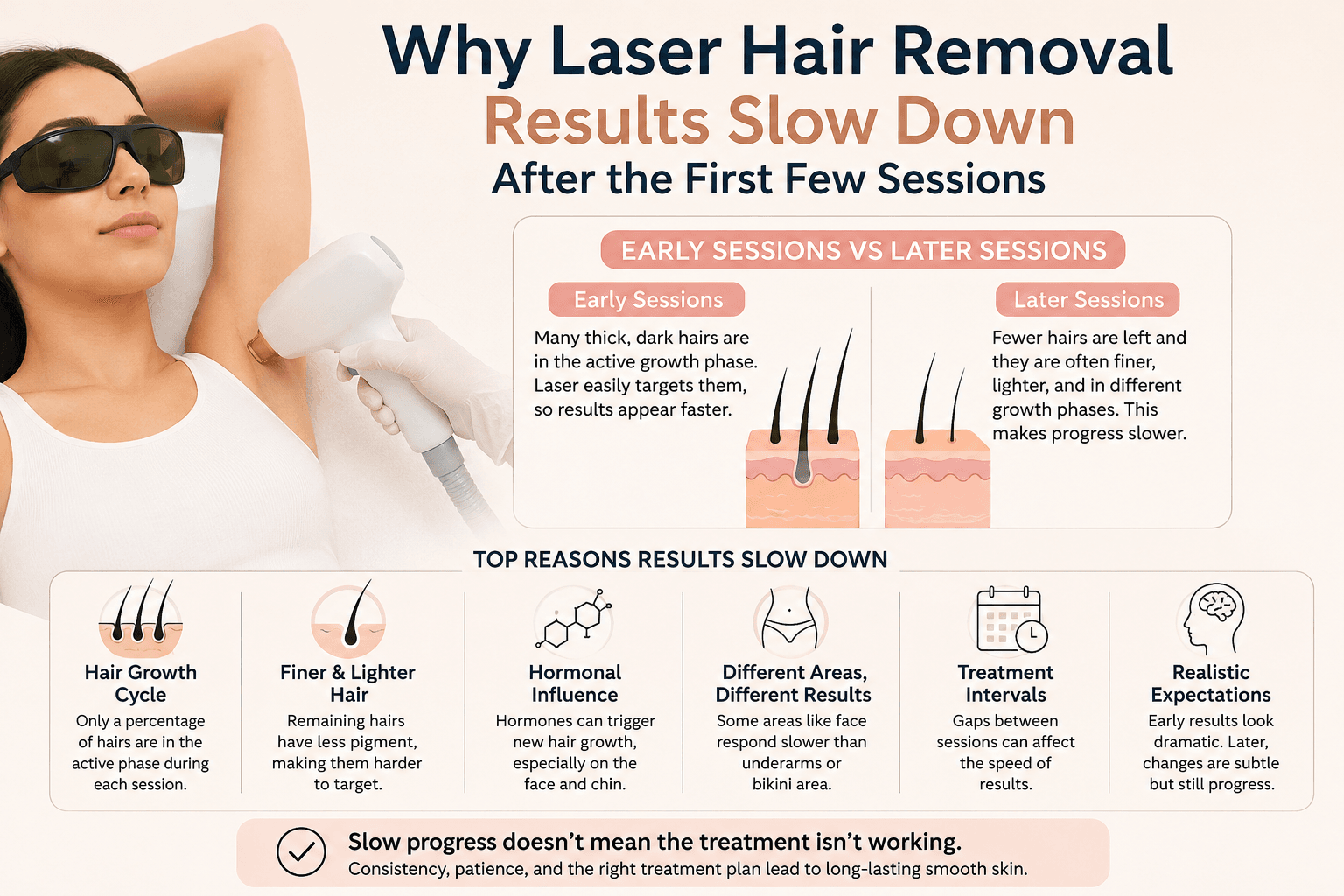
Why Laser Hair Removal Results Slow Down After the First Few Sessions
Laser hair removal is one of the most popular treatments for reducing unwanted hair. Many people notice exciting results during their first few laser hair removal sessions. Hair grows back more slowly, the treated area feels smoother, and shaving becomes less frequent.
But after a few appointments, a common question often comes up:
"Why did my first sessions show great results, but now progress seems slower?"
If you have wondered the same thing, you're not alone. The good news is that slower progress does not always mean the treatment has stopped working. In fact, it is often a normal part of the laser hair removal journey.
The First Sessions Target the Most Visible Hair
At the beginning of treatment, there are usually many thick, dark hairs in the treatment area. These hairs contain more pigment, making them easier for the laser to identify and target.
Because there are so many active hairs during the first few sessions, the reduction often feels dramatic.
Many people see:
Less hair growth
Smoother skin
Slower regrowth
Reduced need for shaving
This early improvement creates the impression that every session will deliver the same level of change.
However, the situation changes as treatment continues.
The Remaining Hair Is Usually More Stubborn
After a few sessions, many of the easiest follicles have already been treated.
The remaining hairs are often:
Finer
Lighter
Less dense
Growing at different stages
Since laser technology works best on darker, thicker hairs, these remaining hairs may require more time and additional sessions.
This is one of the biggest reasons results can appear slower later in the treatment process.
Hair Grows in Cycles
One fact many people don't know is that all hair does not grow at the same time.
Every hair follicle follows its own growth cycle.
Some hairs are actively growing, while others are resting beneath the skin.
Laser hair removal is most effective when hair is in the active growth phase. During this stage, the laser can reach the follicle more effectively.
Because only a percentage of hairs are active during each appointment, multiple sessions are needed to target new groups of follicles as they enter the growth phase.
This is why patience is important.
Different Body Areas Respond Differently
Not every body area reacts the same way to laser hair removal.
For example:
Underarms
Underarm hair is usually thick and dark, which makes it respond well to treatment.
Legs
Leg hair often shows steady improvement, although larger treatment areas may make changes seem slower.
Face
Facial hair can be more challenging because hormones often influence hair growth in this area.
Many people notice that facial hair requires more sessions than underarm or leg hair.
This does not mean the treatment is failing. It simply means the hair behaves differently.
Hormones Can Affect Results
Hormones play a major role in hair growth.
Even when existing follicles respond successfully to laser treatment, hormonal changes may stimulate new hair growth over time.
This is particularly common around the:
Chin
Jawline
Neck
Upper lip
Because of this, some people may need occasional maintenance sessions after completing their main treatment plan.
Why Progress Feels Slower
There is also a psychological reason.
Imagine removing 40% of unwanted hair during the first few sessions.
That change is easy to notice.
Later, removing another 10% may still be excellent progress, but it feels smaller because there is less hair left to begin with.
The treatment is still working, but the improvement becomes less obvious.
Many dermatologists recommend taking photos before each session. Comparing pictures often reveals progress that people don't notice day to day.
The Importance of Following Your Schedule
Laser hair removal works best when sessions are performed at the recommended intervals.
Waiting too long between treatments can reduce efficiency because the hair growth cycle changes over time.
This is why many clinics focus on creating personalized laser hair reduction plans instead of using the same schedule for everyone.
Appreciate the creator