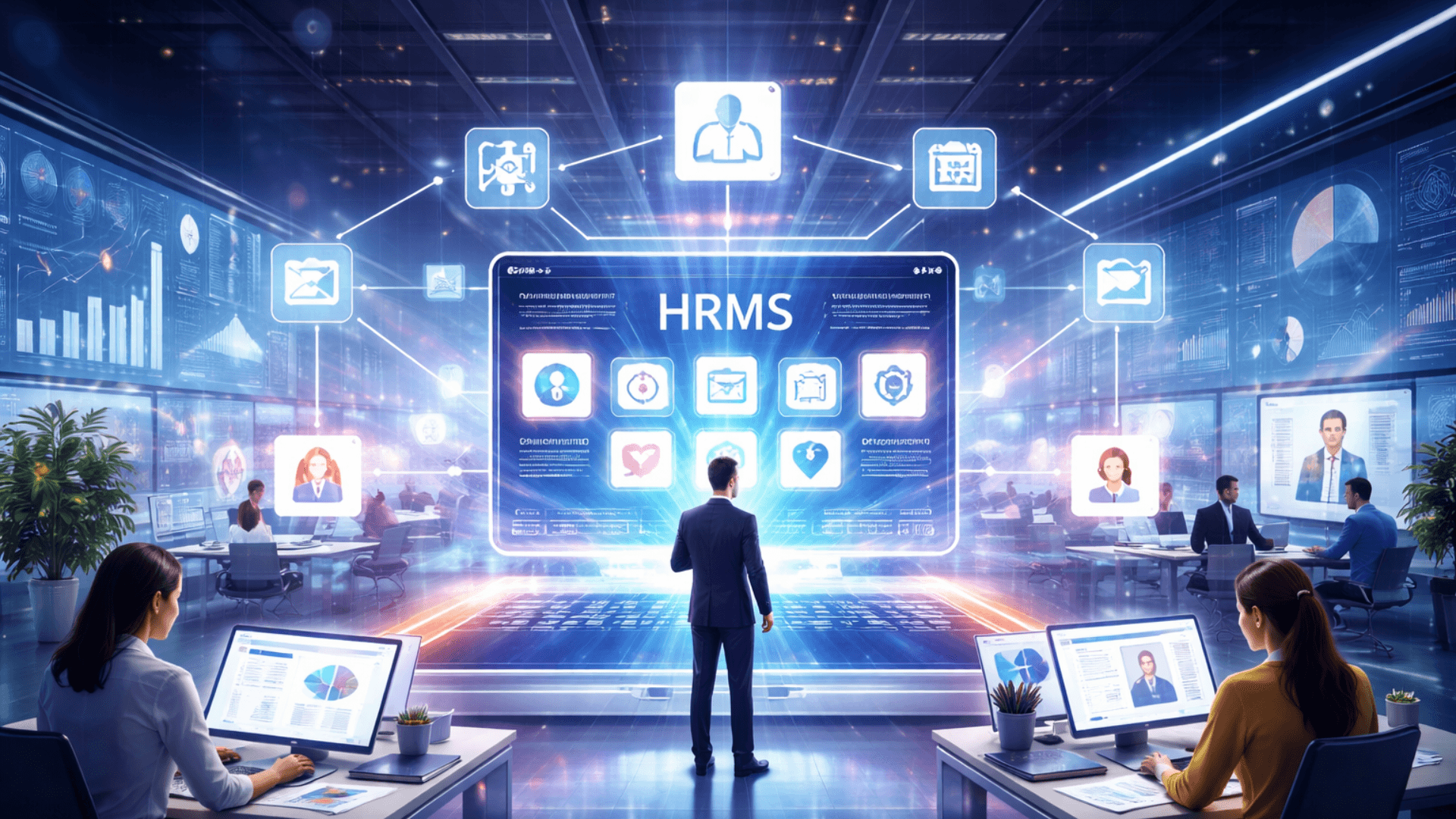
Why HRMS is the Backbone of Digital HR Transformation
Digital transformation has impacted almost every function inside an organization, and human resources is no exception to that. Earlier what used to be tedious and complex, scattered throughout spreadsheets, tons of paperwork, and multiple tools, is now finally getting upgraded in the most modern ways.
With the scalability of organizations, managing people and processes in HR department are far too complex to handle manually. Recruitment pipelines expand, compliance requirements multiply, payroll structures evolve, and employee engagement becomes harder to maintain across distributed teams.
This is exactly where HRMS software becomes critical.
For modern businesses, an HRMS system is very crucial and the most required technology upgrade. So let’s understand what is HRMS software, how it works, and why it matters so much in entire hire-to-retire journey.
What is HRMS Software and Why It Matters
An HRMS (Human Resource Management System) is a digital platform designed to manage the entire employee lifecycle within one connected environment.
It acts as a bridge that connects job seekers, employees, and HRs in the same system with transparent processes for each step, so the process is effortless and more sync throughout the journey.
HRMS is the infrastructure that connects recruitment, employee management, payroll, and workforce insights into one integrated platform. In other words, it forms the backbone of digital HR transformation.
Instead of using multiple disconnected tools, organizations can manage:
employee records
recruitment workflows
attendance and leave management
payroll processing
performance tracking
compliance documentation
from a single HR management software platform.
Many companies' exploring HR software for businesses initially adopts these systems to automate administrative tasks. However, the real value of HRMS emerges when organizations start using it to drive strategic workforce decisions.
The Role of HRMS in Digital HR Transformation
Digital HR transformation is not simply about moving HR processes online. It is about building systems that allow HR teams to operate more intelligently, efficiently, and strategically.
An HRMS platform enables this shift in several important ways.
1. Centralizing Workforce Data
One of the biggest challenges in traditional HR management is fragmented data.
Employee documents may exist in one system, payroll records in another, and recruitment pipelines somewhere else entirely. This makes it difficult for HR teams to maintain consistency and quickly retrieve information when needed.
An HRMS system for businesses centralizes all employee information in one secure platform.
This allows HR teams to track employee history, performance data, and organizational changes without relying on scattered spreadsheets or manual records.
For leadership teams, centralized data also improves workforce visibility and supports more informed decision-making.
2. Automating Routine HR Processes
Many HR departments still spend a large portion of their time handling repetitive administrative tasks.
These include:
updating employee records
tracking attendance
processing leave requests
managing payroll calculations
An HR automation software platform reduces this workload significantly.
With automated workflows in place, routine tasks can run smoothly in the background. Leave requests can be approved digitally, attendance can sync with payroll systems, and employee information updates automatically across the platform.
This automation allows HR teams to shift their focus from operational work to more strategic initiatives such as talent development and employee engagement.
3. Supporting Data-Driven HR Decisions
Modern HR management is increasingly driven by data.
Organizations want to understand workforce trends, track performance patterns, and identify potential challenges before they escalate.
An advanced HR analytics software capability within HRMS platforms allows HR teams to monitor:
hiring efficiency
employee turnover patterns
workforce productivity
training and development outcomes
These insights help businesses make better decisions around recruitment strategies, retention planning, and long-term workforce development.
In a competitive talent market, access to this kind of workforce intelligence can make a significant difference.
4. Improving Employee Experience
Employees are an integral part of any organization, and their experience matters a lot. Employee expectations have evolved significantly in the digital workplace.
Working professionals now expect workplace systems to be as accessible and efficient as the apps they use in everyday life.
Modern HRMS platforms address this through advanced employee self-service portals where employees can:
access payslips
update personal information
apply for leave
track performance feedback
This reduces HR dependency for routine requests and creates a more transparent workplace experience.
For organizations investing in digital HR transformation, improving employee experience is just as important as improving operational efficiency.
Why HRMS is the Foundation of a Connected HR Ecosystem
Digital HR transformation is ultimately about creating a connected ecosystem where every stage of the employee lifecycle works together seamlessly.
Without an HRMS platform, HR processes often remain fragmented. Recruitment systems operate separately from payroll tools, performance data is stored in different applications, and employee records are difficult to synchronize.
An integrated HRMS platform connects these functions into a unified system.
Recruitment data can flow directly into employee records. Attendance systems can integrate with payroll calculations. Performance insights can inform training and development programs.
This level of integration is what allows organizations to build scalable, future-ready HR systems.
How HRMS Supports Business Growth
As organizations expand, the complexity of workforce management increases rapidly.
Hiring volumes increase, teams become more distributed, and compliance requirements grow more demanding. Without the right systems in place, HR teams can quickly become overwhelmed by administrative work.
An HRMS platform for businesses provides the structure needed to support growth.
It allows companies to:
manage larger workforces efficiently
streamline recruitment and onboarding
maintain compliance with regulations
gain workforce insights through analytics
In simple terms, HRMS systems help organizations scale their people operations without increasing operational complexity.
The Future of HR Technology
The onset of modern technology brings faster, deeper, and data-based insights to the Hr industry. Advancements like - Artificial intelligence, predictive analytics, and automation are increasingly becoming part of modern HRMS software platforms.
These technologies are helping HR teams:
identify talent gaps
predict workforce trends
personalize employee development programs
While these innovations continue to advance, the foundation of these capabilities remains the same.
Final Thoughts
HRMS systems for modern businesses is the key infrastructure that can transform the way we carry HR processes today. It is essential to centralize HR operations, automate routine processes, generate workforce insights, and make the entire process transparent equally for employees as well.
HRMS systems allow organizations to move beyond manual HR management and build more strategic, future-ready workplaces.
Appreciate the creator