Why Delhi Doctors Trust Medico Legal Advisors for Practice Safety
Introduction
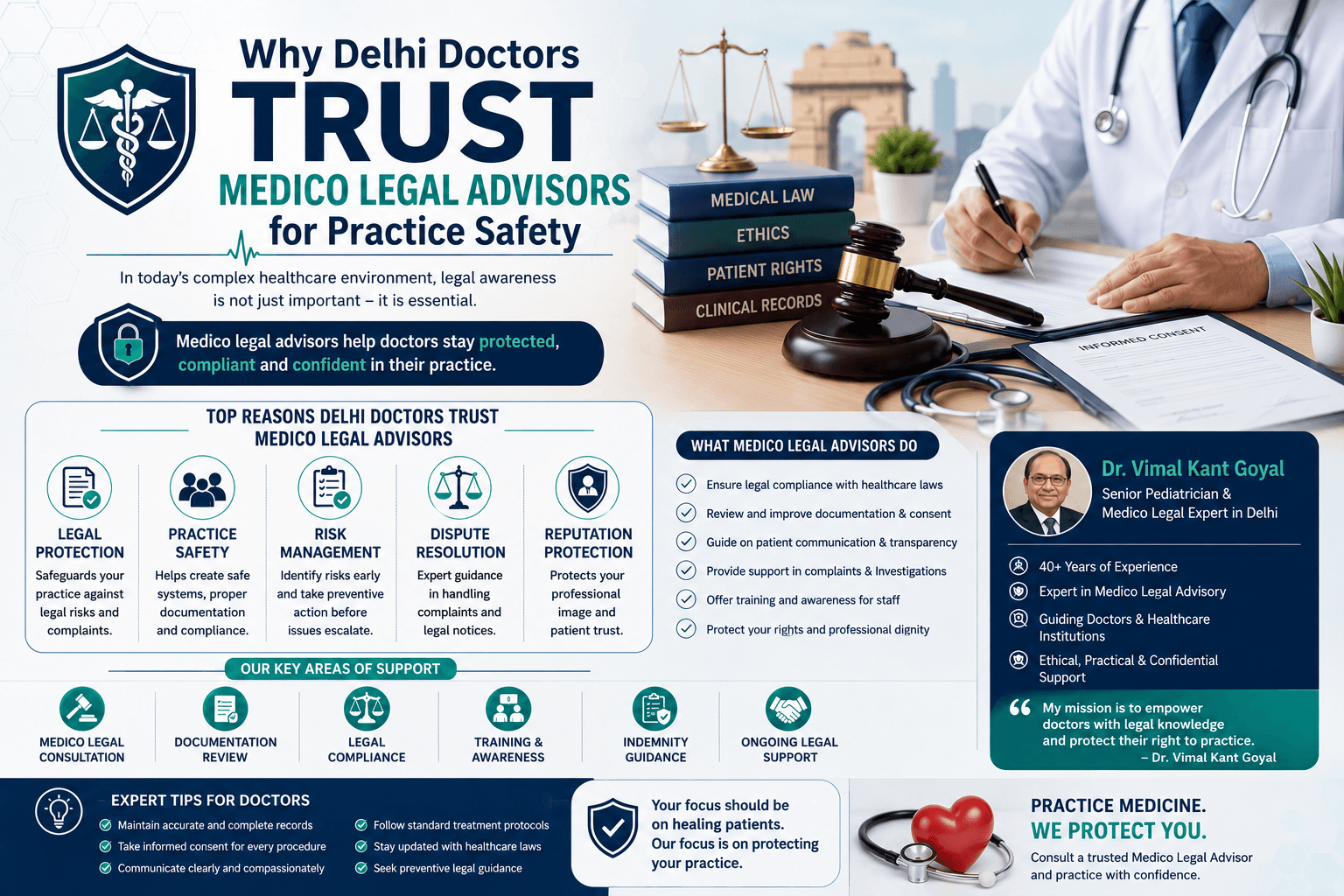
The medical profession is built on trust, responsibility, and patient care. However, in today’s healthcare environment, doctors also face growing legal pressures. Increasing patient awareness, stricter healthcare regulations, digital communication, and rising medico-legal complaints have made legal preparedness extremely important for healthcare professionals in Delhi.
Even highly skilled doctors may face legal complications because of incomplete documentation, communication gaps, consent issues, or compliance-related mistakes. In many cases, disputes arise not because of poor treatment, but because legal precautions were ignored during routine practice.
This is why more healthcare professionals are seeking support from a trusted Medico legal advisor in Delhi to improve practice safety and reduce legal risks. According to Dr. Vimal Kant Goyal, preventive legal awareness is one of the most effective ways for doctors to protect their professional reputation and maintain patient trust.
Today, medico-legal advisors help doctors:
Understand healthcare laws
Improve documentation systems
Strengthen patient communication
Reduce complaint risks
Maintain legal compliance
Handle disputes professionally
This guide explains why Delhi doctors increasingly rely on medico-legal experts for safer and more confident medical practice.
Common Causes of Legal Problems in Medical Practice
Many doctors face legal difficulties because of small but important mistakes made during daily practice. Understanding these causes helps healthcare professionals avoid future complications.
1. Incomplete Medical Documentation
Poor or missing records are among the most common reasons doctors struggle during medico-legal disputes.
Important details often missed include:
Patient history
Consent notes
Follow-up instructions
Emergency management details
Good documentation is essential for legal protection.
2. Communication Gaps with Patients
Patients who feel confused or ignored are more likely to file complaints.
Common communication issues include:
Not explaining risks clearly
Rushed consultations
Lack of transparency
Poor handling of patient concerns
Strong communication reduces misunderstandings and builds trust.
3. Ignoring Informed Consent
Performing procedures without proper written consent creates major legal vulnerability.
Patients must clearly understand:
Risks
Benefits
Alternatives
Possible complications
4. Non-Compliance with Healthcare Regulations
Healthcare professionals must follow laws related to:
Biomedical waste management
Telemedicine
Record maintenance
Prescription standards
Patient confidentiality
Ignoring compliance can lead to penalties and legal action.
5. Improper Handling of Complaints
Many legal cases escalate because complaints are handled emotionally or without professional guidance.
This is why many healthcare professionals consult a trusted Medico legal consultant in Delhi before disputes become serious.
Signs You Should Not Ignore
Doctors should recognize early warning signs that may indicate future medico-legal problems.
1. Frequent Patient Complaints
Repeated dissatisfaction regarding communication, billing, or treatment should be taken seriously.
2. Aggressive Patient Attendants
Family members who repeatedly challenge treatment decisions or demand explanations may escalate complaints later.
3. Missing or Inconsistent Records
Documentation gaps create major legal risks during investigations or court proceedings.
4. Negative Social Media Reviews
Online allegations can damage professional reputation quickly if not managed carefully.
5. Patients Saying “We Were Never Told”
This statement is extremely common in medico-legal disputes and usually points toward communication failures.
According to Dr. Vimal Kant Goyal, recognizing these signs early allows doctors to take corrective action before legal complications increase.
How to Fix / Treat Legal Risks in Medical Practice
Medico-legal advisors help doctors build preventive systems that strengthen practice safety and professional confidence.
1. Improve Documentation Practices
Doctors should maintain:
Detailed consultation notes
Consent records
Follow-up instructions
Investigation reports
Emergency management details
Proper documentation acts as the strongest legal defense.
2. Strengthen Patient Communication
Clear communication helps patients feel informed and respected.
Doctors should:
Use simple language
Discuss risks honestly
Encourage patient questions
Avoid unrealistic assurances
Better communication significantly reduces disputes.
3. Maintain Proper Informed Consent
Consent forms should always be:
Written
Procedure-specific
Clearly explained
Properly signed
Consent is not just paperwork—it is legal protection.
4. Follow Standard Treatment Protocols
Doctors should remain updated with accepted medical guidelines and healthcare standards.
Deviation from standard practice without justification may create legal challenges.
5. Protect Patient Confidentiality
Patient data should remain secure both digitally and physically.
Doctors should avoid:
Casual sharing of reports
Unsecured online communication
Public discussion of patient details
6. Train Staff Regularly
Reception staff and assistants should understand:
Patient communication
Documentation procedures
Confidentiality rules
Emergency handling
A legally safe practice depends on the entire healthcare team.
7. Seek Preventive Legal Guidance
Doctors no longer wait for legal notices before seeking professional help.
Many healthcare professionals now regularly consult a reliable Medico legal expert in Delhi to:
Review clinic systems
Improve compliance
Reduce risk exposure
Handle disputes professionally
8. Maintain Professional Indemnity Insurance
Medical indemnity insurance provides financial protection during legal disputes or negligence claims.
9. Stay Updated with Healthcare Laws
Healthcare laws continue to evolve regularly.
Doctors should remain aware of:
Consumer protection laws
Telemedicine regulations
Ethical guidelines
Documentation standards
Clinical compliance requirements
As explained by Dr. Vimal Kant Goyal, continuous legal awareness is now an important part of responsible medical practice.
Expert Tips
Build Strong Patient Relationships
Patients who trust their doctors are less likely to escalate complaints during difficult situations.
Never Alter Medical Records
Changing records later can create serious legal consequences.
Conduct Regular Compliance Audits
Clinics should periodically review:
Documentation systems
Consent forms
Registrations
Staff training protocols
Stay Calm During Disputes
Doctors should avoid emotional reactions when handling complaints or aggressive patient behavior.
Focus on Prevention, Not Reaction
Seeking support from a trusted Medico legal advisor in Delhi helps doctors prevent problems before they become legal disputes.
Conclusion
Medical practice in Delhi is becoming increasingly complex, and legal awareness has become essential for every healthcare professional. Today, doctors must protect not only patient health but also their professional reputation and legal safety.
Simple preventive steps such as proper documentation, informed consent, transparent communication, confidentiality, and regulatory compliance can significantly reduce medico-legal risks.
This is why more healthcare professionals now trust experienced Medico legal consultants in Delhi for guidance, compliance support, and practice safety.
As emphasized by Dr. Vimal Kant Goyal, preventive medico-legal awareness empowers doctors to practice confidently, ethically, and safely in today’s evolving healthcare environment.
Doctors seeking long-term professional protection increasingly rely on a qualified Medico legal expert in Delhi to strengthen legal preparedness and maintain safer medical practices.
FAQs
1. Why do doctors need medico-legal advisors?
Medico-legal advisors help doctors reduce legal risks, improve compliance, and handle disputes professionally.
2. What are the most common medico-legal risks for doctors?
Common risks include poor documentation, communication failures, consent issues, and non-compliance with healthcare regulations.
3. How can doctors improve practice safety?
Doctors can improve safety through proper documentation, patient communication, legal awareness, and preventive compliance systems.
4. Why is informed consent important?
Informed consent ensures transparency and provides legal protection for both doctors and patients.
5. When should healthcare professionals seek medico-legal guidance?
Doctors should seek guidance whenever they face complaints, legal notices, compliance concerns, or risk management challenges.
Appreciate the creator