Why Chest Congestion Happens During Lung Infections
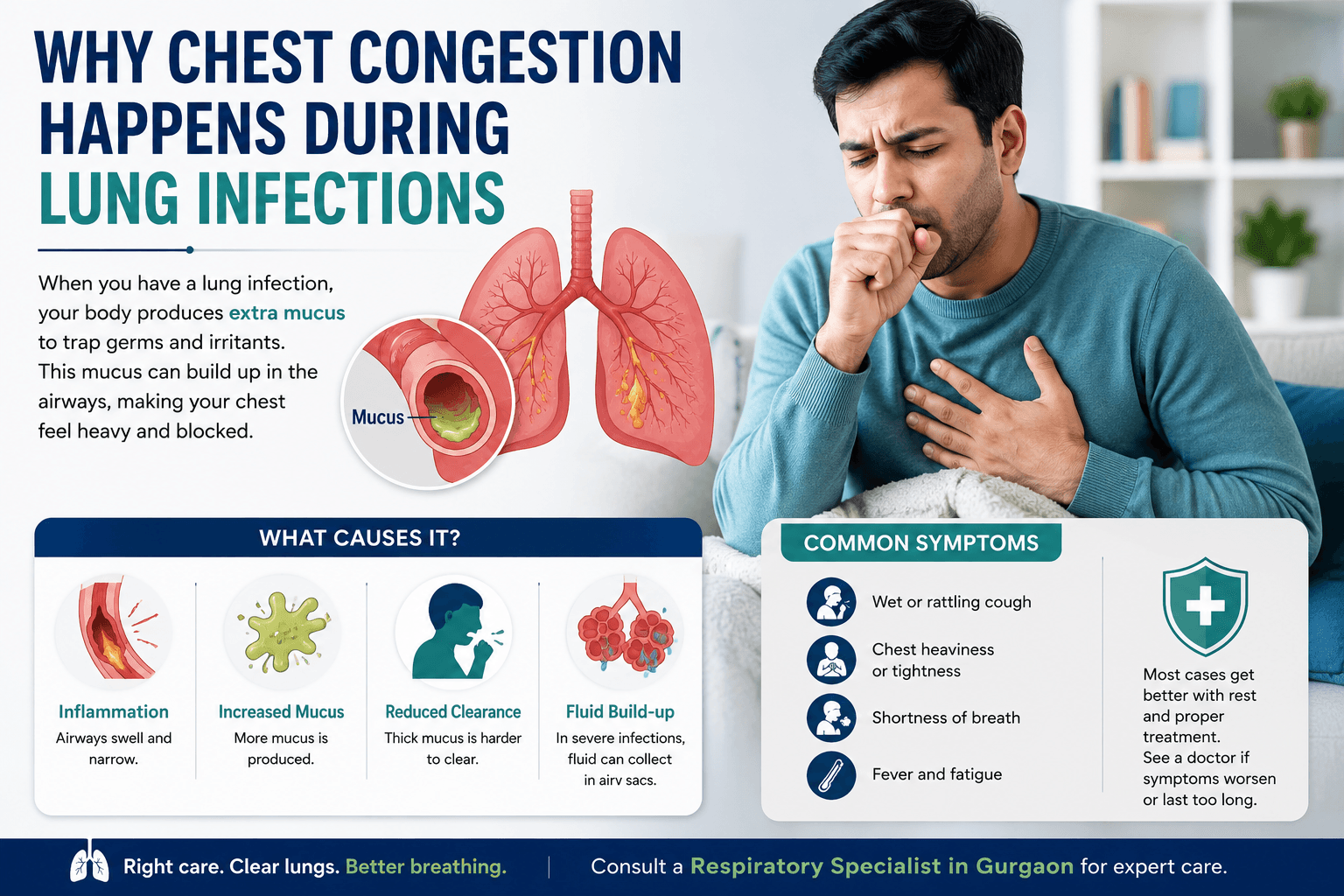
That heavy, blocked feeling in your chest during a cold or flu is something almost everyone has felt. But when it lingers for days, gets worse when you lie down, or comes with a wet, rattling cough, it usually points to something happening deeper in the lungs than a simple cold.
This article explains why chest congestion happens during lung infections, what it means for recovery, and when it's time to get checked. At Mayom Hospital, chest congestion is one of the most common complaints during flu season and monsoon months, when respiratory infections rise sharply across Gurugram.
What Chest Congestion Actually Is
Chest congestion happens when mucus builds up in the airways and lungs. This mucus is your body's defense system at work — it traps viruses, bacteria, and irritants so they can be coughed out instead of settling deeper into the lungs.
The problem is that too much mucus makes breathing feel heavy and can block smaller airways, causing that tight, blocked sensation. A productive cough, one that brings up mucus, is actually helping clear the infection, even though it doesn't feel pleasant.
Why It Happens During Lung Infections
During a lung infection, the airway lining becomes inflamed and irritated. This triggers extra mucus production as the body tries to flush out the infection.
A few things drive this process:
Inflammation — infected airway tissue swells, narrowing the space air moves through
Increased mucus production — glands in the airway lining go into overdrive
Reduced clearance — swollen airways and thicker mucus make it harder to cough things out
Fluid buildup — in serious infections like pneumonia, fluid can collect in the small air sacs
This is why congestion often gets worse before it gets better. As the immune system fights the infection, mucus production temporarily increases, especially in the first several days.
Common Causes of Chest Congestion
Chest congestion during infection usually comes from one of these:
Condition
What's Happening
Common cold
Mild airway irritation, thinner mucus
Bronchitis
Inflamed bronchial tubes, thicker mucus, persistent cough
Pneumonia
Fluid or pus filling the air sacs, often with fever
Flu
Widespread airway inflammation, body aches
Asthma flare-up
Airway narrowing triggered by an infection
Bronchitis and pneumonia tend to cause the heaviest congestion, since the infection sits deeper in the respiratory tract than the upper airways.
Symptoms That Often Come With Chest Congestion
A wet or rattling cough
Tightness or heaviness in the chest
Wheezing when breathing out
Shortness of breath during activity
Low-grade fever, especially with bacterial infections
For example, someone recovering from the flu might notice their cough turns wetter around day four or five — this is often the congestion phase, not a sign the infection is worsening.
When Congestion Signals Something More Serious
Most chest congestion clears up as the underlying infection resolves. But some patterns suggest it's time to see a doctor rather than wait it out.
A quick answer for those searching this: see a doctor if chest congestion lasts more than 10 days, comes with high fever, causes breathlessness at rest, or if the mucus turns green, yellow, or blood-tinged. These signs can point to a bacterial infection or pneumonia that needs treatment.
Warning signs to watch for:
Fever above 102°F that doesn't improve with medication
Breathlessness even while resting
Chest pain that worsens with breathing or coughing
Coughing up blood
A respiratory specialist in Gurgaon (https://mayomhospital.com/pulmonology) can use a chest X-ray or listen to your lungs with a stethoscope to check for fluid, crackling sounds, or reduced airflow that point to a more serious infection.
How Lung Infection Treatment Works
Treatment depends on what's causing the infection. Viral infections, like most colds and flu, usually improve with rest, fluids, and time. Bacterial infections, including many cases of bronchitis and pneumonia, need antibiotics to clear properly.
A doctor may also recommend:
Expectorants to thin mucus and make it easier to cough up
Inhalers if airways are also narrowing, especially in asthma patients
Steam inhalation to loosen congestion naturally
Oxygen support in more severe pneumonia cases
Patients with existing asthma often need closer monitoring during a lung infection, since congestion and airway inflammation can trigger a flare-up on top of the infection. Asthma treatment in Gurgaon (https://mayomhospital.com/pulmonology) for these patients sometimes needs temporary adjustment until the infection clears.
Simple Ways to Ease Chest Congestion at Home
Alongside medical treatment, a few home measures can help:
Drink warm fluids like soup or herbal tea to loosen mucus
Use a humidifier or take a steamy shower
Sleep with your head slightly elevated
Avoid smoking or exposure to smoke and dust
These steps support recovery but are not a substitute for medical treatment if symptoms are severe or infection is suspected to be bacterial.
Summary
Chest congestion during a lung infection is usually the body's natural response to clearing out mucus and fighting off infection. Most cases improve within one to two weeks with rest and supportive care. But persistent, worsening, or severe congestion, especially with fever or breathlessness, is a sign to get a proper evaluation rather than wait it out.
Frequently Asked Questions
Is chest congestion a sign of a serious infection?
Not always. Mild congestion during a cold is normal and usually clears within a week. It becomes concerning when it lasts more than 10 days, comes with high fever, causes breathlessness, or produces green, yellow, or blood-tinged mucus — signs that can point to bacterial infection or pneumonia.
Why does my chest congestion get worse at night?
Lying down allows mucus to pool in the airways instead of draining naturally, which makes coughing and tightness feel worse at night. Sleeping with your head slightly elevated and using a humidifier can reduce this nighttime buildup significantly.
How long does chest congestion usually last?
Congestion from a viral infection like a cold typically clears within seven to ten days. Bronchitis can take two to three weeks to fully resolve. If congestion persists beyond three weeks or keeps getting worse, it's worth getting checked by a specialist.
Can chest congestion happen without a cough?
Yes, though it's less common. Some people feel chest heaviness or tightness without a strong urge to cough, especially in the early stages of infection. This can still indicate mucus buildup and is worth monitoring, especially if breathlessness develops.
Should I take cough medicine for chest congestion?
It depends on the type of cough. Suppressing a productive cough that's clearing mucus isn't usually recommended, since coughing helps clear infection from the lungs. An expectorant that thins mucus is often more helpful than a suppressant, but check with a doctor first.
Conclusion
Chest congestion can feel uncomfortable, but in most cases, it's simply your lungs working to clear out an infection. Knowing what's normal and what isn't makes it easier to decide when home care is enough and when it's time to see a doctor.
If congestion lingers, keeps returning, or comes with fever and breathlessness, the pulmonology team at Mayom Hospital can run the right tests to identify the cause and get your lungs back to clear breathing.
Appreciate the creator