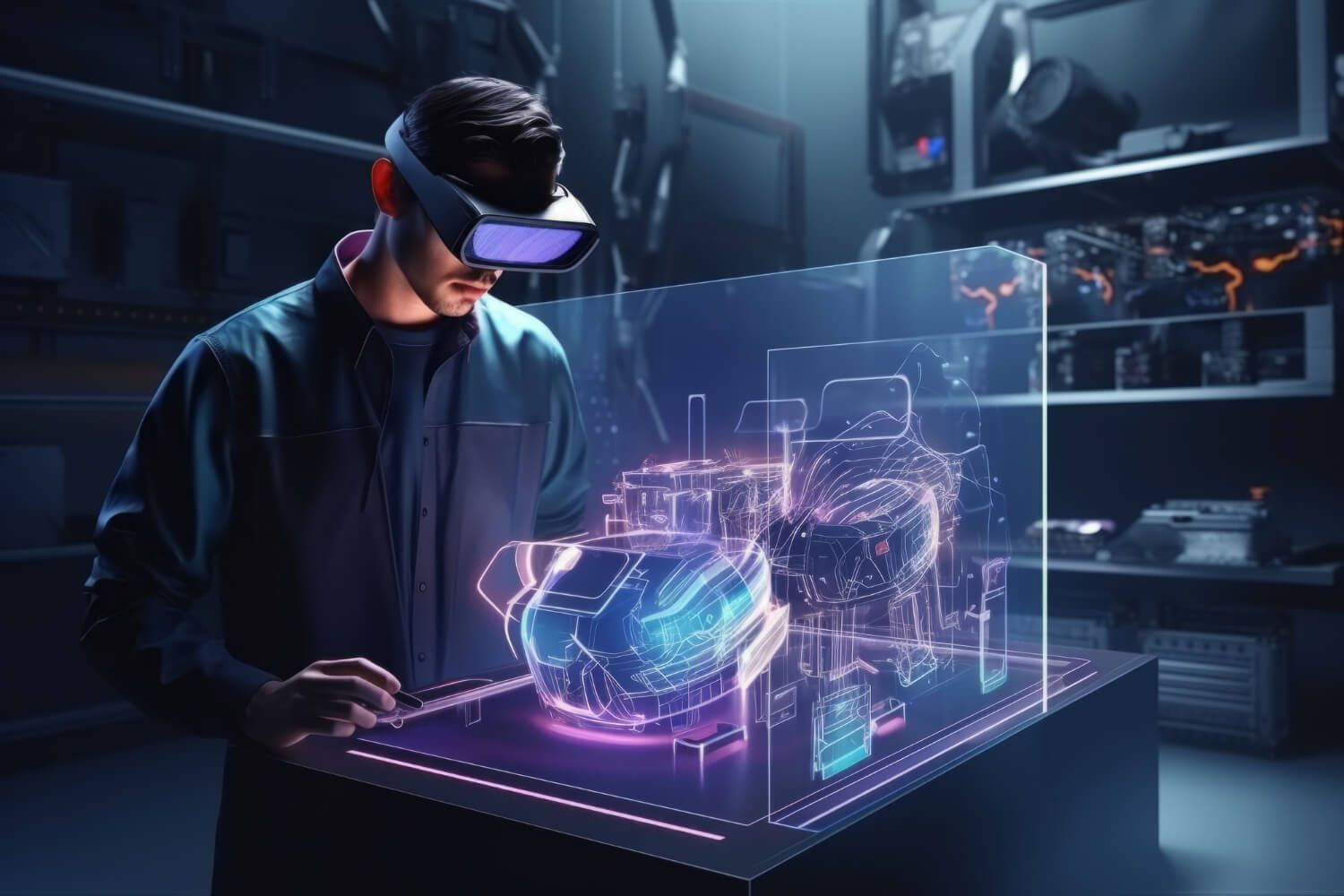
Why AI Makes Augmented Reality Solutions Training More Effective
According to the World Economic Forum's Future of Jobs report, 39% of existing workforce skill sets will transform or become outdated by the year 2030. That means organisations should start looking for a better training format that allows employees' skill sets to match the market demands.
Augmented reality solutions offer learners a format that helps them retain knowledge with visuals while also practising it in different scenarios.
The integration of AI in training programs has made learning a more personalised, cost-effective, and effective experience for modern businesses and learners.
What are augmented reality solutions?
Augmented reality solutions are technology-driven learning formats that overlay digital components such as images, text, animation, and 3D models on a device that scans the real-world surroundings for context. Learners gain on-the-job explanations by simply scanning the object with a device. It is used for practice-based training or skill development that requires hands-on learning.
Integration of AI (artificial intelligence) in AR solutions models has made the learning experience more personalized and effective for employees in different fields and industries.
Contribution of AI in AR solutions
Training adapts to learners' pace
AI technologies can improve retention rates by 30%. In standard augmented reality solutions, the pace of the content is the same for everyone, but upon the integration of generative AI, programs can suggest content based on learners' responses, error patterns, and completion speed. Then, the content will be adjusted according to difficulty, pace, and skipping what they already know.
Feedback becomes smarter
Feedback is a really important part of augmented reality solutions that tells the learners they made a mistake, but that is not enough for effective training. After the addition of AI, the feedback informs the learners what the mistake was, how to fix it, and where the pattern started. This will help the user target exact issues. Skill development through this format is more reliable and teaches learners to recognize patterns in general.
AI predicts fallouts before time
The augmented reality solutions platform generates data every time learners interact with it, including response times, pause frequencies, error rates, and module replays. AI scans this data for every learner and recognises learning gaps to predict where they might struggle next. This data helps L&D teams address issues on time before they become major crises that affect productivity, retention, or task completion.
Prevents one-size-fits-all paths
When the learning and development team assumes that every employee in the organisation is on the same level of training and adopts one-size-fits-all courses, the employees face the consequences of their choices that eventually become visible in the services of the company. This way, experienced learners have to sit through classes that introduce nothing new to them, while new employees struggle to keep pace. Augmented reality solutions with AI recognise learners' exact needs and deliver content accordingly.
Reduction in the cost of updates
Many organisations do not adopt augmented reality solutions because they are expensive to develop and update, and the program has to pause during maintenance because the content is branched. But after the integration of AI, things have changed drastically. Now, AI has automated content adjustments such as updating scenarios, difficulty levels, and assessment criteria without requiring extra budget.
AR and AI translate knowledge
One of the most common problems that organisations face is that the employees who learn from the training program never show it in their task performance, or the L&D team is constantly failing to gauge the translation. Augmented reality solutions with AI prevent this scenario by making the learning look like an actual job and keeping the tasks focused on what skills the learner needs to improve. Together, they solve the common gap problem.
Why is one-size-fits-all training no longer enough?
Generic or off-the-shelf courses are no longer the ideal fit for organisations. Previously, workplaces needed training that could fit their small workforce when job roles were more uniform, and skills changed slowly. But modern workplaces do not have the same conditions anymore, and that is why one-size-fits-all training is no longer enough. Now, employees and businesses need training programs that can keep pace with today’s experience levels, learning speed, and job demands.
Augmented reality solutions with the integration of generative AI make the ideal training format for the constantly changing market.
Why This Matters
With continuously evolving skill requirements, organisations can no longer depend on simple e-learning programs; they need better guidance, but most L&D teams believe that is not possible without draining the company’s budget. But augmented reality solutions with the addition of generative AI can outrun the assumption. Now, modern learning is mostly related to translating knowledge into skills viable for work, and AR solutions make that possible with hands-on practice and focused content that targets the exact gaps of each learner.
Appreciate the creator