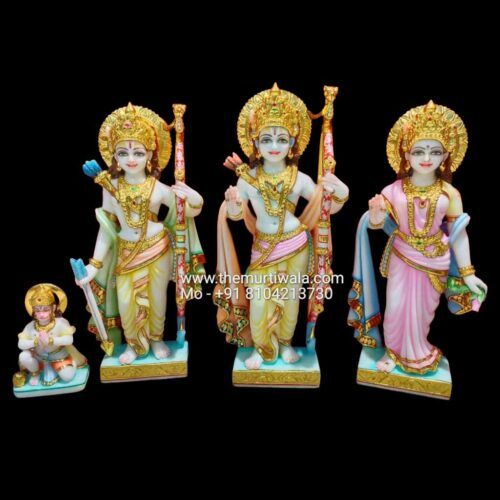
Who Are the Members of Ram Darbar and What Do They Symbolize?
In Hindu tradition, Ram Darbar represents the divine royal court of Lord Rama and reflects the values of righteousness, devotion, loyalty, love, and unity. The word “Darbar” means royal court, and Ram Darbar typically features Lord Rama seated with his closest family members and greatest devotee.
Ram Darbar is worshipped in homes and temples because it symbolizes an ideal family, moral leadership, and spiritual harmony. Each member of Ram Darbar carries deep spiritual meaning and teaches valuable life lessons.
Members of Ram Darbar
Lord Rama
Lord Rama is the central figure of Ram Darbar and is regarded as the seventh incarnation of Lord Vishnu. He represents dharma, truth, justice, and ideal kingship.
Symbolism of Lord Rama
Righteousness and moral values
Leadership with compassion
Duty towards family and society
Victory of good over evil
Devotees worship Lord Rama for inner strength, peace, and guidance in living a disciplined life.
Goddess Sita
Goddess Sita sits beside Lord Rama and symbolizes purity, devotion, patience, and strength. She is considered an incarnation of Goddess Lakshmi.
Symbolism of Goddess Sita
Loyalty and unconditional love
Patience during hardships
Purity of heart and mind
Grace and compassion
Her presence in Ram Darbar represents harmony in relationships and family life.
Lakshmana
Lakshmana, the younger brother of Lord Rama, is known for his unwavering loyalty and dedication. He accompanied Rama during exile and protected him throughout the journey.
Symbolism of Lakshmana
Loyalty and sacrifice
Selfless service
Courage and discipline
Devotion towards family
Lakshmana teaches the importance of standing beside loved ones during difficult times.
Bharata
Bharata is remembered for his deep respect and devotion toward Lord Rama. Even when offered the throne, he refused to rule in Rama’s place and instead governed Ayodhya in Rama’s name.
Symbolism of Bharata
Humility and respect
Brotherhood and unity
Selflessness over power
Dedication to truth
Bharata represents ideal family values and integrity.
Shatrughna
Shatrughna is the youngest brother in the Ramayana and symbolizes silent strength and responsibility. Though less highlighted, he played an important role in supporting the family.
Symbolism of Shatrughna
Responsibility and support
Quiet dedication
Discipline and stability
Service without seeking recognition
His character teaches that every role in a family is important.
Hanuman
Hanuman Ji is usually shown kneeling before Lord Rama with folded hands. He is one of the most beloved devotees in Hinduism and represents devotion, strength, wisdom, and humility.
Symbolism of Hanuman
Complete devotion to God
Fearlessness and courage
Loyalty and faith
Protection from negativity
Hanuman’s presence in Ram Darbar reminds devotees that true devotion leads to spiritual strength and divine blessings.
Spiritual Meaning of Ram Darbar
Together, the members of Ram Darbar symbolize the ideal balance of:
Dharma and truth
Family unity
Respect and devotion
Strength and humility
Love and sacrifice
This is why many devotees keep Ram Darbar idols or paintings in their homes and temples. It is believed to bring peace, positivity, harmony, and spiritual growth.
Importance of Ram Darbar in Homes and Temples
Keeping a Ram Darbar murti is considered highly auspicious in Hindu culture. Families worship Ram Darbar for:
Peaceful relationships
Protection and positivity
Moral guidance
Prosperity and happiness
Spiritual well-being
Marble Ram Darbar murtis are especially popular because of their divine appearance, durability, and traditional craftsmanship.
Conclusion
Ram Darbar is more than a divine representation from the Ramayana. It is a symbol of ideal values that inspire people even today. Every member of Ram Darbar carries a spiritual lesson that teaches devotion, honesty, sacrifice, respect, and unity.
Whether placed in a home temple or a grand mandir, Ram Darbar creates an atmosphere of faith, harmony, and positivity that connects devotees with the timeless teachings of Lord Rama and his divine family.
Appreciate the creator