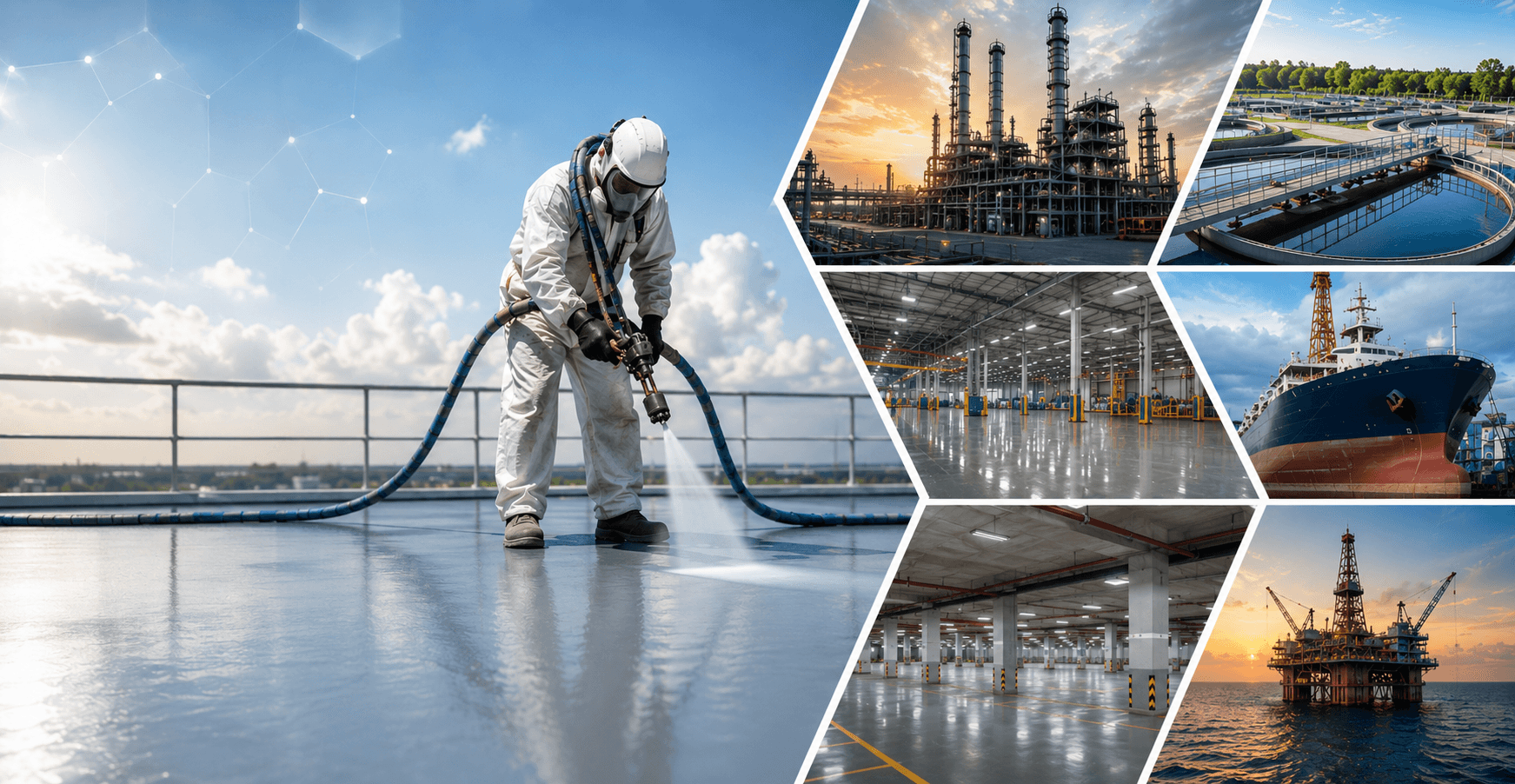
Which Industries Can Benefit From Polyurea Coatings
Polyurea is a spray-applied elastomer that cures in seconds, bonds to almost any substrate, and holds up in conditions that would destroy most coatings. It handles extreme temperatures, chemical exposure, abrasion, and impact without cracking or peeling. That combination makes it useful across more industries than most people expect.
Oil and Gas
Pipelines, storage tanks, and secondary containment structures take a beating. Most polyurea coating manufacturers offer formulations specifically built for oil and gas applications, targeting chemical corrosion resistance on the inside and outside of storage tanks, and sealing containment berms that need to hold fuel or chemical spills without leaking into the soil. These coatings also go onto offshore platforms where salt spMost polyurea coating manufacturersray, UV exposure, and physical impact are constant. The fast cure time matters here too since taking a pipeline or tank offline for days isn't always an option.
Mining
Mining equipment and infrastructure deal with some of the most abusive conditions in any industry. Haul truck beds, chutes, hoppers, and conveyor systems take continuous impact from ore and rock. A polyurea liner absorbs that impact instead of denting or cracking, and it resists the chemical leaching that comes with certain minerals and processing fluids. Reapplication is straightforward, which matters when a worn liner in a haul truck bed can mean thousands of dollars in structural repairs.
Military and Defense
The U.S. Army Corps of Engineers tested polyurea as a blast mitigation coating after discovering it could hold concrete structures together under explosion pressure. Applied to the interior walls of buildings or vehicles, it keeps fragmented material from becoming shrapnel. It's also used on military vehicle underbodies for corrosion protection in harsh terrain. The fact that it cures fast enough to apply in field conditions without specialized curing equipment is a significant operational advantage.
Construction and Infrastructure
Bridges, parking decks, tunnels, and below-grade foundations all need waterproofing that can handle movement. Concrete expands, contracts, and cracks. A rigid coating fails with it. Polyurea stays flexible across a wide temperature range, so it bridges hairline cracks rather than splitting along them. On parking structures specifically, it protects the concrete deck from de-icing salts that would otherwise corrode the rebar underneath and cause structural deterioration over time.
Water Treatment
Polyurea lines water treatment tanks, clarifiers, and secondary containment systems where the coating has to resist both chemical exposure and continuous water immersion. Some formulations are NSF 61 certified, meaning they're approved for contact with potable water. That certification matters because most coating categories can't meet it. Municipalities use it to rehabilitate aging concrete reservoirs without full replacement, which cuts costs significantly.
Marine
Salt water destroys unprotected surfaces fast. Polyurea coats boat hulls, dock structures, offshore buoys, and marine equipment to resist corrosion and impact from debris. It's flexible enough to handle the constant stress of wave action without delaminating. On commercial vessels, it's applied to deck surfaces for slip resistance and waterproofing simultaneously, which reduces the number of separate products needed to protect a single surface.
Automotive
Spray-on polyurea bedliners are the most visible consumer application. Unlike drop-in plastic liners that trap moisture and accelerate rust underneath, spray-on coatings bond directly to the truck bed's metal surface and seal it completely. The coating absorbs impact from cargo, resists UV fading, and won't crack in cold weather the way some other liner materials do. Beyond bed liners, polyurea gets sprayed onto underbodies for corrosion and chip protection, and on wheel wells where road debris and salt exposure are concentrated.
Agriculture
Farm equipment runs in mud, fertilizer, and chemical exposure for years. Polyurea coats the inside of sprayer tanks, grain trailers, and chemical storage containers to resist the corrosive fertilizers and pesticides they carry. It's also applied to barn floors and livestock areas where cleaning involves harsh chemicals and constant moisture. Equipment downtime during planting or harvest season is costly, so a coating that holds up without frequent reapplication has real operational value.
Conclusion
Polyurea's real advantage is that it solves the same core problem across completely different environments, which is protecting the surfaces that take abuse so they can keep up. As the coating technology gets more accessible and formulations become more application-specific, the list of industries using it will keep growing.
Appreciate the creator