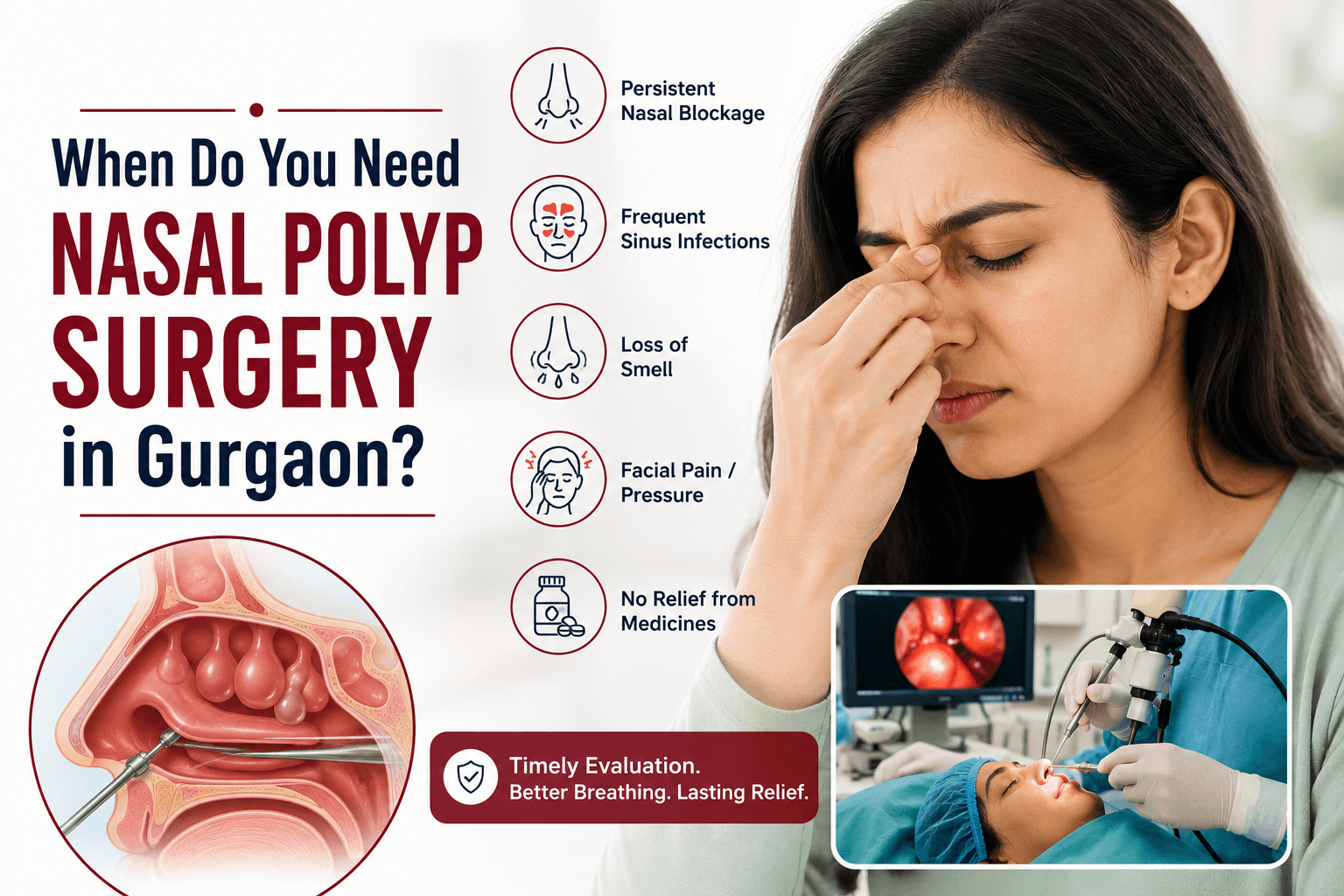
When Do You Need Nasal Polyp Surgery in Gurgaon?
One common concern many patients raise is whether a blocked nose that won't clear up needs surgery or just stronger medicine. In most cases, medication is tried first, but nasal polyp surgery in Gurgaon (https://www.entgurgaon.com/polyp-surgery.php) becomes necessary when polyps keep growing back or stop responding to treatment altogether. Knowing exactly when to consider surgery can help you avoid months of frustration with symptoms that never fully improve.
What Are Nasal Polyps?
Nasal polyps are soft, painless growths that form inside the nasal passages or sinuses due to long-term inflammation. They can vary in size and often appear in clusters rather than as a single growth.
Small polyps may cause few symptoms, but larger ones can block airflow significantly, reduce your sense of smell, and lead to repeated sinus infections if left untreated.
Symptoms That Suggest You May Need Surgery
Many patients worry that constant nasal congestion is simply due to allergies or a lingering cold. In many cases, specific symptoms suggest something more persistent is happening.
Nasal blockage that doesn't improve with decongestants
Reduced or complete loss of smell and taste
Frequent sinus infections despite antibiotic treatment
Facial pressure or pain around the forehead and cheeks
Snoring or difficulty breathing through the nose at night
If these symptoms continue for several weeks despite treatment, it may be time for a proper ENT evaluation.
Common Causes Behind Nasal Polyp Formation
You may notice that nasal polyps rarely appear without an underlying trigger. In many cases, chronic inflammation plays the biggest role in their development.
Common contributing causes include:
Chronic sinusitis lasting several months or longer
Allergic rhinitis with ongoing nasal inflammation
Asthma, which is often linked to recurring polyps
Sensitivity to certain medications, including aspirin
Family history of nasal polyps or chronic sinus issues
Understanding these causes helps determine whether long-term management or surgical removal is the more suitable option.
Risk Factors That Increase Your Chances
Most people don't realize how much certain health conditions raise the likelihood of developing nasal polyps that eventually require surgery.
Common risk factors include:
Long-standing asthma or chronic bronchitis
Frequent sinus infections over several years
Known aspirin or NSAID sensitivity
Cystic fibrosis in select cases
Ongoing exposure to irritants like smoke or strong fumes
Being aware of these factors can encourage earlier evaluation before polyps grow large enough to cause significant blockage.
When Does Medication Stop Being Enough?
In many cases, doctors first recommend nasal sprays, steroids, or saline rinses to shrink polyps and reduce inflammation. Surgery is generally considered only when these options fail to provide lasting relief.
Signs that medication may no longer be sufficient include:
Polyps continuing to grow despite consistent treatment
Symptoms returning shortly after stopping medication
Breathing difficulty that affects daily activities or sleep
Repeated infections requiring multiple antibiotic courses
Dr. Manish Prakash typically confirms this transition point through a detailed evaluation before recommending polyp surgery in Gurgaon (https://www.entgurgaon.com/polyp-surgery.php%20https://www.entgurgaon.com/polyp-surgery.php).
Diagnosis Before Confirming the Need for Surgery
Diagnosis usually starts with a nasal endoscopy to directly view the size and location of the polyps. This is why early diagnosis matters, since it helps track whether polyps are growing or improving over time.
Typical diagnostic steps include:
Nasal endoscopy using a thin, flexible camera
CT imaging to map polyp size and sinus involvement
Allergy testing when a trigger is suspected
Review of previous treatments and their effectiveness
Dr. Manish Prakash uses these findings to confirm whether nasal polyp treatment in Gurgaon (https://www.entgurgaon.com/polyp-surgery.php) should continue with medication or move toward surgery.
Warning Signs You Should Not Ignore
Certain symptoms suggest it is time to seek evaluation without further delay, rather than waiting to see if things improve on their own.
Sudden or severe difficulty breathing through the nose
Vision changes or swelling around the eyes
Severe, persistent facial pain
Complete loss of smell lasting several weeks
Recurring infections despite multiple treatment attempts
Common Mistakes Patients Make
One common mistake is relying only on over-the-counter decongestants for months without seeking a proper diagnosis. This can delay identifying polyps as the actual underlying cause, allowing them to grow larger over time.
Another frequent mistake is stopping prescribed nasal sprays too early once symptoms improve slightly, which can allow polyps to regrow more quickly than expected. Skipping follow-up visits after initial treatment is also common, even though regular monitoring helps track whether polyps are shrinking or continuing to expand.
Conclusion
Knowing when nasal polyp surgery in Gurgaon becomes necessary can save you months of frustration with treatments that no longer work. While medication remains the first step for most patients, surgery offers meaningful relief once polyps stop responding to it. Dr. Manish Prakash recommends a thorough nasal evaluation if your symptoms persist despite treatment. Book a consultation today to understand the most suitable next step for your condition.
Frequently Asked Questions
How do I know if my congestion is caused by nasal polyps?
Persistent blockage, reduced smell, and recurring sinus infections despite medication often point toward polyps. A nasal endoscopy can confirm their presence and guide appropriate treatment.
Can nasal polyps go away without surgery?
Smaller polyps sometimes shrink with nasal sprays or steroids. However, larger or recurring polyps that don't respond to medication typically require surgical removal for lasting relief.
Is nasal polyp surgery necessary for everyone with polyps?
No, surgery is generally recommended only when medication fails to control symptoms adequately. Many patients manage smaller polyps successfully with ongoing medical treatment alone.
How long can I wait before considering surgery?
This depends on symptom severity and response to treatment. Persistent blockage, infections, or breathing difficulty lasting several weeks despite medication usually warrants a specialist evaluation.
Will nasal polyps return after treatment?
Polyps can recur, especially if underlying inflammation or allergies aren't managed well afterward. Continuing prescribed nasal sprays and regular checkups helps reduce the chances of regrowth.
Appreciate the creator