What to Do When a Patient Refuses to Pay and Files a Complaint
Introduction
In medical practice, doctors dedicate their time, knowledge, and effort to providing the best possible care. However, situations can arise where a patient refuses to pay for services and, in some cases, even files a complaint. This can be frustrating, stressful, and legally challenging for any medical professional.
In Delhi, such incidents are becoming increasingly common due to rising patient awareness, financial disputes, and misunderstandings. This is where Medico legal help for medical professionals in Delhi becomes essential. Doctors must know how to handle these situations professionally while protecting their reputation and practice.
In this blog, Dr. Vimal Kant Goyal explains the causes, warning signs, and practical steps doctors can take when faced with non-payment and complaints.
Common Causes of Payment Disputes and Complaints
Understanding why patients refuse to pay or file complaints can help doctors prevent such issues.
1. Miscommunication About Costs
One of the most common reasons is a lack of clarity about consultation fees, treatment charges, or additional costs.
2. Dissatisfaction with Treatment
Patients who are unhappy with outcomes may refuse payment or try to justify it by filing complaints.
3. Financial Constraints
Some patients genuinely face financial difficulties but may not communicate openly.
4. Unrealistic Expectations
Patients expecting instant results or guaranteed outcomes may feel disappointed and react negatively.
5. Influence of Online Information
Misinformation from the internet or social media can create confusion and mistrust.
In such situations, seeking Medico legal support in Delhi helps doctors handle disputes effectively and professionally.
Signs You Should Not Ignore
Early identification of potential issues can help doctors act before the situation escalates.
1. Hesitation or Disputes Over Fees
If a patient frequently questions costs or delays payment, it may indicate a future dispute.
2. Aggressive or Defensive Behavior
Patients who become argumentative or hostile may escalate the issue further.
3. Repeated Requests for Records
Frequent demands for prescriptions, reports, or billing details can signal preparation for a complaint.
4. Negative Feedback or Threats
Statements like “I will file a complaint” or negative online reviews should be taken seriously.
5. Avoiding Communication
Patients who stop responding or avoid discussions about payment may later file complaints.
According to Dr. Vimal Kant Goyal, recognizing these warning signs early allows doctors to take preventive action and seek Legal help for doctors in Delhi when necessary.
How to Fix / Treat the Problem
Handling such situations requires a calm, structured, and legally sound approach.
1. Stay Calm and Professional
Avoid emotional reactions. Maintain professionalism in all interactions, even if the patient is aggressive.
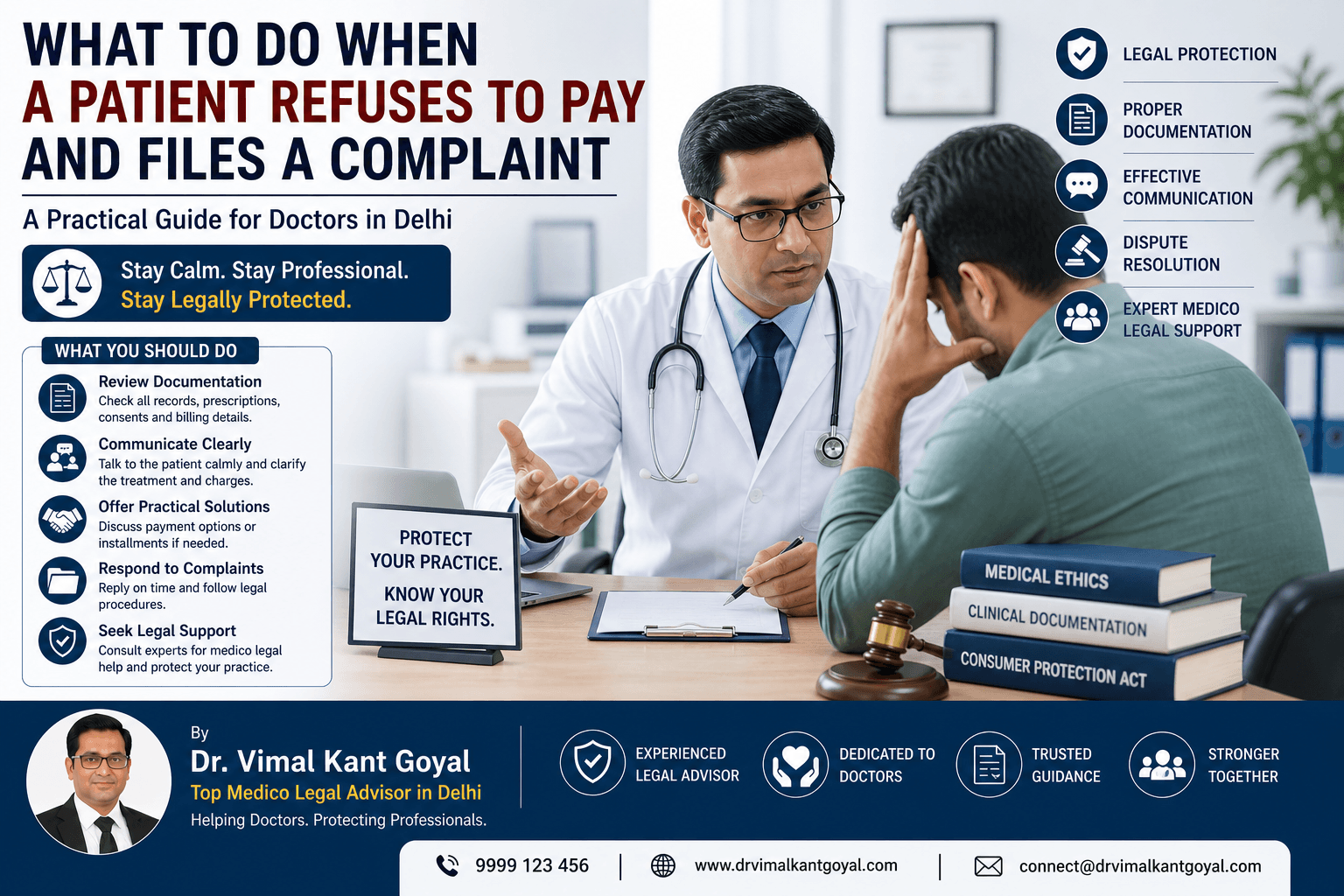
2. Review Documentation
Check patient records, treatment details, consent forms, and billing information. Proper documentation is your strongest defense.
3. Communicate Clearly
Have a transparent discussion with the patient about the treatment provided and the associated costs. Misunderstandings can often be resolved through clear communication.
4. Offer Practical Solutions
If the patient has genuine financial issues, consider options like:
Payment installments
Partial waivers (if appropriate)
Flexible payment timelines
5. Respond to Complaints Promptly
If a complaint is filed, respond professionally and within the required timeframe. Avoid ignoring notices or delaying responses.
6. Maintain Written Records
Document all communication with the patient, including emails, messages, and discussions. This can be crucial evidence.
7. Avoid Public Arguments
Do not engage in arguments on social media or public platforms. Handle disputes privately and professionally.
8. Seek Professional Guidance
Consult experts offering Medico legal help for medical professionals in Delhi to manage the situation legally and effectively.
9. Follow Legal Procedures
If necessary, take legal steps to recover dues while ensuring compliance with medical ethics and laws.
With proper Medico legal support in Delhi, doctors can resolve disputes without damaging their professional reputation.
Expert Tips
Here are practical tips shared by Dr. Vimal Kant Goyal to help doctors handle such situations:
Always explain treatment costs clearly before starting procedures
Use written consent forms and billing agreements
Maintain detailed patient records
Avoid giving guarantees about treatment outcomes
Train staff to handle billing and communication professionally
Do not delay responding to complaints or notices
Keep communication polite and respectful at all times
Consult experts for Legal help for doctors in Delhi before the issue escalates
Prevention is always better than cure, especially in medico-legal matters.
Conclusion
Facing a situation where a patient refuses to pay and files a complaint can be challenging, but it is manageable with the right approach. Doctors must focus on clear communication, proper documentation, and timely action.
Seeking Medico legal help for medical professionals in Delhi ensures that doctors are protected and guided through such situations. With expert support and awareness, medical professionals can handle disputes confidently while maintaining their reputation and practice.
As emphasized by Dr. Vimal Kant Goyal, combining clinical excellence with legal awareness is the key to a successful and stress-free medical career. With the right Medico legal support in Delhi, doctors can continue to provide quality care without fear of unnecessary legal complications.
FAQs
1. Can a doctor take legal action if a patient refuses to pay?
Yes, doctors can take legal steps to recover dues, but it must be done following proper legal procedures and ethical guidelines.
2. What should a doctor do if a patient files a false complaint?
Doctors should respond professionally, provide documentation, and seek Legal help for doctors in Delhi to handle the case effectively.
3. Is it necessary to maintain written records of communication?
Yes, maintaining records of all communication is crucial for legal protection and dispute resolution.
4. How can doctors prevent payment disputes in the future?
Clear communication, transparent billing, proper documentation, and timely guidance from Medico legal support in Delhi can help prevent such issues.
Appreciate the creator