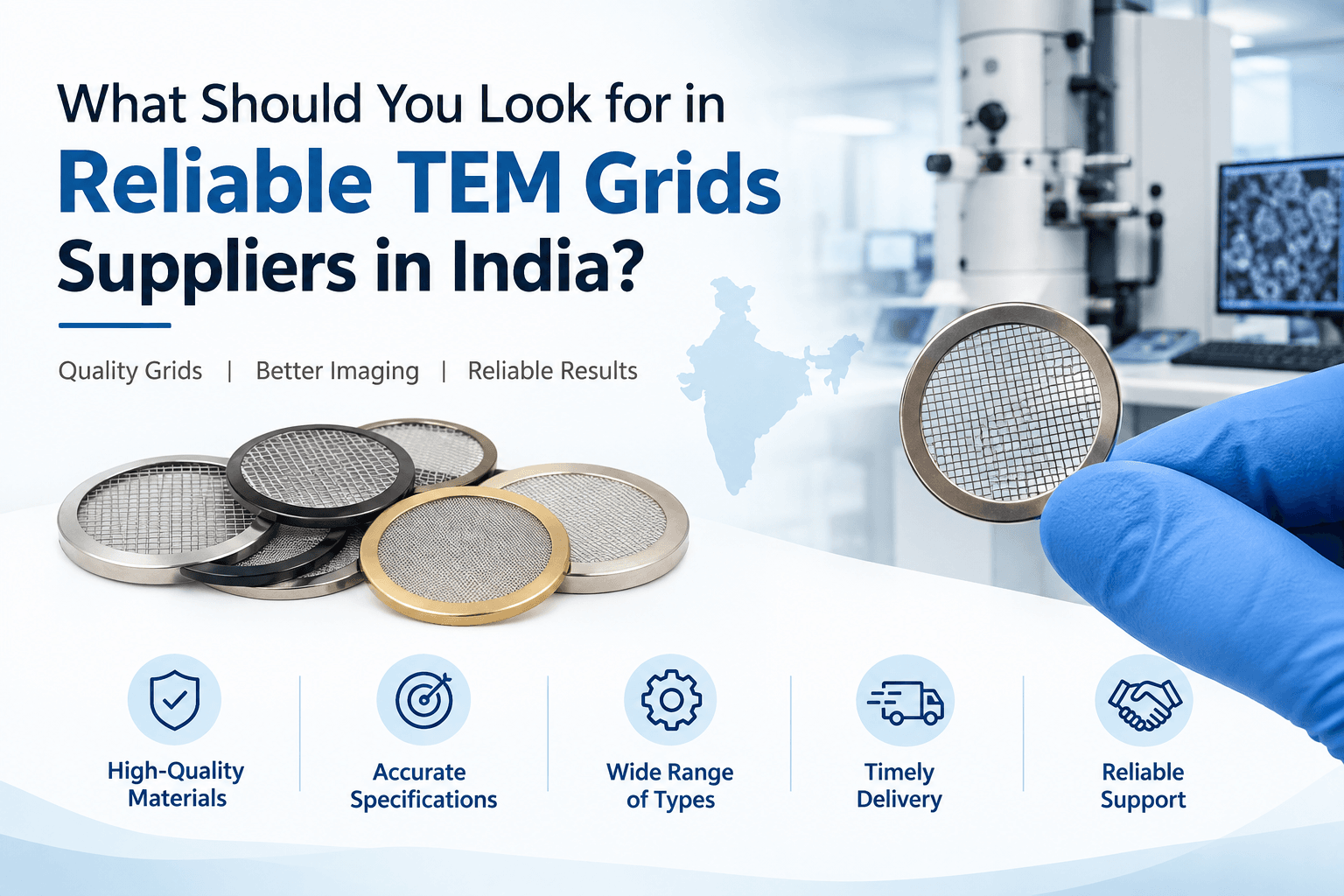
What Should You Look for in Reliable TEM Grids Suppliers in India?
Transmission Electron Microscopy (TEM) is widely used for studying the morphology, structure, size, and composition of materials at the nanoscale. However, obtaining clear and reliable TEM results depends not only on the microscope but also on proper sample preparation. TEM grids are one of the most important consumables used during this process.
For researchers, universities, testing laboratories, pharmaceutical companies, nanotechnology laboratories, and material science industries, choosing reliable TEM Grids Suppliers in India can make a significant difference in sample handling and imaging quality.
But with many suppliers available in the market, how do you identify a dependable supplier? This blog discusses the key factors you should consider before selecting a TEM grid supplier in India.
What Are TEM Grids?
TEM grids are small, thin support structures used to hold specimens for examination under a transmission electron microscope. They are commonly made from materials such as copper, nickel, gold, or other suitable metals and may have different mesh sizes and support films.
The choice of grid depends on factors such as:
Sample type
Particle size
Required resolution
Imaging technique
Chemical compatibility
Sample preparation method
TEM operating conditions
Selecting the correct grid is therefore essential for preparing samples properly and obtaining meaningful microscopic results.
Why Is Choosing the Right TEM Grid Supplier Important?
A reliable supplier can provide consistent-quality grids that are suitable for your specific application. Poor-quality or unsuitable grids may affect sample stability, background contrast, handling, and ultimately the quality of TEM observations.
A dependable supplier should offer:
Consistent product quality
Appropriate grid materials and mesh sizes
Proper packaging
Product specifications
Reliable availability
Technical support
Transparent pricing
Timely delivery
These factors become particularly important when TEM analysis is part of regular research or industrial testing.
1. Check the Quality of TEM Grids
The first factor to consider is product quality. TEM grids should be manufactured with appropriate dimensions, mesh consistency, surface quality, and structural stability.
Depending on your application, you may require grids with different characteristics. For example, researchers working with nanoparticles may have different requirements from those preparing biological specimens.
Before purchasing, ask suppliers about:
Grid material
Mesh size
Grid diameter
Support film type
Film thickness, where applicable
Surface condition
Manufacturing consistency
A supplier that can provide detailed product specifications makes it easier to select the right product.
2. Look for a Wide Range of Grid Options
Different research applications may require different types of TEM grids. A reliable supplier should ideally provide multiple options instead of offering only one standard configuration.
Common options can include:
Copper TEM grids
Nickel TEM grids
Gold TEM grids
Carbon-coated grids
Formvar-supported grids
Holey carbon grids
Different mesh sizes
Having access to multiple options allows researchers to choose a grid based on the characteristics of their sample and imaging requirements.
3. Consider Mesh Size
Mesh size is another important consideration when selecting TEM grids. TEM grids are available in different mesh configurations, and the appropriate choice depends on the specimen and the desired observation area.
A supplier should clearly mention the available mesh sizes and provide guidance where required.
For example, a researcher may need a different mesh configuration for a particulate sample compared with a thin-film or biological specimen.
Therefore, when comparing TEM Grids Suppliers in India, check whether they offer the mesh options required for your laboratory applications.
4. Evaluate Support Film Options
Some TEM samples require a supporting film to improve sample stability and handling. Carbon, Formvar, and other support-film configurations may be available depending on the application.
A good supplier should provide clear information about:
Film type
Film characteristics
Grid compatibility
Intended applications
Storage requirements
Choosing an appropriate support film can help make sample preparation more convenient and suitable for the intended TEM analysis.
5. Check Material Compatibility
The grid material can be important depending on the sample and analytical technique. Copper, nickel, and gold grids, for example, may have different suitability depending on the specimen and experimental conditions.
Researchers should consider whether the grid material could interfere with their analysis.
Before purchasing, discuss your application with the supplier if you are unsure which material is appropriate.
6. Verify Packaging and Storage
TEM grids are delicate laboratory consumables. Improper handling or packaging can result in contamination, bending, or surface damage.
Reliable suppliers should use appropriate packaging to protect grids during:
Manufacturing
Storage
Transportation
Laboratory handling
The supplier should also provide suitable storage recommendations where necessary.
Proper packaging is especially important when ordering grids in larger quantities for routine laboratory use.
7. Ask About Product Consistency
For laboratories performing repeated experiments, consistency is extremely important.
If grids from different batches have significant variations, researchers may experience differences during sample preparation or imaging. A dependable supplier should therefore maintain consistent manufacturing and quality-control practices.
Ask suppliers about their quality-control procedures and whether they can maintain consistency across repeat orders.
8. Check Availability and Delivery Time
Even high-quality TEM grids are not useful if they are difficult to obtain when needed.
Before selecting a supplier, check:
Current stock availability
Standard lead time
Bulk-order availability
Delivery locations
Reordering process
Emergency or urgent-order options, if available
For laboratories working with strict research schedules, reliable delivery can help prevent unnecessary delays.
9. Compare Pricing With Product Specifications
Price is an important consideration, but it should not be the only factor.
A very low-cost product may not necessarily provide the consistency or specifications required for your application. Instead of comparing suppliers only by price, evaluate the overall value.
Consider:
Product quality + specifications + packaging + availability + technical support + price
This provides a more useful basis for comparing TEM Grids Suppliers in India.
10. Look for Technical Support
A supplier with knowledgeable technical support can be particularly helpful when researchers are selecting grids for a new application.
For example, you may need assistance deciding between:
Different grid materials
Different mesh sizes
Carbon-coated and uncoated grids
Different support-film configurations
A supplier that understands laboratory applications can help you identify suitable options based on your sample preparation requirements.
11. Check Supplier Experience and Reputation
Experience can be another useful factor when evaluating suppliers. Look for suppliers that have experience serving:
Research laboratories
Universities
Testing laboratories
Nanotechnology facilities
Material science laboratories
Pharmaceutical research organizations
Industrial R&D teams
You can also review available product information, customer feedback, certifications, and references before making a purchasing decision.
12. Consider Bulk and Repeat Ordering
If your laboratory regularly performs TEM analysis, you may need grids on a recurring basis.
In this situation, check whether the supplier can support:
Bulk orders
Repeat orders
Multiple grid configurations
Consistent batch quality
Scheduled supply
Establishing a reliable supply relationship can simplify procurement and reduce interruptions to laboratory work.
How to Compare TEM Grids Suppliers in India
Before making a final decision, you can create a simple supplier checklist:
Factor - What to Check
Product Quality - Dimensions, surface quality, consistency
Grid Material - Copper, nickel, gold, etc.
Mesh Size - Availability of required mesh options
Support Film - Carbon, Formvar, holey carbon, etc.
Packaging - Protection from contamination and damage
Availability - Stock and lead time
Pricing - Cost relative to specifications
Technical Support - Product and application guidance
Supplier Experience - Laboratory and research experience
Bulk Supply - Availability for recurring requirements
This comparison can make the purchasing process more systematic.
Common Mistakes to Avoid When Choosing a TEM Grid Supplier
Researchers should avoid selecting a supplier based solely on the lowest price. Other common mistakes include:
Choosing Without Checking Specifications
Always verify the grid material, mesh size, diameter, support film, and other relevant specifications before ordering.
Ignoring Sample Compatibility
A grid that works well for one sample type may not be suitable for another. Consider your sample preparation and analytical requirements.
Buying Without Checking Packaging
TEM grids can be sensitive to contamination and physical damage. Packaging quality should therefore be considered.
Not Confirming Availability
If your laboratory requires regular TEM analysis, confirm whether the supplier can provide consistent stock.
Failing to Compare Suppliers
Comparing multiple suppliers can help you understand differences in specifications, quality, pricing, and service.
Why Reliable TEM Grids Matter for Research and Analysis
TEM provides highly detailed information about materials at very small scales. However, successful analysis starts with proper sample preparation.
A suitable TEM grid can provide the necessary support for the specimen while helping researchers prepare samples appropriately for microscopic examination.
For laboratories conducting frequent TEM analysis, consistent access to suitable grids can contribute to a more efficient sample-preparation workflow.
Final Thoughts
Choosing the right TEM Grids Suppliers in India (https://www.labatoz.com/consumable/tem-grids/) requires more than simply comparing prices. Researchers should consider product quality, grid material, mesh size, support-film options, packaging, availability, technical support, and supplier reliability.
A supplier that provides clear specifications, consistent products, suitable options, and dependable service can make procurement easier and support more efficient laboratory workflows.
Before placing an order, clearly identify your sample requirements and TEM application. Then compare suppliers based on product specifications, quality, service, and overall value. This approach can help laboratories select TEM grids that are better suited to their research and analytical needs.
Appreciate the creator