What Should Doctors Do After Receiving a Legal Notice from a Patient?
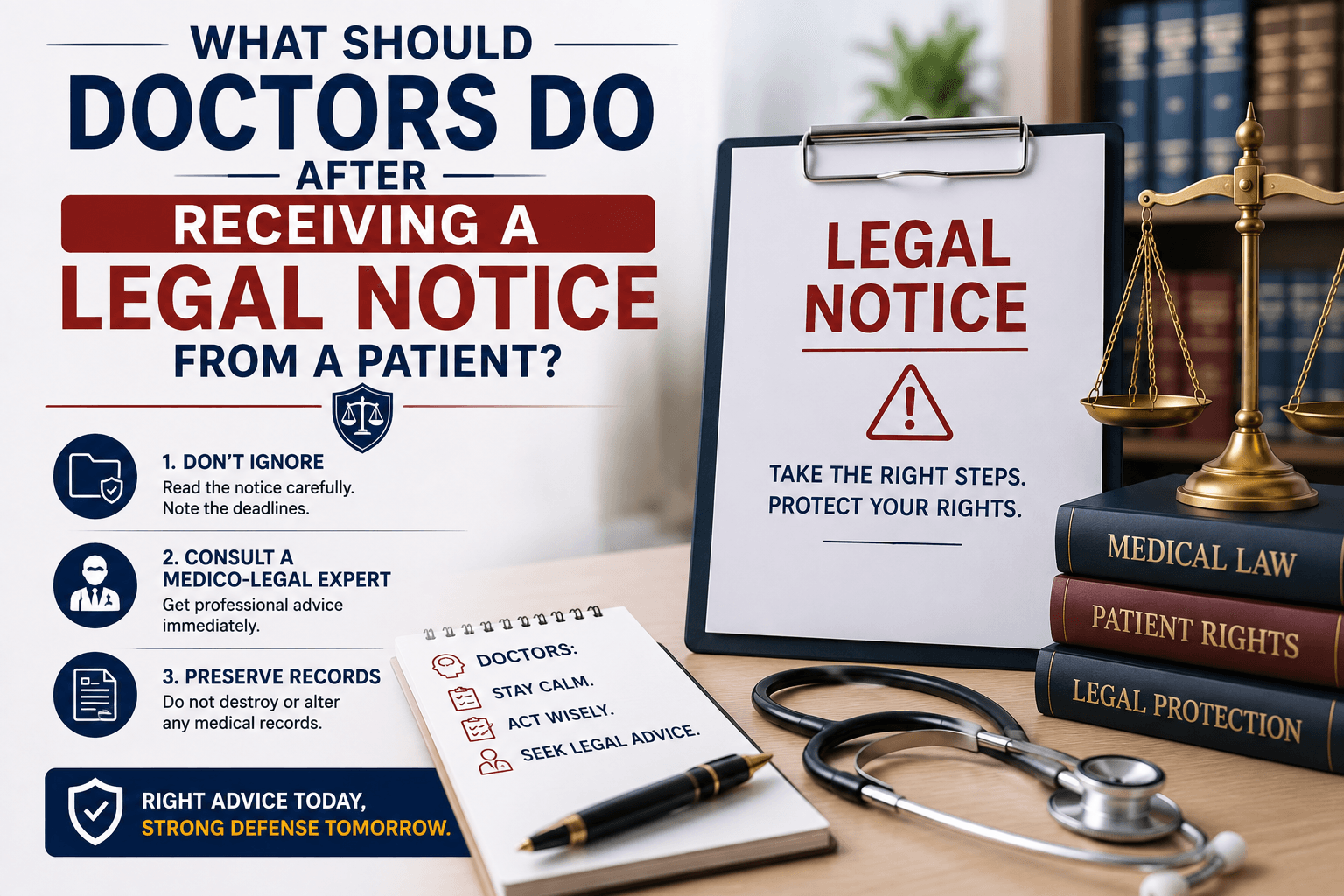
The Moment the Notice Arrives
A courier hands over an envelope during a busy OPD morning. Inside is a legal notice from a patient alleging that a complication was never explained, and that the treatment given was inappropriate. The doctor's first reaction is usually panic, followed by the urge to call the patient directly and "sort it out." This is exactly the moment a proper medico legal expert guide in Delhi (https://drvimalkantgoyal.com/medico-legal-guide.php) becomes useful — not to eliminate the stress, but to make sure the next few steps don't accidentally make the situation worse.
Most doctors have never received medico legal advice for doctors in Delhi before facing an actual notice, so the instinct is to react emotionally rather than procedurally. Understanding what a notice actually represents, and what it doesn't, is the first step toward handling it sensibly.
What a Legal Notice Actually Means
A legal notice is not a court judgment, and it isn't proof of wrongdoing. It's a formal statement of a patient's grievance, often drafted by a lawyer, asking for a response within a set period. It signals that the patient is considering further action, but the matter is still at an early, addressable stage.
Why the First Reaction Matters
How a doctor responds in the first 48 hours often shapes how the rest of the process unfolds. Ignoring the notice, responding angrily, or trying to negotiate informally with the patient can all create complications that a calm, structured response would have avoided.
Following a Medico Legal Expert Guide in Delhi: First Steps That Matter
The period right after receiving a notice should be spent gathering facts, not making promises or admissions.
Reading the Notice Carefully
Read the notice more than once, and note exactly what is being alleged — a missed diagnosis, an undocumented complication, a consent issue, or something else. Vague or emotional notices sometimes mix several complaints together, and separating them helps in preparing an accurate response later.
Gathering Records Before Responding
Before writing back or speaking to anyone, pull together the complete treatment record: consultation notes, investigation reports, consent forms, prescriptions, discharge summary, and any documented phone conversations. This is where earlier documentation habits either help a great deal or leave frustrating gaps that are hard to fill retroactively.
Common Mistakes Doctors Make After a Notice
Some of the most damaging mistakes happen not during treatment, but in the days right after a notice arrives.
Reacting Emotionally or Contacting the Patient Directly
Calling the patient to explain, apologize, or argue can feel like the right instinct, but it often creates new statements that weren't part of the original record. A medico legal expert in Delhi (https://drvimalkantgoyal.com/best-medicolegal-consultant-in-delhi.php) will usually advise routing all communication through proper channels instead.
Editing or "Completing" Records After the Fact
Going back to add missing details to a chart once a notice has arrived is one of the riskiest things a doctor can do. Even well-intentioned corrections can look like an attempt to alter the record if they aren't clearly dated and marked as later additions. If a genuine correction is needed, a medico legal expert in Delhi will usually recommend adding a separate, dated note rather than editing the original entry, so the timeline of what was recorded and when stays intact.
Building a Clear, Honest Response
A good response to a legal notice isn't about denying everything or admitting fault reflexively — it's about presenting an accurate account.
What a Good Response Should Include
The response should reference the actual sequence of care: what was assessed, what was explained to the patient, what alternatives were discussed, and what was done at each stage. Where documentation is thin, it's better to state the facts honestly than to fill gaps with assumptions.
Working With a Lawyer Rather Than Alone
Drafting the response with a lawyer experienced in healthcare matters, rather than independently, reduces the chance of language that sounds evasive or unintentionally admits liability. This is usually where structured medico legal advice for doctors in Delhi (https://drvimalkantgoyal.com/medico-legal-guide.php) makes the biggest practical difference.
Why Hospitals Need Structured Medico-Legal Support
A single doctor facing a notice alone is far more vulnerable than one supported by a hospital system built for this.
Institutional Support and Documentation Systems
Hospitals with clear record-retention practices, internal audit processes, and defined escalation procedures can pull relevant records quickly and consistently, which matters when a response deadline is short. A department that has to search for scattered notes, missing investigation reports, or an unfiled consent form under time pressure starts the process at a disadvantage. This kind of preparedness is part of what a hospital's own medico legal advice for doctors in Delhi framework should cover, well before any individual doctor needs it.
Communication Between Doctor, Hospital, and Legal Counsel
When a notice arrives, the doctor, hospital administration, and legal counsel should be aligned on facts before anyone drafts a reply. Disorganized or contradictory internal communication can undermine an otherwise solid clinical record.
Preventing the Next Notice
Most notices are less about a single dramatic error and more about small gaps that accumulated over time — an unclear prescription, a missing follow-up note, or a conversation that was never written down.
Checklist for Ongoing Risk Reduction
Keep consent specific to each procedure, document patient refusals with reasoning, record complications as they're noticed rather than in hindsight, and review discharge summaries for completeness before they leave the department.
When to Proactively Seek Medico-Legal Advice
Doctors don't need to wait for a notice to seek guidance. Reviewing high-risk cases periodically with a medico legal expert guide in Delhi, especially after a difficult outcome, can reduce avoidable risk long before a patient considers formal action. Handled calmly and with the right support, a legal notice becomes a manageable process rather than a crisis — and preparation, not panic, is what usually makes the difference.
Appreciate the creator