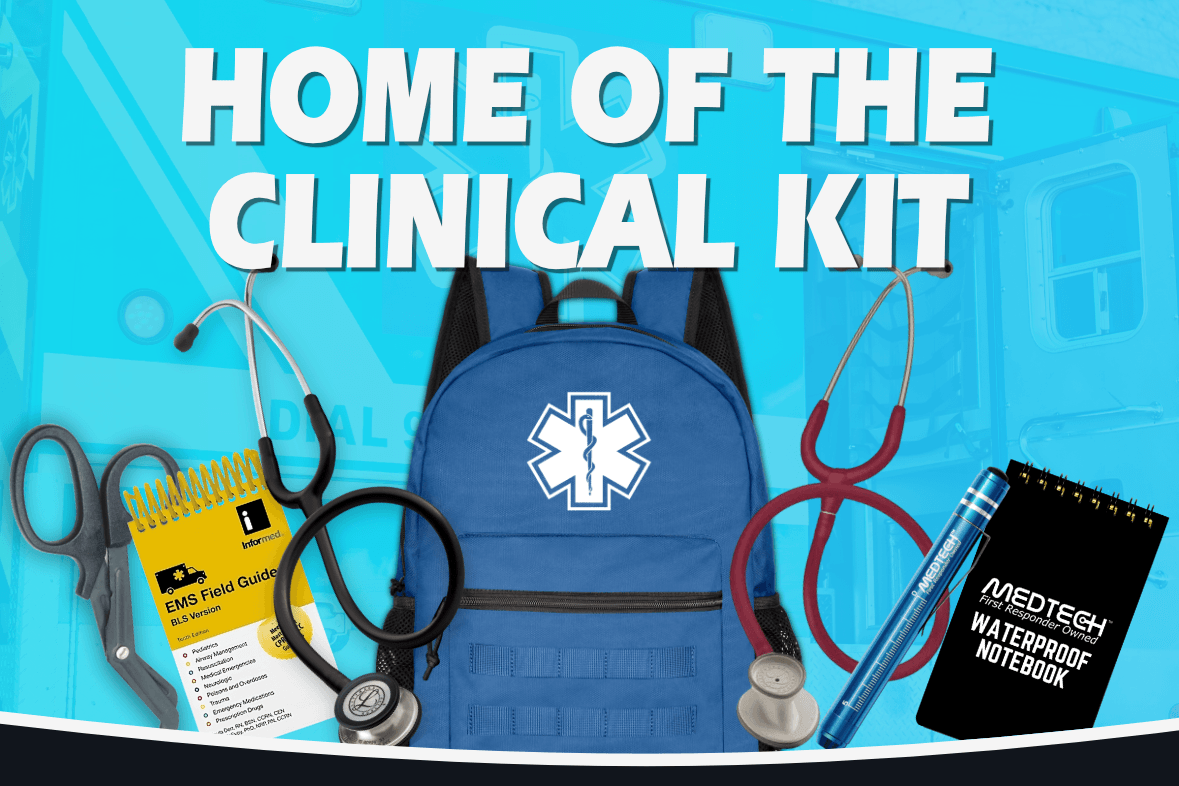
What Lighting Tools Do EMTs Need for Scene Safety and Exams?
A good emergency medical response starts with being able to control the environment and be sure of the diagnosis.
The MedTech tactical flashlight and the aluminum penlight give you the visibility you need to handle both of these important tasks in an emergency.
Clinicians need to be able to smoothly switch from looking at the big picture of scene safety to the small details of a physical exam.
Hardware that can handle extreme environmental stressors while still being clinically accurate is what makes reliability in the field.
To see how useful these emt tools are in a full medical arsenal, you need to know how they work beyond their basic surfaces.
The MedTechKits Approach to Patient Care
The core philosophy at MedTechKits is rooted in providing every student and professional with a quality medkit that simplifies complex field operations.
By prioritizing the specific needs of EMTs and paramedics, the organization ensures that advanced diagnostic tools are accessible to those at the beginning of their clinical careers.
This commitment to the EMS community involves more than just equipment sales; it focuses on enhancing the educational experience through reliable hardware.
Navigating the Scene with the Tactical Flashlight
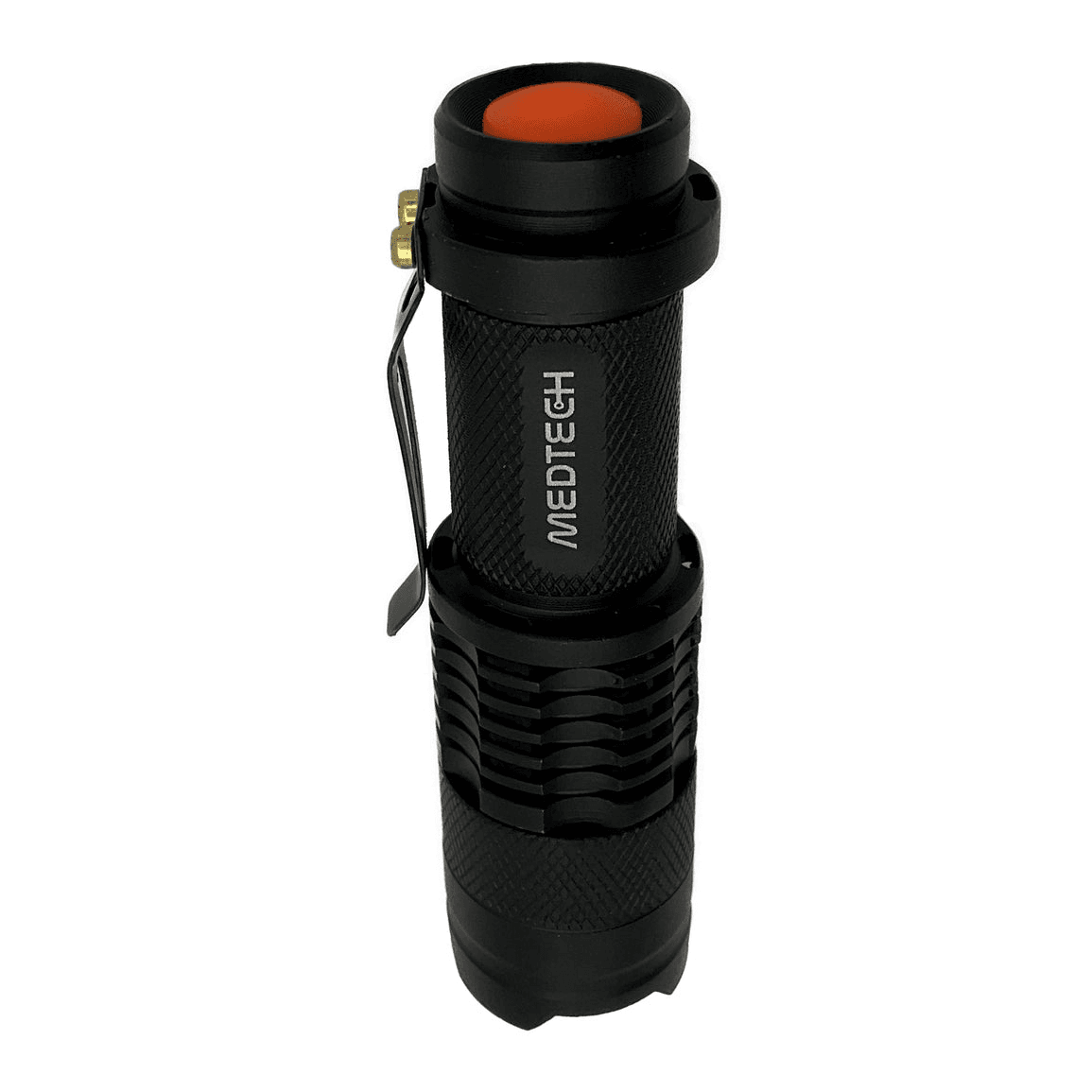
Scene safety is the foundational priority for any medical professional arriving at an unsecured or poorly lit environment.
The tactical flashlights from MedTechKits provide a powerful solution for identifying potential hazards and establishing a secure perimeter during night operations.
Visibility in the field requires more than just raw power; it demands a versatile beam that can adapt to changing terrain.
Such adaptability is essential when moving from the broad inspection of a scene to the specific identification of localized dangers.
Technical Specifications: 350 Lumens and Power Efficiency
The Tactical Flashlight is engineered with a high-intensity output of 350 lumens, providing the necessary brightness for long-range identification.
Despite this powerful performance, the internal circuitry is optimized for efficiency to ensure the light remains operational throughout an entire shift.
The device offers multiple modes in addition to standard visibility, including high-beam, low-beam, and a strobe function for emergency signaling.
The robust construction ensures that these technical capabilities remain functional even when exposed to moisture or physical impact.
Once the broader scene is secured and visibile, the focus of the responder shifts toward the delicate requirements of patient-specific diagnostics.
Patient Diagnostics with the Aluminum Penlight
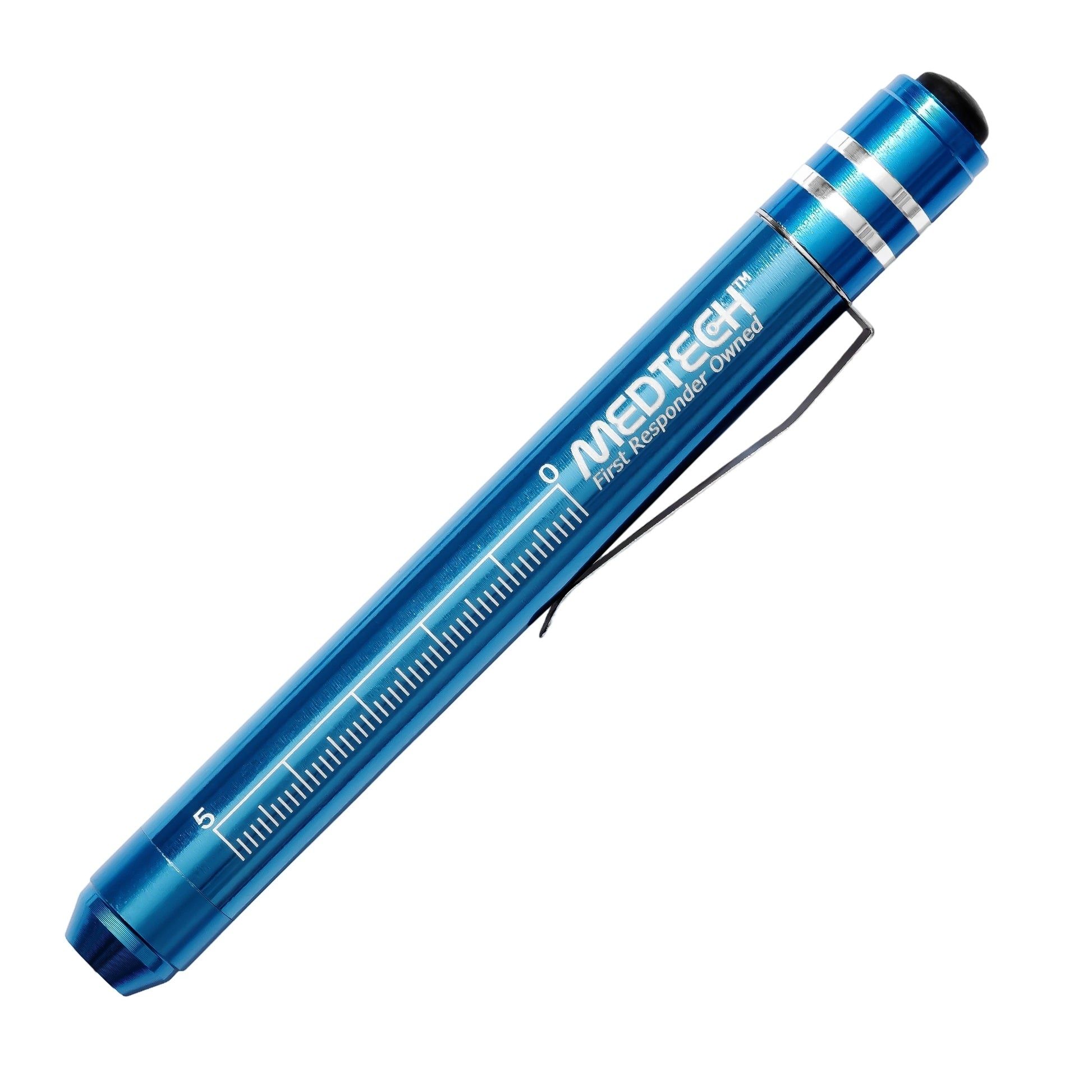
While scene lighting requires intensity, neurological assessments demand a more refined and controlled light source to ensure patient safety and diagnostic accuracy.
The aluminum pen light medical tool from MedTechKits utilizes a specialized white LED that provides clear visibility without the overwhelming glare of a tactical flashlight.
The steady, clean beam allows the clinician to perform repeated checks without causing unnecessary discomfort or light-induced trauma to the eyes.
Beyond the quality of the light itself, the physical architecture of the penlight incorporates additional features to streamline these clinical observations.
Precision Engineering for Clinical Measurements
The design of the aluminum penlight incorporates laser-engraved diagnostic aids directly onto the durable casing.
A pupil gauge and a 5 cm ruler provide immediate reference points for measuring physical findings during a trauma or medical assessment.
The casing is crafted from high-grade aluminum and features an IP67 rating, ensuring it remains functional even after submersion in water.
The rugged nature of these diagnostic tools ensures they are ready for use at a moment's notice.
Tactical Integration: Portability and Deployment in the Field
Efficient deployment of medical gear depends heavily on the ergonomic design and portability of the tools carried on the person.
Both the tactical light and the penlight are equipped with heavy-duty clips, allowing them to be stored alongside an ems field guide in a pocket or on a radio strap.
The lightweight nature of these aluminum-housed devices prevents unnecessary bulk while maintaining the structural strength required for field use.
The seamless integration of these tools into the responder's uniform maximizes efficiency during the most critical moments of a call.
Final Recommendations for First Responders
Selecting the appropriate visibility tools is a vital decision that directly impacts the safety and efficacy of emergency medical services.
The combination of a high-lumen tactical light and a precision penlight provides a comprehensive solution for the diverse challenges of the field.
Investing in high-quality hardware like the MedTech series guarantees that diagnostic tools will withstand the rigors of clinical training and active duty.
These instruments represent a commitment to professional excellence and a dedication to superior patient outcomes through better technology.
Frequently Asked Questions
Q1. How does the tactical flashlight perform in rain or smoke?
A: Its 350-lumen output and adaptable beam cut through glare and weather better than standard vehicle spotlights or phone lights, letting you quickly scan for downed wires or unstable vehicles while still having enough runtime to last an entire 12- or 24-hour shift.
Q2. How quickly can I switch from the tactical light to the penlight during a call?
A: Both tools are clipped directly to your vest or pocket, so you can grab the penlight one-handed while the tactical light stays on your belt. The penlight’s focused white LED gives instant, glare-free pupil checks without having to fumble or turn off the bigger light.
Q3. Can these lights withstand heavy use and exposure to fluids?
A: The tactical flashlight is built to handle impact and moisture, while the penlight carries an IP67 rating, meaning it can be fully submerged or hosed down for cleaning between calls and still work perfectly.
Q4: Is the strobe mode useful in real EMS situations?
A: It works great for signaling other arriving units, marking a landing zone for air med, or temporarily disorienting an agitated patient or bystander without needing a separate signaling device.
Reliable Additions for Daily Use
1. MedTech EMS Backpack: Organize Your EMT Essential Like a Pro
Appreciate the creator