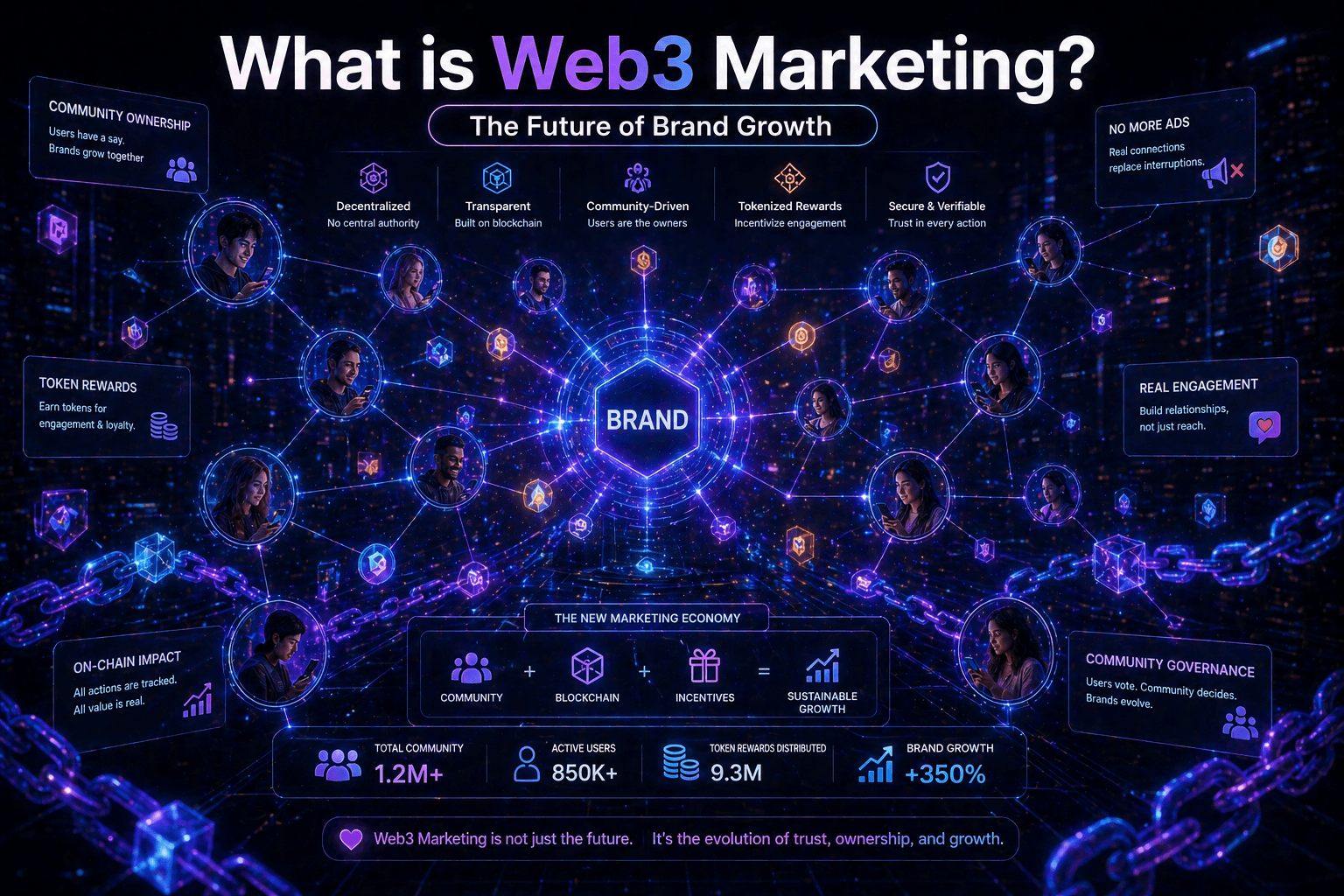
What Is Web3 Marketing and How It’s Changing Brand Growth Forever
Marketing used to be simple.
Brands created campaigns, pushed ads, and hoped for conversions.
But that model is breaking.
People ignore ads. Algorithms limit reach. Trust in traditional marketing is fading fast.
So what’s replacing it?
Web3 marketing.
Instead of broadcasting messages, brands are now building communities, ecosystems, and shared ownership experiences.
And that shift isn’t small it’s fundamentally changing how brands grow.
What Is Web3 Marketing?
Web3 marketing is a strategy focused on building communities and engaging users through decentralized technologies like blockchain, tokens, and NFTs. Instead of targeting audiences with ads, brands create participatory ecosystems where users contribute, interact, and gain value from the brand itself.
How Does Web3 Marketing Work?
Web3 marketing works by combining community engagement with ownership incentives. Brands use tools like tokens, NFTs, and DAOs to involve users directly in their ecosystem, encouraging participation, loyalty, and long-term engagement instead of one-time interactions
Why Web3 Marketing Matters Today
The internet is shifting from platform-controlled to user-owned.
Here’s what’s changing:
Users want ownership, not just access
Communities drive decisions, not ads
Trust comes from transparency, not messaging
This is why Web3 marketing is gaining traction across:
Crypto and blockchain projects
SaaS startups
Creator-led brands
It aligns with how people actually behave online today.
Traditional Marketing vs Web3 Marketing
Traditional Marketing
One-way communication
Paid ads and campaigns
Platform-controlled reach
Short-term conversions
Web3 Marketing
Two-way (or multi-way) interaction
Community-driven growth
Decentralized engagement
Long-term loyalty
💡 The difference is simple:
Traditional marketing rents attention. Web3 marketing builds ownership.
Core Pillars of Web3 Marketing
1. Community First
In Web3, your community isn’t part of your marketing strategy it is your marketing strategy.
Platforms like Discord and Telegram act as:
Engagement hubs
Feedback loops
Growth engines
2. Ownership & Incentives
Users aren’t just participants they’re stakeholders.
This is enabled through:
Tokens
NFTs
Rewards
When users have a stake, they care more
3. Transparency
Blockchain enables:
Open transactions
Verifiable data
Public accountability
This builds trust faster than traditional branding ever could.
4. Decentralization
No single entity controls the ecosystem.
Communities can:
Contribute ideas
Influence decisions
Participate in governance
Key Web3 Marketing Strategies
1. Build and Nurture Communities
Focus on:
Active engagement
Real conversations
Long-term relationships
Community is your growth engine.
2. Leverage Token-Based Incentives
Reward users for:
Participation
Contributions
Loyalty
This creates a loop where engagement feeds growth.
3. Collaborate with KOLs
KOLs play a major role in Web3.
They:
Build trust
Drive awareness
Influence communities
4. Create Exclusive Experiences
Web3 thrives on exclusivity.
Examples:
NFT drops
Early access
Private communities
Scarcity increases value.
5. Focus on Narrative, Not Just Promotion
Web3 users care about:
Vision
Utility
Long-term value
Storytelling matters more than ads.
Real-World Examples of Web3 Marketing
Example 1: NFT Communities
Projects use NFTs to:
Build identity
Reward holders
Create exclusivity
Result: Strong, loyal communities.
Example 2: Token-Based Ecosystems
Brands reward users with tokens for:
Engagement
Referrals
Contributions
Result: Organic growth loops.
Example 3: DAO-Led Projects
Communities participate in decisions through DAOs.
Result: Higher trust and long-term involvement.
Benefits of Web3 Marketing
Stronger user loyalty
Higher engagement rates
Organic growth through communities
Reduced reliance on paid ads
Transparent brand relationships
Challenges of Web3 Marketing
Requires active community management
Harder to control messaging
Needs long-term commitment
Education barrier for new users
💡 It’s not easier it’s just more effective when done right.
The Future of Brand Growth
We’re moving toward a world where:
Users are stakeholders
Communities drive adoption
Brands act as facilitators, not controllers
This changes everything.
Growth is no longer about reach.
It’s about participation.
Conclusion
Web3 marketing isn’t just a trend, it’s a shift in mindset.
From:
Ads → Communities
Users → Contributors
Customers → Stakeholders
Brands that understand this early will have a major advantage.
Because in the future, the brands that win won’t just market to people
They’ll build with them
Appreciate the creator