What Indian Gym Trainers Actually Think About Oversized Gym T-Shirts — An Inside Look
What Indian Gym Professionals Observe About Gymwear Choices
Experienced trainers notice movement first. Across Indian gyms, trainers commonly prefer tops that allow the shoulders and upper back to move without excessive fabric tension. A relaxed fit can make pressing, lateral raises, rows, pull-ups, and overhead movements feel less restricted than a close-fitting cotton tee.
In Mumbai, Bengaluru, and Pune, gym members also train in very different environments. A premium air-conditioned chain may stay comfortable throughout a session, while a neighbourhood gym can feel noticeably warmer during peak evening hours. Hostel gyms and smaller independent facilities may have limited cooling, making fabric choice part of basic training comfort rather than just personal style.
A useful definition is simple: an oversized training top is a gym shirt cut with extra room through the torso and usually a shoulder seam that sits lower than the wearer's natural shoulder point. That construction changes how the fabric moves when the arms travel overhead or away from the body. It does not automatically improve strength or muscle growth, but it can reduce clothing-related restrictions.
What Happens to Form When Clients Wear the Wrong Gym Top
Restricted clothing can alter movement. A fitted top that pulls across the shoulders during overhead pressing may encourage a lifter to change arm position, shorten the movement, or repeatedly adjust the shirt. None of those changes automatically causes injury, but they can make consistent technique harder to maintain.
Consider a dumbbell shoulder press. As the elbows travel upward, the shoulder complex needs freedom to rotate while the upper back and rib cage maintain position. A tight sleeve or narrow shoulder seam can create a noticeable pulling sensation. Trainers often spot the resulting behaviour before the person wearing the shirt notices it: sleeves get tugged, shoulders roll forward, or the lifter stops just short of a comfortable range.
That does not mean every fitted gym shirt is unsuitable. A properly sized performance top with stretch fabric can work very well. The problem usually appears when a regular cotton tee is one size too small or when its shoulder construction does not match the wearer's build.
What Trainers Actually Recommend Their Clients Wear for Upper Body Sessions
Relaxed fits usually give more movement freedom. Many Indian trainers favour either a loose fit training tee with dropped shoulders or a vest for upper-body sessions because both options reduce the chance of fabric pulling across the shoulders. The choice depends on the exercise, personal comfort, gym temperature, and how much coverage the wearer prefers.
A trainer working with clients in Pune might suggest a relaxed top for bench pressing and cable work, while someone coaching in a warm, non-AC neighbourhood gym may favour a lighter vest. Neither choice is universally superior. A person training in Bengaluru at a heavily air-conditioned facility has different clothing needs from someone lifting in Mumbai during a humid summer evening.
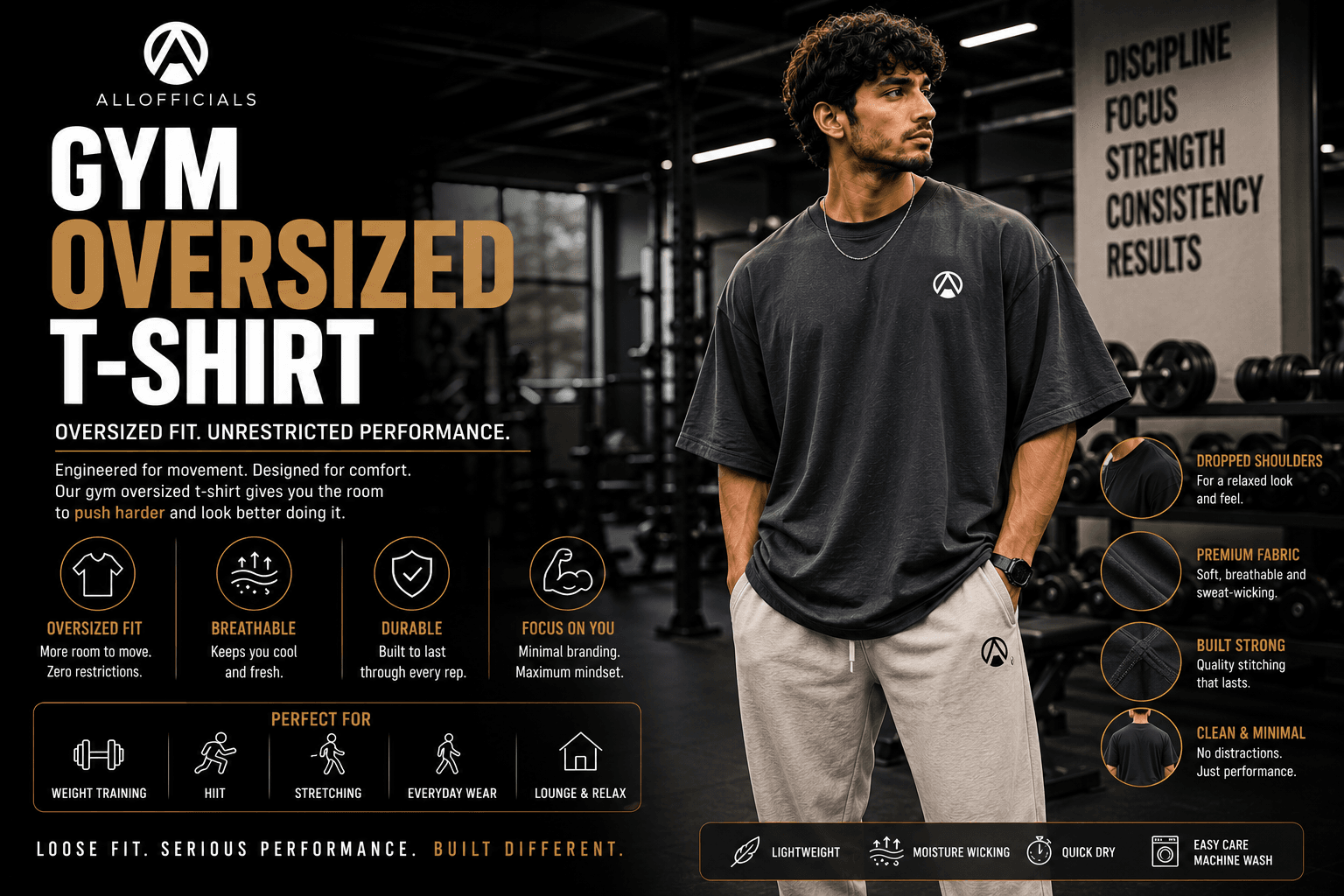
The gym oversized t-shirt range from AllOfficials can be considered when shoulder freedom and a relaxed training fit are priorities.
Fabric also matters more than the word "oversized" suggests. A loose 100% cotton shirt may move freely but absorb sweat and become heavier during a long session. A polyester-cotton blend or performance fabric can remain lighter and dry faster, although some lifters prefer cotton's softer feel for shorter workouts.
The Common Mistakes Trainers See Every Day in Indian Gyms
Fabric choice can become a bigger issue than fit. A 100% cotton oversized tee may feel excellent for the first 20 minutes, particularly during warm-up or low-volume strength work. After sustained sweating, however, cotton absorbs moisture instead of moving it away from the skin, so the shirt can become heavy and cling around the torso.
Indian conditions make that difference noticeable. Summer temperatures in cities such as Delhi can move well above 35°C, while Mumbai adds high humidity and Bengaluru can still feel warm inside a crowded gym. During monsoon periods, humidity can also slow drying, making a sweat-soaked shirt uncomfortable for longer.
Another mistake is choosing an extremely loose baggy gym top simply because a larger silhouette looks good. Extra fabric can interfere with cable machines, obscure movement during self-checks, or become distracting during exercises such as incline dumbbell pressing. Oversized should mean intentionally cut, not simply several sizes larger.
The gym oversized t-shirt is worth considering when the goal is a deliberately relaxed silhouette rather than simply sizing up a regular shirt.
Where to Find Gym Tops That Trainers Actually Approve Of
Construction matters more than the label. Indian trainers looking for practical upper-body gymwear tend to focus on three details: a dropped shoulder seam, fabric that manages sweat reasonably well, and a hem that provides coverage without getting in the way. A relaxed fit gym top should also allow the arms to move freely without producing excessive material around the wrists or equipment.
Price does not have to be high. In India, basic oversized gym tees can often be found around ₹500–₹1,000, while specialised performance pieces may cost more. A cheaper shirt can be perfectly adequate if the shoulder placement, fabric weight, stitching, and sizing work for the wearer. Paying more only makes sense if those additional features solve an actual training problem.
The gym oversized t-shirt collection gives Indian gym-goers a starting point for comparing relaxed-fit training options.
One small detail deserves more attention: check the hem while performing a movement, not just while standing in front of a mirror. Raise both arms overhead, reach forward, and perform a bodyweight squat. If the shirt repeatedly rides upward, twists around the torso, or catches against the shoulders, the pattern may not suit your training even if the shirt looks correctly oversized.
Frequently Asked Questions
Do gym trainers in India recommend oversized t-shirts for upper body training?
Many experienced Indian gym trainers recommend relaxed-fit tops with dropped shoulders for upper-body sessions because the construction can allow freer shoulder movement. The benefit is mainly practical: reducing clothing restriction can make pressing, pulling, and raising movements more comfortable.
What gymwear mistakes do Indian gym trainers commonly correct?
A common issue is training in heavy cotton tees that become saturated with sweat in warm Indian gyms. Trainers may also notice tops that restrict overhead movement, sleeves that interfere with exercises, or overly loose shirts that become distracting around equipment.
Why do some Indian gyms have specific dress codes around gym tops?
Most gym dress codes focus on hygiene, appropriate coverage, and safe use of equipment rather than banning oversized styles. Requirements vary by facility, so members should check individual rules, particularly at premium chains, hostel gyms, and residential fitness centres.
Is an oversized gym top better than a fitted shirt for lifting?
Neither fit is automatically better for strength training. A well-made fitted performance shirt can provide excellent freedom of movement, while an oversized top may feel more comfortable for people who dislike fabric tension around the shoulders and torso.
Should I buy a more expensive oversized training top?
Not necessarily. If a ₹600–₹800 shirt has suitable shoulder placement, comfortable fabric, durable stitching, and a useful fit, spending twice as much may not provide a meaningful training advantage. Extra cost becomes easier to justify when you need specific performance fabric, better construction, or more durable finishing.
Final Thoughts
A good oversized gym tee should disappear into the workout rather than become something you keep adjusting between sets. Check shoulder movement, sleeve behaviour, fabric weight, and hem position before worrying about branding or trend-driven styling.
For Indian training conditions, the simplest test is practical: wear the top for five minutes of warm-up, complete several overhead movements, then check how much sweat and heat have built up after your main sets. If the shirt stays comfortable, allows unrestricted movement, and still feels manageable during the commute home, it is doing its job.
Appreciate the creator