What "Full-Grain" Really Means: A Buyer’s Guide to Leather Apron Quality
Most people shopping for a work apron have never actually read a leather grading chart, and that’s exactly why so many end up disappointed six months in. “Genuine leather” sounds like a guarantee of quality, but in the leather industry it’s actually the second-lowest grade you can buy. Understanding the difference before you spend $100–$300 on an apron will save you from a purchase that looks fine online and falls apart at the stitching by week ten.
The Four Grades, Ranked Honestly
Leather cut from a single hide splits into four commercial tiers. Full-grain is the top layer of the hide, left with its natural grain intact, pores, minor scars, and all the texture that comes from a living animal. Top-grain is the same layer sanded smooth and often coated, which removes imperfections but also strips away some of the natural fiber strength. Genuine leather, the split layer beneath, is real leather but noticeably weaker and thinner. Bonded leather is scrap fiber glued to a fabric backing, and it has no real business being on a tool apron.
Why the Grain Layer Matters for Apron Use
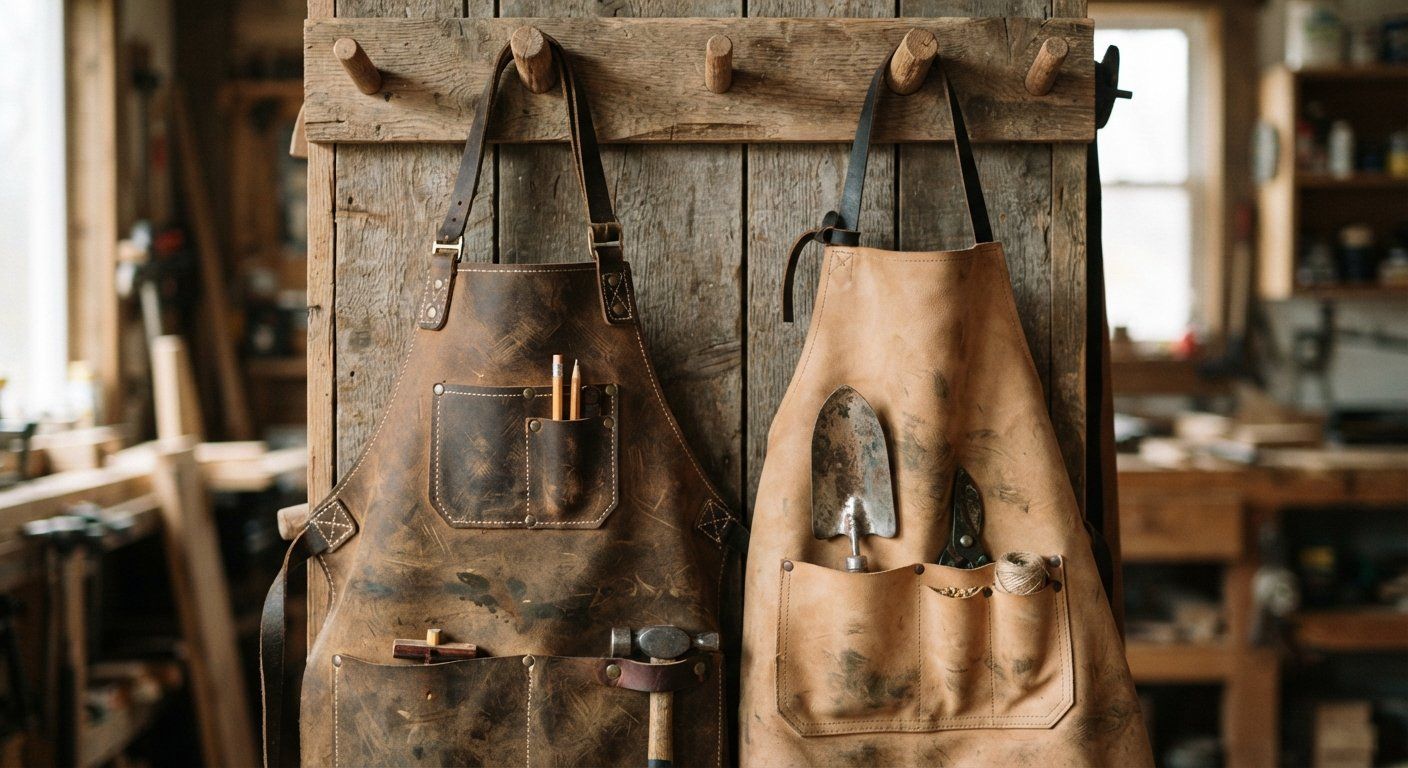
An apron isn’t a wallet or a jacket lining; it gets scraped by tools, splashed with grease or spirits, and folded and unfolded hundreds of times a shift. The tight fiber structure in the grain layer is what resists tearing and abrasion over years of that kind of handling. It’s also the layer that develops a patina, the deepening, richening color change that makes a well-used apron look better at year three than it did on day one. Sanded or bonded leathers don’t do this; they crack, peel, or flake instead.
How to Verify Before You Buy
Listings rarely lie outright, but they omit. A trustworthy product page states hide thickness in millimeters or ounces, not just “genuine leather.” Anything under roughly 1mm is going to feel flimsy on a work apron; 1.0mm to 1.4mm is the sweet spot most trade aprons land in for a balance of protection and flexibility, and heavier smith or welding work often runs thicker still. Lapron is one of the more reliably specced sellers I’ve come across for a full grain leather apron; (https://leatherapron.shop/) the thickness and tanning method are stated up front rather than buried in a FAQ, which is usually a sign of a seller who isn’t hiding anything.
Buy on spec, not on the word “leather” alone, and the apron you choose today will still be doing its job a decade from now.
Appreciate the creator