What Causes Nasal Polyps? Symptoms and Treatment Guide
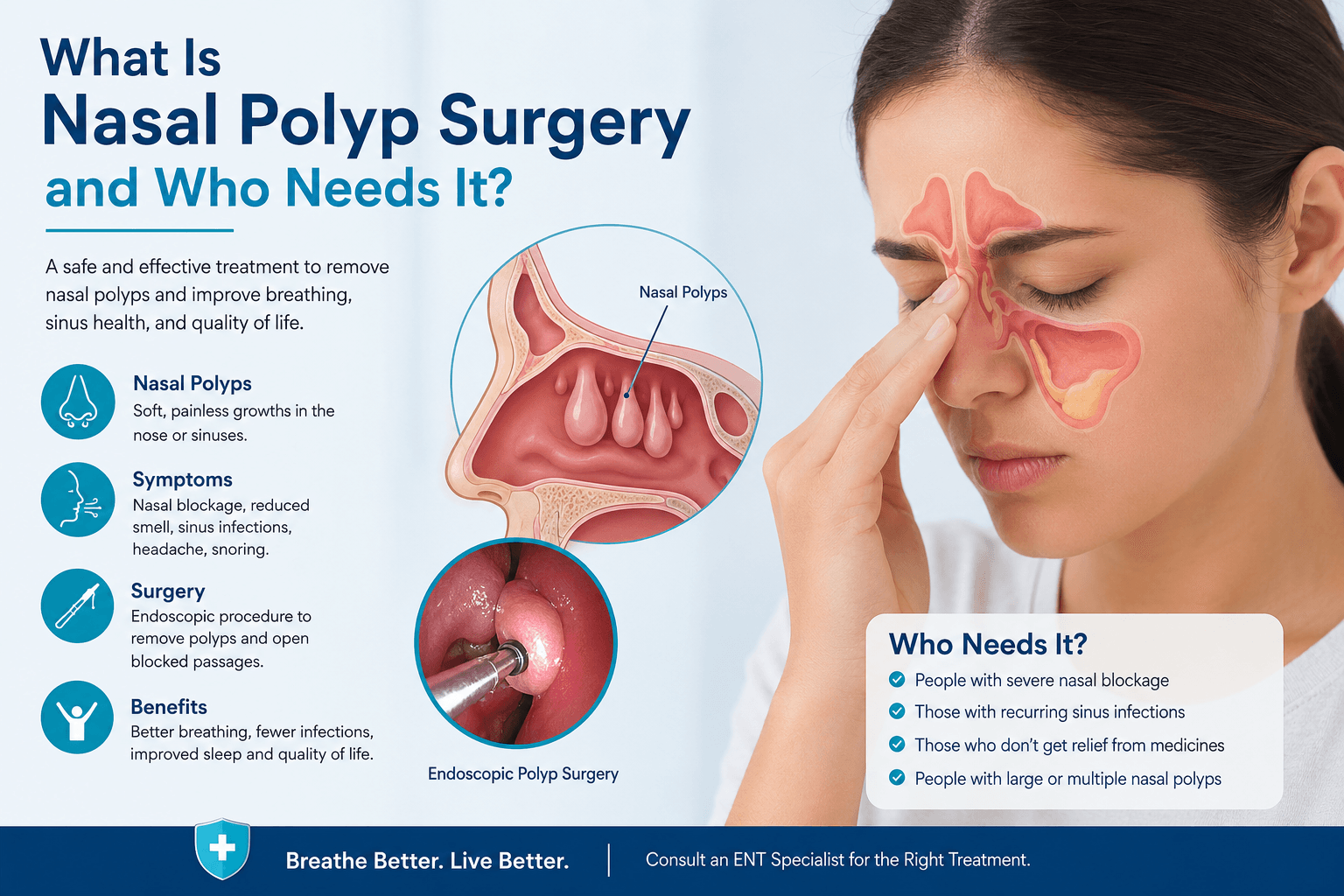
Breathing clearly through your nose is important for everyday comfort. It helps you sleep better, smell food, and stay active during the day. But when your nose feels blocked for weeks, breathing becomes difficult, and sinus problems keep returning, the reason may be nasal polyps.
Many people ignore these symptoms because they think it is only a cold or allergy. However, long-term nasal blockage should not be ignored.
In this guide, you will learn what nasal polyps are, what causes them, common symptoms, and available treatment options in simple English.
Dr. Manish Parshad, an experienced ENT specialist, helps patients understand nose and sinus conditions and guides them toward the right treatment based on their symptoms.
What Are Nasal Polyps?
Nasal polyps are soft, painless growths that develop inside the nose or sinus passages. They are usually non-cancerous, but larger polyps may block airflow and make breathing difficult.
Small nasal polyps may not create noticeable problems. However, when they grow bigger, they may affect breathing, smell, sleep, and daily comfort.
What Causes Nasal Polyps?
There is no single reason why nasal polyps develop. Usually, they happen because of long-term swelling or irritation inside the nose.
Below are some common causes.
Long-Term Sinus Infections
Repeated sinus infections can irritate the nasal lining. Over time, this irritation may lead to the development of polyps.
People with chronic sinus problems are often at higher risk.
Allergies
Dust, smoke, pollen, or seasonal allergies may increase inflammation inside the nose.
If allergies are not properly managed, they may increase the chance of developing nasal polyps.
Asthma
Some people with asthma also experience sinus and nose-related issues.
Breathing conditions may sometimes be connected with nasal swelling.
Weak Immune Response
In some cases, the body reacts strongly to inflammation, which may increase the risk of nasal growths.
Family History
Sometimes genetics may also play a role. If family members have sinus-related issues, the risk may be slightly higher.
Common Symptoms of Nasal Polyps
Nasal polyps often grow slowly, so symptoms may appear gradually.
Many people mistake them for a common cold or sinus infection.
Here are some common warning signs.
Constant Blocked Nose
One of the biggest signs is a nose that stays blocked for a long time.
If breathing through your nose feels difficult for weeks, it should not be ignored.
Difficulty Breathing
Blocked nasal passages may make normal breathing uncomfortable.
Some people notice they breathe more through their mouth.
Reduced Sense of Smell
A weak sense of smell is a very common symptom.
Food may not taste the same because smell and taste work together.
Frequent Sinus Infections
Repeated sinus infections may happen when the nose becomes blocked.
Common signs include:
Facial Pressure
Pain around the forehead or eyes.
Thick Nasal Discharge
A runny or blocked nose that keeps returning.
Headaches
Pressure around the sinuses may lead to discomfort.
Snoring or Sleep Problems
Blocked airflow can affect sleep quality.
Some people experience loud snoring or poor sleep due to nasal blockage.
When Should You Visit an ENT Specialist?
Many people wait too long before getting medical help.
You should consider seeing an ENT doctor if:
Nasal blockage continues for many weeks
Breathing feels difficult
You experience repeated sinus infections
Your sense of smell becomes weak
Sleep problems continue because of nasal blockage
Early care may help prevent symptoms from becoming worse.
How Are Nasal Polyps Diagnosed?
Doctors usually begin with a proper nose examination.
Physical Examination
The ENT specialist checks symptoms and medical history.
Nasal Examination
Doctors may use a small camera to look inside the nose.
Imaging Tests
In some cases, scans help understand the size and location of polyps.
Dr. Manish Parshad carefully evaluates each patient before recommending treatment options.
Treatment Options for Nasal Polyps
Treatment depends on the size of the polyps and the severity of symptoms.
Medicines
Smaller polyps may improve with medicines.
Nasal Sprays
Doctors may suggest sprays to reduce swelling.
Allergy Medicines
Managing allergies may improve symptoms.
Medicines for Infection
Treatment may be given if sinus infection is present.
Surgery for Nasal Polyps
If medicines do not work, surgery may be recommended.
Modern treatment uses endoscopic methods to remove polyps carefully.
People looking for ENT polyp surgery in Gurgaon often consider surgery when symptoms begin affecting breathing and daily life.
Some patients may also explore Polyp removal Surgery in Gurgaon if larger growths continue causing blockage.
In severe or repeated cases, choosing a trusted Nasal polyp Hospital in Gurgaon can help ensure proper diagnosis and treatment.
Can Nasal Polyps Return?
Yes, nasal polyps may come back in some cases, especially if allergies or sinus inflammation continue.
This is why regular follow-ups and proper care are important.
Doctors may suggest lifestyle changes and medicines to reduce the chances of recurrence.
Tips to Reduce Nasal Polyp Problems
Here are a few simple ways to support nose health:
Avoid Dust and Smoke
These may increase irritation inside the nose.
Control Allergies
Managing allergies may help reduce inflammation.
Stay Hydrated
Drinking enough water may support overall sinus health.
Follow Medical Advice
Take medicines exactly as prescribed.
Frequently Asked Questions (FAQs)
What are nasal polyps?
Nasal polyps are soft growths inside the nose or sinuses that may block airflow.
Are nasal polyps dangerous?
Usually, they are not dangerous, but larger polyps can affect breathing and comfort.
Can nasal polyps go away without surgery?
Yes, smaller polyps may improve with medicines.
When is surgery needed?
Surgery may be recommended if medicines do not provide enough relief.
Is nasal polyp surgery painful?
Modern procedures are generally comfortable, and recovery is manageable.
Can nasal polyps come back?
Yes, some people may experience recurrence, which is why follow-up care is important.
Conclusion
Nasal polyps can affect breathing, smell, sleep, and daily comfort if ignored for too long. Understanding the causes and symptoms early can help you get proper treatment before the condition becomes more serious.
If you are facing long-term nasal blockage or repeated sinus problems, consulting an experienced ENT specialist is important. Dr. Manish Parshad provides careful evaluation and patient-focused guidance to help people manage sinus and nose-related concerns with confidence.
Appreciate the creator