What Are the Common Symptoms of Female Infertility?
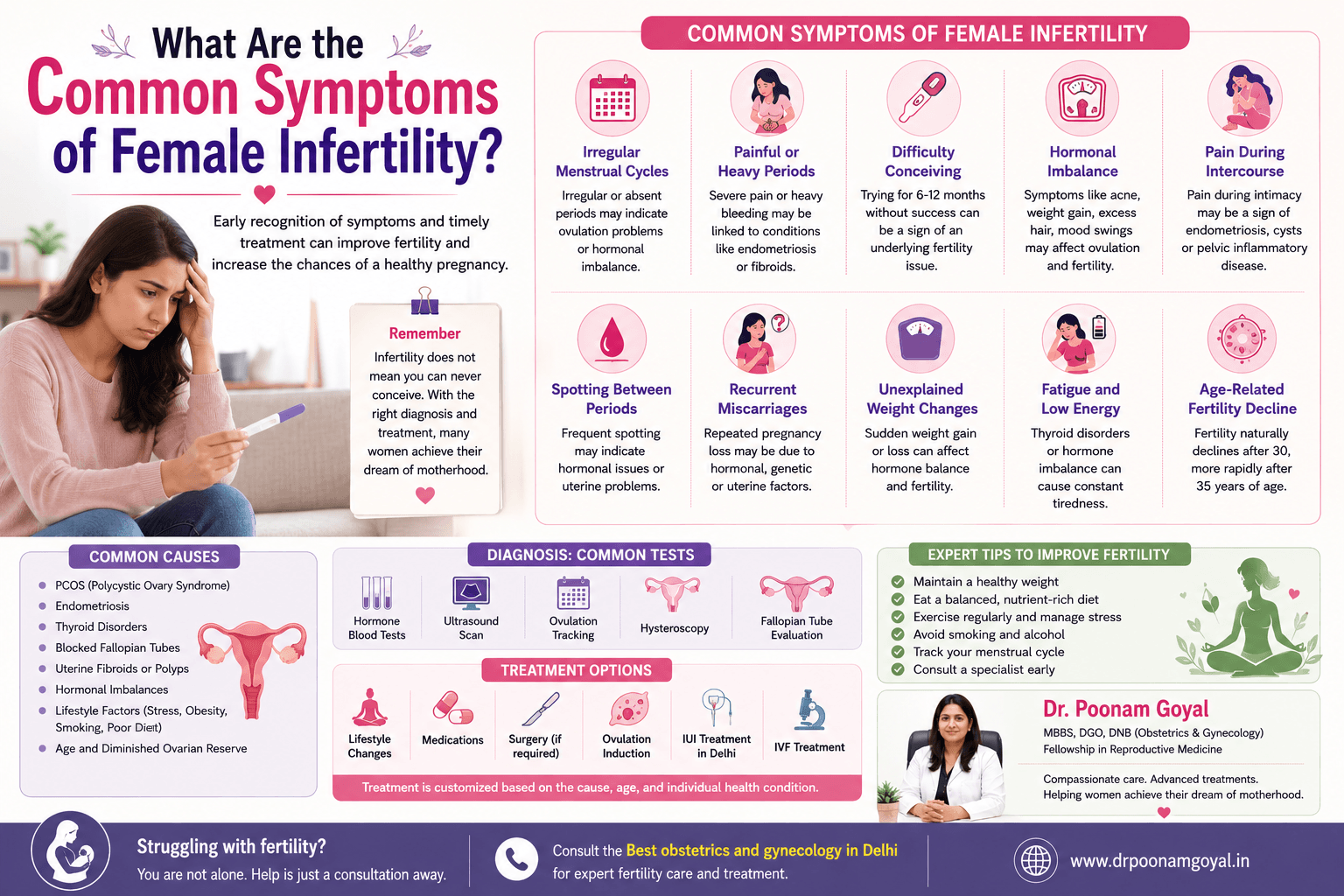
Female infertility is becoming increasingly common among women of reproductive age. Many women may not realize they are experiencing fertility problems until they try to conceive. Infertility can affect emotional well-being, relationships, and overall health, making early awareness and timely medical consultation extremely important.
According to Dr. poonam goyal, female infertility does not always show obvious symptoms in the beginning. However, the body often gives warning signs that should never be ignored. Identifying these symptoms early can improve treatment success and increase the chances of pregnancy.
If you are searching for the Best obstetrics and gynecology in Delhi, understanding the symptoms of infertility can help you seek proper medical care at the right time.
Understanding Female Infertility
Female infertility refers to difficulty in conceiving after trying for pregnancy for a certain period of time. Generally, women under 35 years should seek medical evaluation after one year of trying without success, while women above 35 years should consult a specialist after six months.
How Female Fertility Works
For pregnancy to occur naturally, several reproductive functions must work properly, including:
Healthy egg production
Regular ovulation
Open fallopian tubes
Healthy uterus
Balanced hormones
Any disruption in these processes may affect fertility.
Importance of Early Diagnosis
Early fertility evaluation helps identify hormonal imbalance, ovulation problems, uterine conditions, or lifestyle factors affecting conception.
Dr. poonam goyal emphasizes that timely diagnosis often improves fertility treatment outcomes.
Irregular Menstrual Cycles
One of the most common symptoms of female infertility is irregular periods.
What Are Irregular Periods?
A menstrual cycle shorter than 21 days or longer than 35 days may indicate ovulation problems or hormonal imbalance.
Conditions Linked With Irregular Periods
Polycystic Ovary Syndrome (PCOS)
Thyroid disorders
Hormonal imbalance
Premature ovarian insufficiency
Women with irregular periods often consult the Best obstetrics and gynecology near me for fertility evaluation and reproductive care.
Painful or Heavy Periods
Severe menstrual pain or extremely heavy bleeding may signal underlying reproductive health issues.
Conditions Associated With Painful Periods
Endometriosis
Fibroids
Pelvic inflammatory disease
Adenomyosis
These conditions can interfere with implantation and fertility if left untreated.
When to Seek Medical Advice
Women experiencing severe pain, excessive bleeding, or periods affecting daily activities should consult a gynecologist immediately.
Difficulty Conceiving
The inability to conceive despite regular unprotected intercourse is one of the major signs of infertility.
When Should You Be Concerned?
Trying for one year under age 35
Trying for six months above age 35
History of miscarriages
Existing reproductive disorders
An experienced fertility specialist can help identify the cause and recommend suitable treatment options.
Hormonal Imbalance Symptoms
Hormonal disorders often affect ovulation and reproductive health.
Common Signs of Hormonal Imbalance
Sudden weight gain
Acne or oily skin
Excess facial hair
Hair thinning
Mood swings
Low libido
Conditions such as PCOS and thyroid disorders commonly affect fertility in women.
Dr. poonam goyal advises women not to ignore persistent hormonal symptoms, especially when planning pregnancy.
Pain During Intercourse
Pain during intercourse may indicate reproductive health conditions that can affect fertility.
Possible Causes
Endometriosis
Pelvic infections
Ovarian cysts
Vaginal dryness
Ignoring these symptoms may delay diagnosis and treatment.
Recurrent Miscarriages
Repeated pregnancy loss may also indicate fertility-related problems.
Common Causes of Recurrent Miscarriages
Hormonal imbalance
Uterine abnormalities
Genetic issues
Autoimmune disorders
Women facing repeated miscarriages should seek reproductive evaluation from fertility specialists.
Age-Related Fertility Decline
Female fertility naturally declines with age, especially after 35 years.
Why Age Matters
As women age, egg quality and ovarian reserve decrease, making conception more difficult.
Importance of Timely Fertility Planning
Early fertility assessment can help women understand their reproductive health and explore treatment options if necessary.
Many couples seek guidance for IUI Treatment in Delhi to improve pregnancy chances when natural conception becomes difficult.
Lifestyle Factors Affecting Fertility
Lifestyle habits can significantly influence reproductive health.
Unhealthy Lifestyle Habits
Smoking
Alcohol consumption
Poor diet
Obesity
Chronic stress
Lack of exercise
Maintaining a healthy lifestyle can improve fertility naturally.
Stress and Fertility
Excess stress may interfere with hormone balance and ovulation, reducing conception chances.
How Female Infertility Is Diagnosed
Doctors may recommend several tests to identify the cause of infertility.
Common Fertility Tests
Hormone blood tests
Ultrasound examination
Ovulation tracking
Hysteroscopy
Fallopian tube evaluation
Importance of Fertility Assessment
Accurate diagnosis helps doctors recommend the most effective treatment plan based on individual reproductive health conditions.
Women often search for the Best obstetrics and gynecology in Delhi to receive expert fertility evaluation and personalized care.
Treatment Options for Female Infertility
Treatment depends on the exact cause of infertility.
Lifestyle Changes
Healthy eating, regular exercise, stress management, and maintaining healthy body weight can improve fertility.
Medications
Doctors may prescribe medications to regulate hormones and improve ovulation.
Surgical Treatments
Certain conditions such as fibroids, endometriosis, or uterine abnormalities may require surgery.
Fertility Treatments
Advanced fertility treatments may include:
Ovulation induction
IUI
IVF
Hormonal therapy
Many couples explore IUI Treatment in Delhi under expert medical supervision to improve conception success.
Expert Tips for Better Fertility Health
Track Your Menstrual Cycle
Understanding ovulation patterns can help identify fertility-related issues early.
Maintain Healthy Weight
Balanced nutrition and physical activity support hormone balance and reproductive health.
Avoid Smoking and Alcohol
These habits can negatively affect egg quality and fertility.
Seek Early Medical Advice
Women experiencing infertility symptoms should not delay fertility evaluation and treatment.
According to Dr. poonam goyal, early reproductive care improves the chances of successful treatment and healthy pregnancy outcomes.
Conclusion
Female infertility can affect women physically, emotionally, and mentally. Symptoms such as irregular periods, hormonal imbalance, painful menstruation, recurrent miscarriages, and difficulty conceiving should never be ignored. Early diagnosis and proper treatment can significantly improve fertility outcomes.
Lifestyle changes, hormonal management, and advanced fertility treatments can help many women achieve successful pregnancies. Understanding your body’s warning signs and seeking timely medical care is essential for reproductive wellness.
If you are searching for the Best obstetrics and gynecology near me, expert guidance from a qualified specialist can help identify fertility concerns early and provide effective treatment options. Couples considering IUI Treatment in Delhi should always consult experienced fertility experts for personalized reproductive care.
FAQs
What are the first signs of female infertility?
Irregular periods, hormonal imbalance, difficulty conceiving, and painful menstruation are common early signs.
Can stress cause infertility in women?
Chronic stress may affect hormonal balance and ovulation, which can reduce fertility.
At what age does female fertility decline?
Female fertility usually starts declining gradually after 30 years and more rapidly after 35 years.
Can infertility be treated successfully?
Yes, many infertility conditions can be managed through lifestyle changes, medications, or fertility treatments.
When should I consult a fertility specialist?
Women under 35 should seek help after one year of trying to conceive, while women above 35 should consult after six months.
Appreciate the creator