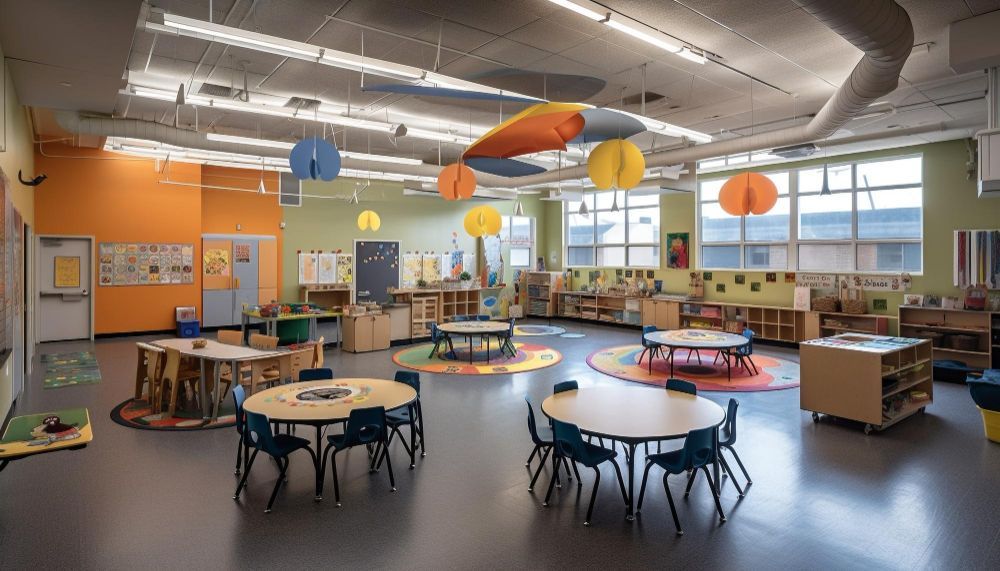
Upsurge in Adoption of Modern and Flexible Learning Spaces
Educational institutes increasingly seek water-resistant, anti-termite, and mold-resistant wood types, such as rubber, for constructing chairs, desks, and storage spaces. Also, wood is an eco-friendly and highly sustainable material for educational furniture production. Thus, the demand for wood-based furniture is high among the schools, colleges, and other educational institutes. Europe, South America, Asia Pacific, and North America are regions with high forest covers, and therefore, the accessibility of wood for furniture making is high in these continents. With technological developments, manufacturers can cut wood in newer ways to distinguish furniture styles suiting each school setting. Plastic furniture is substantially lighter than wood or metal furniture allowing the easy movement of furniture in the classroom, which is necessary for establishing a flexible and adaptive learning environment in the classroom. Lightweight plastic furniture is easy to stack and store, which is highly suitable in schools with little room for storage. Since plastic furniture made from Polypropylene (PP), Polycarbonate (PC), and Polyethylene Terephthalate (PET), lasts longer than conventional furniture, it is a more cost-effective solution for schools.
Schools in different parts of the world plan to create dynamic and collaborative learning environments that are adaptable to a wide range of learning styles, and furniture plays a major role in this effort. Modern classrooms are no longer static spaces; rather, they have become fluid and flexible ones that can be easily adapted to meet the changing needs of students and teachers. Moreover, schools are seeking customized furniture that meets their specific needs. As a result, furniture manufacturers are increasingly offering customizable options that allow schools to choose the size, shape, and features of their furniture. Customization can include everything from the color of upholstery to the placement of power outlets and charging ports. The growing demand for such modern learning spaces is contributing to the growth of the educational furniture market. As schools move away from traditional, lecture-based classrooms, they require furniture that can be easily rearranged to accommodate different learning styles and group sizes. Thus, flexibility is another key driver of the educational furniture market growth. In response, furniture manufacturers are creating modular furniture that can be quickly reconfigured to suit the needs of different learning activities. For example, chairs and desks may be designed to be easily stacked and stored when not in use, or they may be designed to be easily moved around the room to create different seating arrangements, such as the Flex collection from Steelcase.
A few players operating in the educational furniture market are Fleetwood Group Inc, Smith Systems Manufacturing Co, Haworth Inc, Office Line Srl, and Virco Manufacturing Corp among few others.
Read more: https://www.theinsightpartners.com/reports/educational-furniture-market
Appreciate the creator