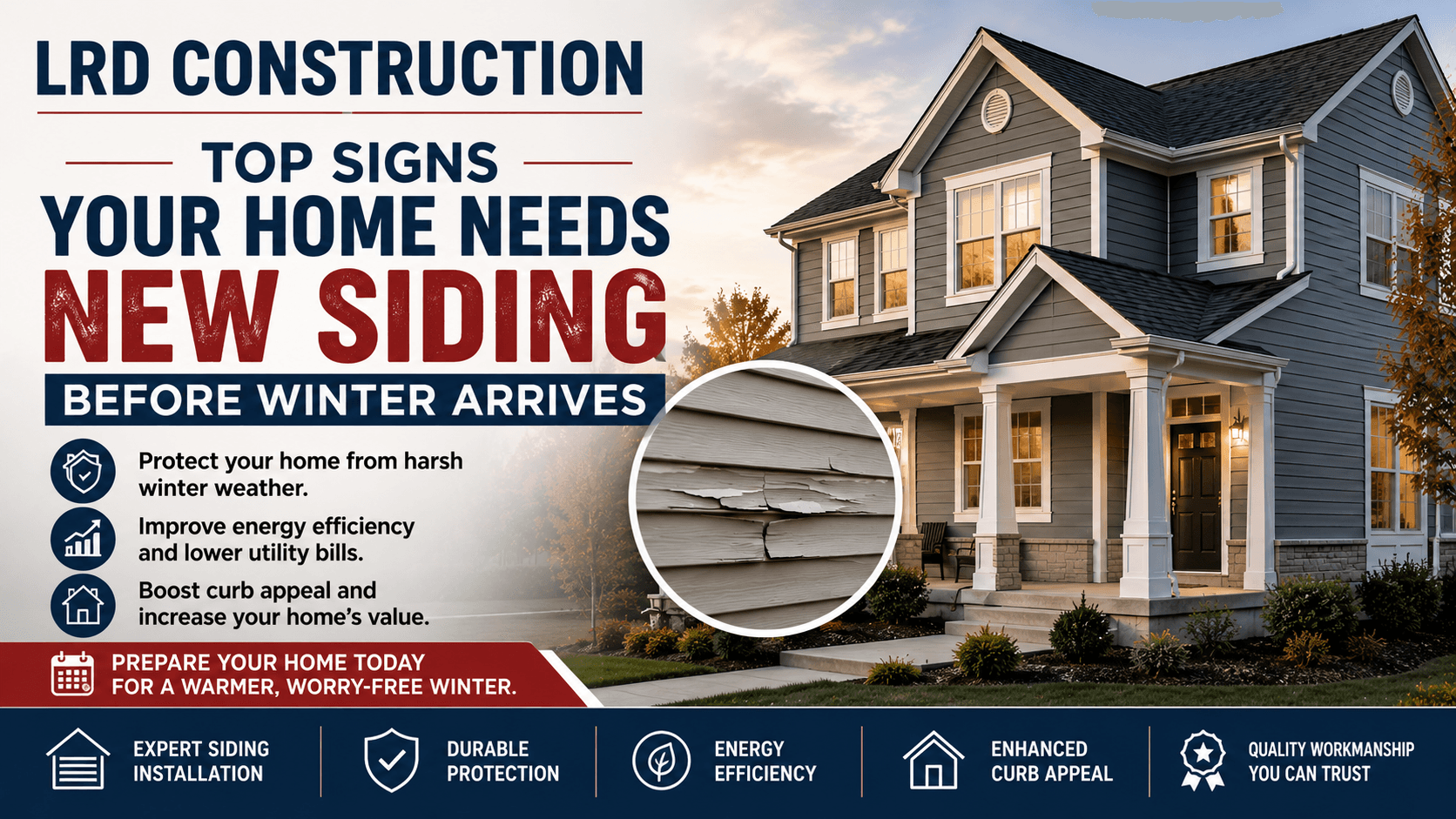
Top Signs Your Home Needs New Siding Before Winter Arrives
As winter approaches, homeowners often focus on preparing their roofs, gutters, and heating systems for the colder months. However, one critical part of your home's exterior that is frequently overlooked is the siding. Quality siding acts as a protective barrier against harsh weather, moisture intrusion, and energy loss. When siding begins to deteriorate, your home becomes vulnerable to costly damage and higher energy bills.
If you're noticing signs of wear and tear, it may be time to consider a siding replacement before winter arrives. Investing in professional home siding installation can improve your home's appearance, increase energy efficiency, and protect your property from seasonal weather challenges.
In this guide, we'll discuss the top signs that indicate you may need a new siding installation and how working with an experienced exterior siding contractor like LRD Construction can help protect your investment.
1. Visible Cracks, Holes, or Warping
One of the most obvious indicators that your siding needs attention is visible physical damage. Cracks, holes, dents, and warped panels can compromise your home's defense against wind, rain, and snow.
Damaged siding allows moisture to penetrate beneath the surface, which can lead to mold growth, wood rot, and structural damage. During winter, trapped moisture can freeze and expand, making existing issues even worse.
If multiple sections of your siding show signs of deterioration, a complete siding replacement may be more cost-effective than repeated repairs.
2. Rising Energy Bills
Have your heating costs been increasing despite normal usage? Aging or damaged siding may be contributing to the problem.
Modern home siding installation solutions are designed with improved insulation properties that help maintain indoor temperatures more effectively. When siding deteriorates, gaps and cracks allow cold air to enter your home and warm air to escape.
Replacing old siding with energy-efficient materials can reduce heat loss, lower utility bills, and improve year-round comfort.
3. Frequent Maintenance and Repairs
If you find yourself constantly repainting, sealing, or repairing your home's exterior, it may be time to evaluate whether your current siding has reached the end of its lifespan.
While routine maintenance is expected, excessive upkeep often signals deeper issues. New siding materials require significantly less maintenance and offer better long-term durability.
A trusted siding installation professional can assess the condition of your exterior and recommend the most cost-effective solution.
4. Fading or Discoloration
Siding naturally experiences some fading over time due to sun exposure. However, severe fading may indicate that the material's weather-resistant properties are weakening.
When siding loses its protective coating, it becomes more susceptible to moisture penetration and environmental damage. Significant discoloration often serves as a warning sign that replacement should be considered before winter weather arrives.
Modern siding products retain their color longer and provide enhanced protection against UV exposure and harsh seasonal conditions.
5. Mold, Mildew, or Fungus Growth
The presence of mold, mildew, or fungus on exterior walls should never be ignored. While surface growth can sometimes be cleaned, persistent mold often indicates moisture infiltration behind the siding.
Moisture trapped beneath damaged siding can lead to extensive structural damage over time. Winter conditions can accelerate these issues by introducing additional moisture through snow and ice.
A professional exterior siding contractor can determine whether the problem is cosmetic or if a full siding replacement is necessary.
6. Interior Water Damage
Water stains, peeling paint, or mold inside your home may actually originate from failing exterior siding.
When siding can no longer effectively keep moisture out, water may seep into walls and insulation. This hidden damage often becomes more severe during winter storms and freezing temperatures.
Addressing siding issues early can help prevent expensive repairs and protect the structural integrity of your home.
7. Rotting or Soft Areas
For homes with wood-based siding, rot is one of the clearest signs that replacement is needed. Soft spots, crumbling sections, or visible decay indicate that moisture has already compromised the material.
Rot spreads over time and can affect surrounding structural components if left untreated. Before winter arrives, it's essential to replace damaged sections or invest in a complete home siding installation if the problem is widespread.
8. Bubbling or Blistering Panels
Bubbles, blisters, or raised areas on siding panels typically indicate that moisture has become trapped beneath the surface.
These signs often appear after prolonged exposure to heat and humidity but become especially problematic during winter when freezing temperatures can worsen the damage.
If blistering is visible in multiple areas, it may be time to consult an experienced siding replacement specialist.
9. Pest Infestations
Damaged siding creates entry points for insects, rodents, and other pests. Small cracks and gaps can provide easy access to your home's interior.
Once pests enter wall cavities, they can damage insulation, wiring, and structural components. Installing new siding helps seal vulnerable areas and improves overall protection against unwanted intruders.
10. Decreased Curb Appeal
Your home's exterior significantly impacts its value and appearance. Old, damaged, or outdated siding can make an otherwise beautiful property look neglected.
A professional siding installation project not only enhances protection but also boosts curb appeal and property value. Whether you're planning to sell your home or simply want to improve its appearance, replacing aging siding can deliver a strong return on investment.
Why Choose LRD Construction for Siding Replacement?
When it comes to protecting your home before winter, choosing the right contractor is just as important as selecting the right materials.
LRD Construction provides professional siding services designed to improve durability, energy efficiency, and curb appeal. Their experienced team understands the unique challenges homeowners face and delivers quality workmanship that stands up to changing weather conditions.
Whether you need a complete siding replacement, expert guidance on material selection, or a professional inspection, LRD Construction can help ensure your home is ready for winter.
Conclusion
Your home's siding serves as the first line of defense against harsh weather, moisture, and temperature fluctuations. Ignoring warning signs such as cracks, mold growth, rising energy bills, or visible damage can lead to costly repairs down the road.
Scheduling a professional inspection before winter arrives allows you to identify potential problems and address them before they worsen. Investing in a quality home siding installation not only protects your property but also enhances comfort, efficiency, and long-term value.
If you've noticed any of these signs, consider contacting LRD Construction to discuss your siding replacement options and prepare your home for the season ahead.
FAQs
1. How long does residential siding typically last?
Most siding materials last between 20 and 50 years, depending on the material, climate, and maintenance practices.
2. What are the benefits of siding replacement?
A siding replacement can improve energy efficiency, enhance curb appeal, increase property value, and provide better protection from weather damage.
3. Can damaged siding increase heating costs?
Yes. Cracks, gaps, and deteriorated siding allow heat to escape, forcing your heating system to work harder during winter.
4. How do I know if I need repairs or full siding replacement?
A professional exterior siding contractor can inspect your siding and determine whether localized repairs are sufficient or if replacement is the better long-term solution.
5. What is the best time of year for home siding installation?
Fall is often an ideal time because it allows homeowners to prepare for winter weather and avoid potential cold-weather damage.
6. Why should I hire a professional siding contractor?
Professional contractors ensure proper installation, use quality materials, identify hidden issues, and help maximize the lifespan and performance of your new siding.
Appreciate the creator