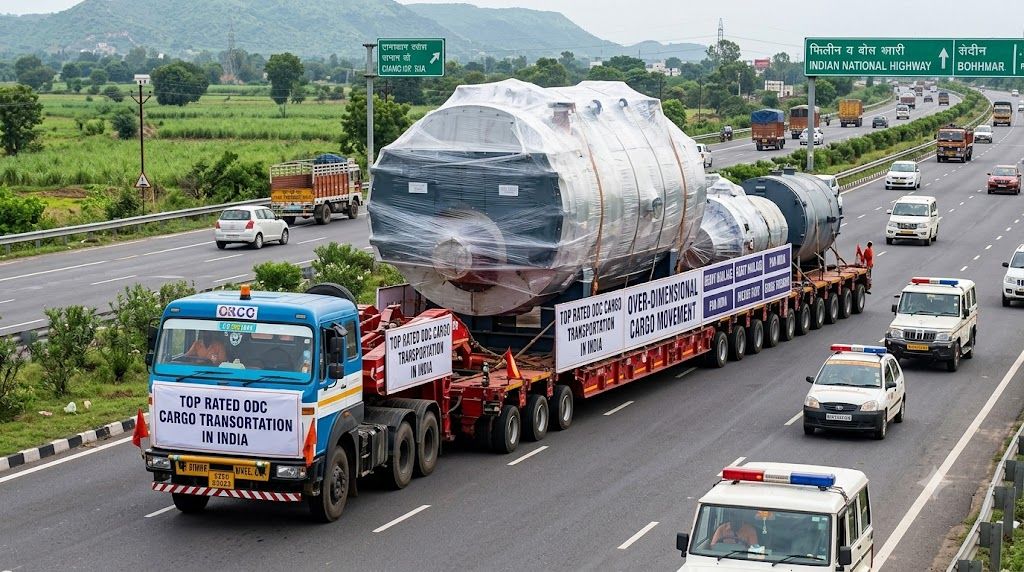
Top Rated ODC Cargo
A single wind turbine doesn't travel as one shipment. It travels as up to ten separate loads, blades, tower sections, the nacelle, gearbox, and electrical components, each requiring its own specialized trailer, its own route plan, and its own set of permits. As wind turbines across the world get taller and their blades stretch well past the 60-metre mark, this has become one of the most demanding categories within ODC cargo transportation in India, and the trend shows no sign of reversing.
In this guide, we'll look specifically at why wind energy has become such a significant driver of oversized cargo movement, the specialized equipment this kind of transport actually requires, and what businesses in this space need to plan for as turbine components keep growing.
Why Wind Energy Has Become India's Biggest ODC Driver
India's renewable energy expansion has made wind turbine components one of the most frequent categories of oversized freight on Indian highways, and the physical dimensions involved explain why this segment demands such specialized handling.
Blades Ship as a Single, Unbreakable Piece
Unlike most oversized cargo that can sometimes be broken into smaller sections, a turbine blade has to move as one continuous piece from factory to site, which means its full length, sometimes exceeding 60 to 70 metres for the largest onshore models, dictates the entire route planning process.
Every Component Has Its Own Weight Profile
A turbine's nacelle, which houses the generator and gearbox, can weigh in the tens of tons on its own, while tower sections add their own substantial weight, meaning a single project typically requires multiple different trailer configurations rather than one standard setup handling everything.
Growing Blade Lengths Are Outpacing Standard Equipment
As turbine designs get larger to capture more energy per installation, blade lengths have grown to the point where they exceed the thresholds where standard oversized-load logistics start to break down, requiring increasingly specialized transport solutions to keep pace.
Sites Are Often Far From Major Highways
Wind farms frequently sit in remote locations away from primary road networks, meaning the final stretch of any turbine component's journey often involves narrower, less developed roads that require even more careful route surveying than the main highway portion.
The Specialized Equipment Behind Turbine Component Transport
Moving these components isn't simply a matter of finding a bigger truck. It requires purpose-built equipment designed specifically for this cargo profile.
Extendable and Blade-Tilting Trailers
Specialized trailers can extend to accommodate a blade's full length while also tilting the load at an angle, sometimes up to 60 degrees, allowing it to clear obstacles like overhead structures or tight turns that a horizontally mounted blade simply couldn't navigate.
Multi-Axle Trailers for Heavy Components
Tower sections and nacelles require multi-axle trailers that distribute weight across enough points to stay within road and bridge load limits, since concentrating that much weight onto too few axles risks damaging the road surface or exceeding structural limits on bridges along the route.
Steer-Axle Configurations for Tight Turns
Certain trailer configurations include steering axles specifically to help negotiate sharp turns and intersections that a fixed, rigid trailer of the same length simply couldn't manage.
Route Planning Specific to Oversized Wind Components
Given the unique dimensions involved, route planning for turbine components goes well beyond standardhttps://www.logibrisk.com/products/smart-fleet-management-systemODC cargo transportation in India planning.
Detailed Engineering Surveys Before Movement
Every planned route requires a detailed survey checking bridge weight capacities, overhead clearances, and turning radius at every intersection, since a single miscalculation on any of these can bring an entire movement to a halt mid-route.
Identifying and Addressing Temporary Obstructions
In some cases, temporary modifications, like trimming overhanging branches or relocating a road sign, need to be arranged in advance with local authorities to allow a blade or component through a specific stretch of road.
Seasonal and Weather Considerations
Route timing needs to account for seasonal factors, since monsoon conditions can affect road stability and visibility in ways that significantly increase risk for a movement that's already operating with minimal margin for error.
Coordinating Across Multiple States
Since a single wind project often sources components manufactured in one state for installation in another, route planning frequently spans multiple state jurisdictions, each with its own permit process and escort requirements.
Why Planning Timelines for Wind Projects Run Long
Given the complexity involved, experienced logistics planners for wind energy projects typically build in significantly more lead time than other ODC categories.
Permits Take Time to Process Across Jurisdictions
Since no single permit covers movement across multiple states, securing approval from each jurisdiction the route passes through takes coordinated, sequential effort rather than a single application.
Specialized Equipment Availability Is Limited
The specific trailers required for blade and tower transport represent a limited pool of equipment, and demand during peak construction seasons can mean booking well in advance to secure the right trailer for a specific project timeline.
Escort and Support Vehicle Coordination
Given the size of these loads, escort vehicles and, in many cases, coordination with local police for traffic management at critical points, need to be arranged well before the actual movement date.
How Technology Supports Complex ODC Movements
Even with the physical challenges inherent to this cargo, the right logistics technology meaningfully reduces operational risk.
Real-Time Tracking for High-Value, Multi-Day Movements
Given how much time and coordination goes into a single turbine component's journey,https://www.logibrisk.com/real-time-shipment-tracking-benefits-transport-companies/real-time shipment tracking provides continuous visibility throughout what can be a multi-day movement across several states.
Digital Compliance Management Across Jurisdictions
Since these movements require permits and documentation across multiple states, tracking all of this through a proper fleet management system reduces the risk of a shipment getting held up due to a missing or expired document at a state border.
Sourcing Qualified Specialized Transport Partners
Since not every transporter has the specialized equipment wind energy components require, auction management software helps businesses identify and compare genuinely qualified transporters for this specific cargo type rather than defaulting to a general freight provider.
Getting Started With Better Wind Energy ODC Logistics
If your business regularly moves turbine components or other heavy renewable energy equipment, bringing that process onto a proper transport management platform helps manage the multi-state permits, specialized vendor sourcing, and long-duration tracking this category demands. You can explorehttps://www.logibrisk.com/Logibrisk's fleet and transportation management tools, built to handle the compliance and visibility needs of complex, high-value shipments like oversized wind energy cargo.
For a deeper technical look at how blade sizes and transport methods have evolved globally,https://ljtsi.com/feeds/blog/wind-turbine-blade-transportthis detailed guide to wind turbine blade transport covers the equipment and logistics challenges in depth.
Frequently Asked Questions
Why does a single wind turbine require so many separate shipments?
A turbine's blades, tower sections, nacelle, gearbox, and electrical components each have different dimensions and weight profiles, requiring different trailer types, which means they typically move as multiple separate loads rather than one combined shipment.
Why can't wind turbine blades be transported in sections?
Blades are manufactured and shipped as a single continuous piece since splitting them isn't structurally practical, meaning their full length dictates route planning regardless of how long the blade actually is.
What kind of trailers are used to transport turbine blades?
Specialized extendable and blade-tilting trailers are commonly used, with some capable of tilting the load up to 60 degrees to help clear overhead obstacles or navigate tight turns.
How far in advance should wind energy ODC shipments be planned?
Given multi-state permit requirements, limited specialized trailer availability, and escort coordination, planning typically needs to begin months in advance rather than following a standard freight timeline.
Does moving wind turbine components require permits from multiple states?
Yes, since no single permit covers oversized cargo movement across state lines, each state a route passes through generally requires its own separate approval process.
Can technology reduce the risk involved in these complex movements?
Yes, real-time tracking, digital compliance management, and structured vendor sourcing all reduce the operational risk involved, even though the physical transport itself still requires specialized expertise and equipment.
Appreciate the creator