Top On-Demand Mobile App Ideas for Dubai Entrepreneurs
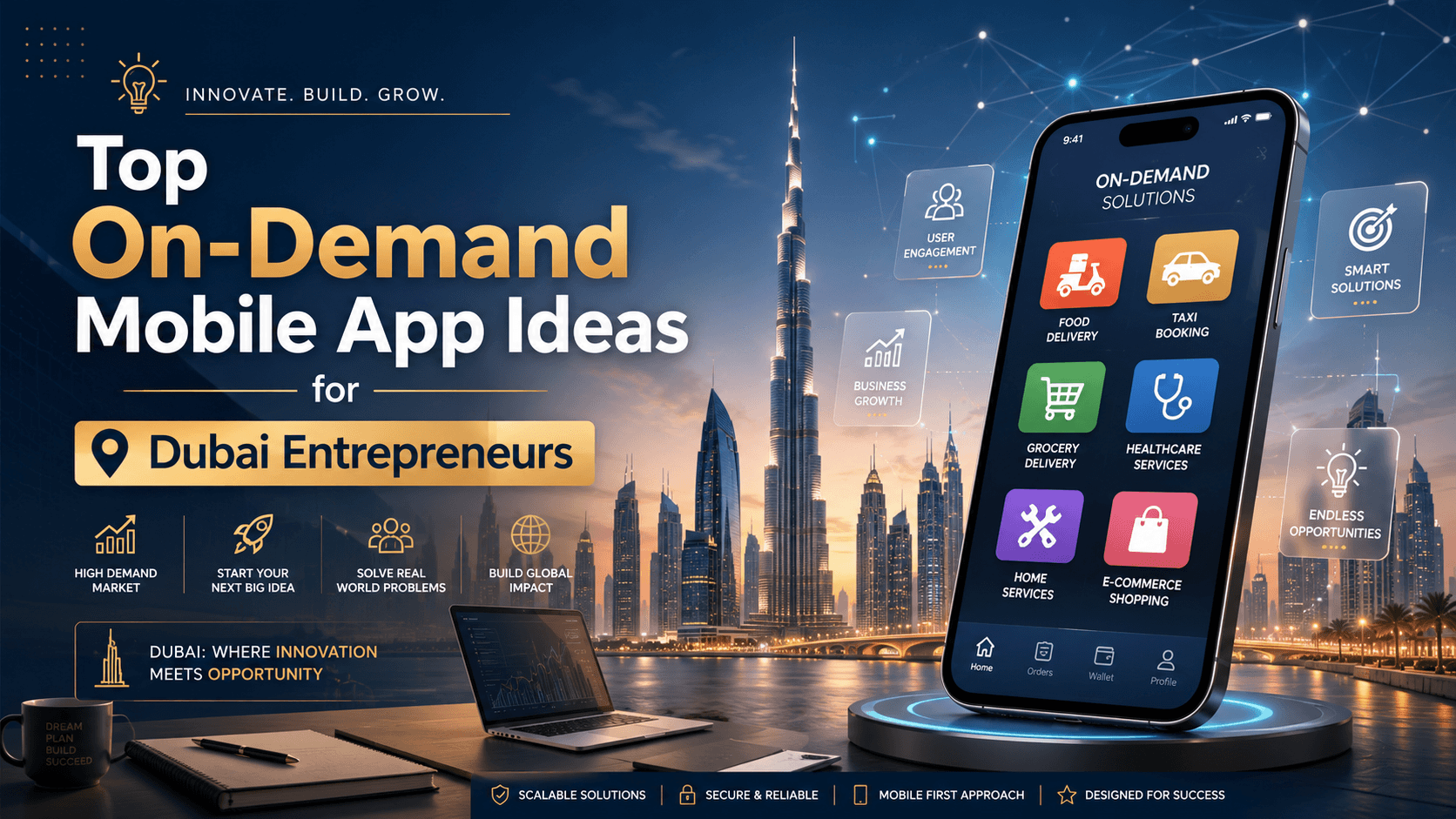
Dubai’s convenience-driven economy creates opportunities for founders who solve everyday problems through reliable digital services. Customers prefer applications that let them book professionals, order products, pay securely, and track services in real time. For entrepreneurs, an on-demand platform can support recurring revenue and direct customer relationships. This guide explores the Top On-Demand Mobile App Ideas for Dubai Entrepreneurs, their key features, revenue models, and important development considerations.
Why On-Demand Mobile Apps Offer Strong Business Opportunities in Dubai
Dubai’s digitally active population, tourism market, startup ecosystem, and demand for convenience support on-demand platforms across many sectors. Successful applications reduce booking friction, offer clear pricing, and connect users with verified providers. Professional Mobile app development in Dubai can turn a validated concept into a secure, scalable platform with suitable integrations and administrative controls.
Top On-Demand Mobile App Ideas for Dubai Entrepreneurs
Entrepreneurs should compare demand, competition, operating costs, provider availability, and market gaps. Starting with one focused category makes validation, marketing, and quality control easier.
1. On-Demand Home Services App
A home services app can connect residents with cleaners, plumbers, electricians, AC technicians, painters, repair specialists, and handymen. Core features include booking, provider profiles, tracking, pricing, scheduling, payments, and ratings. Revenue can come from commissions, provider subscriptions, and featured listings.
2. Food and Restaurant Delivery App
Entrepreneurs can build a niche platform for healthy meals, office lunches, cloud kitchens, or specific cuisines. Features should include menu management, scheduled ordering, live tracking, delivery tools, payments, promotions, and reviews. Revenue can come from restaurant commissions, delivery fees, sponsored listings, and subscriptions.
3. Grocery and Essentials Delivery App
This app can deliver groceries, household products, personal-care items, and essentials from supermarkets or local stores. Useful features include smart search, live inventory, delivery slots, repeat ordering, payments, and tracking. Revenue options include commissions, delivery charges, memberships, and promoted placements.
4. On-Demand Taxi and Transportation App
A transportation app can target airport transfers, corporate travel, local rides, luxury cars, or chauffeurs. Features include GPS tracking, fare estimates, driver verification, scheduling, emergency support, payments, and ratings. Reliable Android app development in Dubai can help reach a broad audience. Revenue may come from ride commissions, booking fees, or corporate plans.
5. Healthcare and Doctor Consultation App
A healthcare app can connect users with doctors, clinics, nurses, pharmacies, laboratories, and home-care providers. Features may include appointments, video consultations, profiles, prescriptions, secure records, payments, and reminders. It must follow applicable healthcare, privacy, and security requirements. Revenue can include consultation commissions and provider subscriptions.
6. Beauty and Wellness Booking App
This app can cover salons, home beauty services, spas, personal trainers, yoga instructors, and grooming professionals. Portfolios, availability calendars, packages, booking, payments, reviews, and loyalty rewards improve usability. Revenue can come from commissions, memberships, and premium provider visibility.
7. On-Demand Courier and Delivery App
A courier platform can serve individuals, offices, retailers, and eCommerce sellers needing same-day or scheduled delivery. Features include pickup scheduling, pricing, route optimization, tracking, driver management, delivery confirmation, and notifications. Revenue options include delivery fees, business accounts, priority charges, and subscriptions.
8. Property Maintenance and Real Estate Services App
Property owners, tenants, landlords, and facility managers can use this app for inspections, repairs, cleaning, moving, pest control, and maintenance. Features include image uploads, service history, bookings, payments, ratings, and automated updates. Revenue can come from commissions, maintenance packages, and property-management subscriptions.
9. On-Demand Car Care and Maintenance App
A car-care app can offer washing, detailing, battery replacement, tire services, inspections, repairs, and roadside assistance. Features include vehicle profiles, location-based booking, technician tracking, reminders, payments, and maintenance records. Revenue can come from commissions, memberships, emergency fees, fleet packages, and partnerships.
10. On-Demand Tutor and Learning App
A learning app can connect students with tutors, language instructors, test-preparation experts, and trainers. It should support profiles, subject filters, video lessons, scheduling, payments, reviews, materials, and progress tracking. Quality iOS App Development in Dubai can provide a polished Apple experience. Revenue options include commissions, packages, subscriptions, and tutor memberships.
Essential Features of a Successful On-Demand Mobile App
A successful platform needs secure registration, simple onboarding, and profile management. GPS tracking improves transparency, while provider tools support verification, pricing, availability, and performance monitoring. Payment integration should manage cards, wallets, refunds, and records securely.
Ratings build trust, and notifications share booking updates, reminders, and confirmations. An admin dashboard should manage users, providers, bookings, complaints, payments, reports, and platform activity.
How On-Demand Apps Can Generate Revenue
Monetization options include transaction commissions, customer subscriptions, provider memberships, convenience charges, featured listings, advertising, premium features, and partnerships. Founders may combine models, but pricing should remain transparent.
The right approach depends on customer expectations, operating costs, provider margins, and competition.
Factors to Consider Before Developing an On-Demand App
Before development, define the audience and problem. Review competitors, costs, provider onboarding, operations, technology, payment security, privacy, scalability, support, and marketing.
A minimum viable product can test the booking journey and revenue model before major investment. Early feedback can reveal operational issues, missing features, and improvement opportunities.
Choosing the Right On-Demand App Idea for Your Business
The most popular idea is not automatically the best. The platform should match the founder’s experience, resources, users, and operational ability.
A focused solution is often easier to operate and position than a broad multi-service app. After proving demand and service quality, the business can expand.
Conclusion
The Top On-Demand Mobile App Ideas for Dubai Entrepreneurs include home services, transportation, healthcare, delivery, tutoring, property maintenance, and vehicle care. A strong concept must solve a clear problem and deliver a smooth experience.
Founders should validate demand, priorities essential features, and build scalable technology. An experienced development team can help define the product scope, technical approach, and launch strategy.
Frequently Asked Questions
Which on-demand app is best for starting a business in Dubai?
The best option depends on demand, competition, operational experience, and the problem being solved. Entrepreneurs should validate a familiar niche with potential users and providers before full development.
How much does it cost to develop an on-demand mobile app?
The cost depends on features, platforms, design complexity, integrations, security requirements, admin dashboards, and development time. A focused MVP generally costs less than a complex multi-service platform with advanced tracking and automation.
How long does it take to build an on-demand app?
The timeline depends on scope. A simple MVP may be completed faster, while an app with multiple user roles, tracking, payments, dashboards, and integrations requires more planning and testing.
Should entrepreneurs build an MVP first?
Yes. An MVP helps validate demand, collect feedback, reduce risk, and improve essential workflows before adding advanced features or expanding into more service categories.
Can one app offer multiple on-demand services?
Yes, a multi-service or super app can support several categories. However, beginning with one focused service usually makes operations, quality control, marketing, and customer acquisition easier. Additional services can be introduced after the first model is validated.
Appreciate the creator