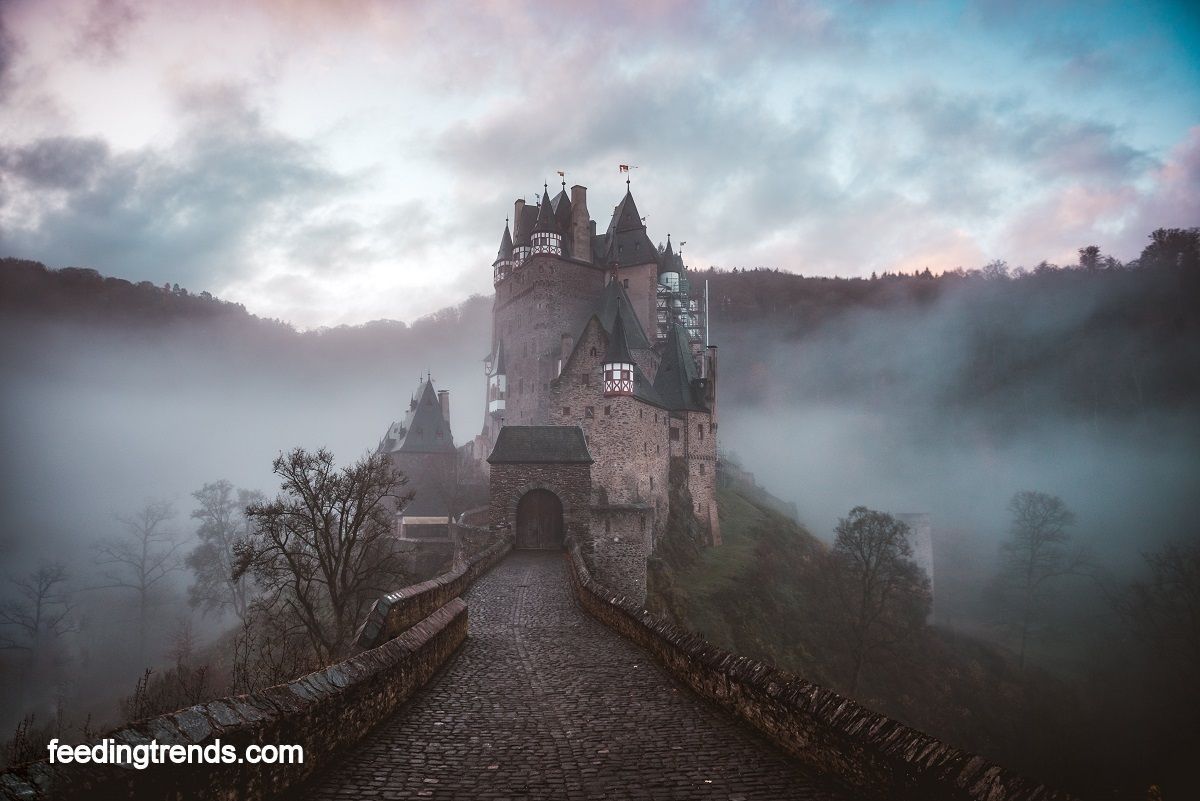
Top 25 Best Medieval Places To Visit In All Of Europe
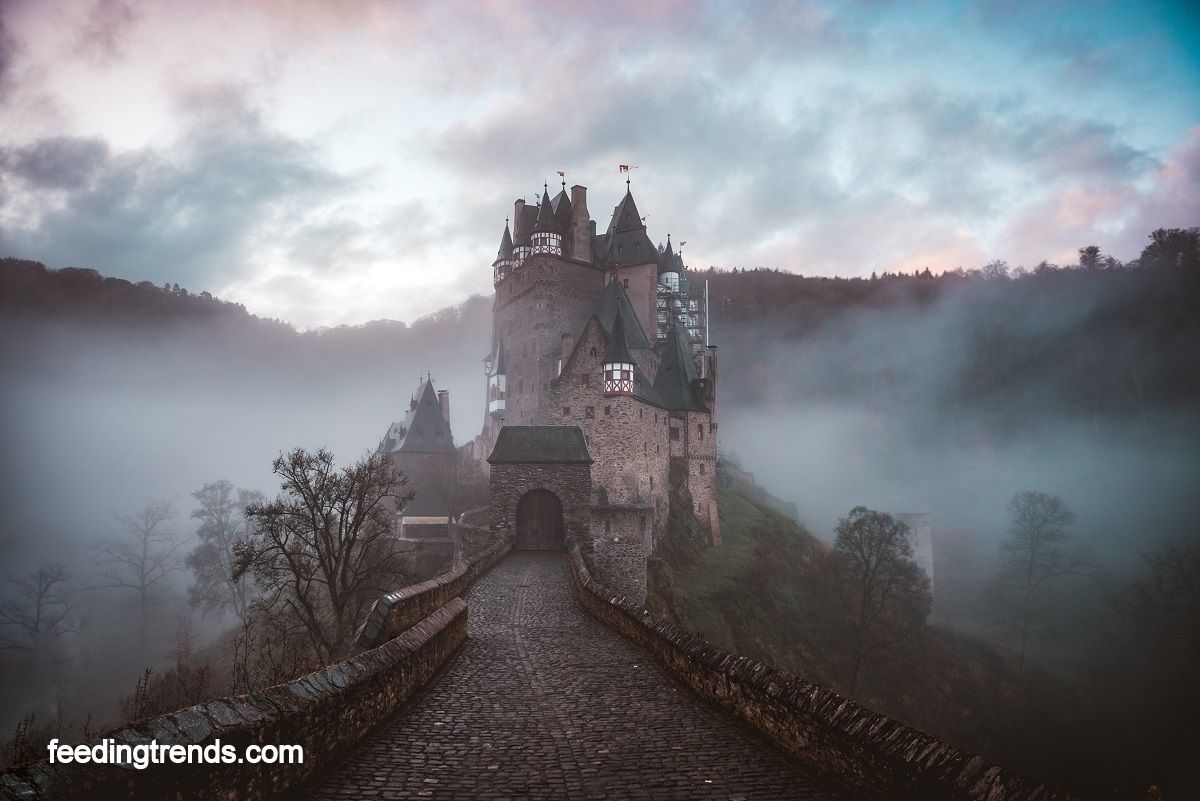
I spent the last few years exploring Europe, and I want to show you my favorite locations from the middle ages. So here are my Medieval places. Top 25. Medieval Europe is one of the most fascinating periods in all of history. Some of the world’s most iconic cities and architecture were born during this time. Europe’s Medieval cities and history remain unmatched by the rest of the world.
1. Dubrovnik, Croatia
Let’s start this article off in the magical, Medieval town of Dubrovnik located in southern Croatia on the Adriatic coast. Dubrovnik is one of the most stunning Medieval cities in all of Europe. The history of Dubrovnik dates back to the 7th century when it was founded by refugees. The city rose to prosperity during Medieval times, thanks to its maritime trade. Now, one of the most notable features of Dubrovnik are the walls that surround the city they’re almost two kilometers in length and anywhere from four to six meters thick. It just makes you wonder what it must have felt like to live here during Medieval times.
2. Prague, Czech Republic
After Croatia, we headed up north to the Czech Republic to visit the capital city of Prague. Prague was the capital of the kingdom of Bohemia and was the main residence of many Roman emperors, such as Charles iv. One of my favorite attractions is the Charles bridge. Its construction began in 1357 and it wasn’t finished until the beginning of the 15th century. The bridge is decorated with an alley of over 30 statues and which is so scenic and such a great feature in Prague. The old town square is also a great place to explore, and the Prague castle is another beautiful sight to see it’s considered to be the largest ancient castle in the world, and it was built more than a thousand years ago. In the ninth century I mean that’s a freaking long time. Prague has such a historic vibe and I hope all can visit.
3. Cesky Krumlov, Czech Republic
While we’re still in the Czech Republic we’re going to visit the magical city of Cesky Krumlov located about a two hours drive from Prague. Cesky Krumlov is a Medieval fantasy. As I was doing research, I was just blown away by the beauty of this place. It looks like something straight out of a fairy tale. The town arose around the year 12 40 when the Cesky Krumlov castle was built and a settlement emerged beneath it in 1302. The town and castle were given to the Rosenberg family who owned them for the next 300 years.
Cesky Krumlov thankfully escaped the bombings of world war 2, which is the main reason the city is so well preserved. Today, it stands as one of the Czech Republic’s most beautiful towns. One of the main attractions of the town is the castle. It’s the second most visited in the country. It’s surrounded by a moat, that’s not full of water, but bears instead, that’s pretty crazy. You can also visit the castle tower to get an incredible view of the town. I mean it’s just such a magical place and I can’t believe it exists
4. San Gimignano, Czech Republic
After the Czech Republic, we’re going to head over to Italy to visit the charming town of San Gimignano now located in Tuscany. San Diego is a stunning Medieval city perched upon a hill. One of the most iconic features of the city is the Medieval watchtowers. Currently, there are 14 watchtowers still standing, but during its prime, there were over 72 towers, with the highest being over 70 meters tall. The towers were built due to competing families who wanted to build the tallest and most grand tower. I can’t imagine how it must have looked back. Then I guess you could say that was the manhattan of the middle ages. I went there a few years ago and I was just baffled by those towers Sanchez Flores, as a city until 1348, when the plague of the black death struck the town which resulted in killing over half the population. San Diego's, Medieval vibe has remained untouched throughout time and has become one of the most popular media locations in all of Italy.
5. San Marino, Italy
While we’re still in Italy we’re going to head over to nearby San Marino. The Republic of San Marino is a microstate completely enclosed by Italy. The history of this small country is fascinating. It was founded by a stonemason from Croatia named saint marines after facing persecution for his Christian sermons. He fled to the mountain of Monte Titano, where he built a church and founded the small country in the year 301. A.D San Marino claims to be the oldest surviving sovereign state and the oldest constitutional republic. The capital of the country is the city of San Marino and it’s situated on the slopes of Monte Titano, it’s hard to beat the location of the city. One of the most iconic spots in San Marino is the fortress of Guaita. It was built in the 11th century and served as a prison San Marino, is just such a beautiful yet interesting city and country, and I hope you all can visit it
6. Meteora, Greece
After San Marino we head over to Greece to visit the Medieval monasteries of Meteora located in central Greece Meteora is home to six monasteries built upon nearly inaccessible rock pillars. During the 14th century, monks were facing attacks from Turkish raiders, so they needed a place where they could worship and safety. They decided to start building the monasteries on the rocks. These places of worship were perfect for their bunks because the only way to reach them was by climbing long ladders. The monasteries became a place of refuge and over 20 monasteries were built during the 14th century. I was lucky enough to go here a few years ago when I got there.
I was just amazed by the architecture of these monasteries. They are perched perfectly on the cliff edge and you wonder how people could have built these in the Medieval times. Monks and nuns. Currently live in the six surviving monasteries, the largest one, is the monastery of the great meteor. If you’re ever in Greece make sure you visit this magical place, while we’re still in Greece we’re going to head to the Medieval island of Rhodes.
Rhodes is an island full of intriguing history. Now one of my favorite places in Rhodes is its old town. During the 14th century, the knights of the hospital occupied roads and converted a former Byzantine fortress into the palace of the grand master, it’s one of the few examples of gothic architecture in all of Greece, which is such an impressive, Medieval building.
7. Conway Castle, Wales
Now, after Greece, we’re going to head to the United Kingdom to visit Conway castle located in northern Wales, Conway Castle is an extraordinary piece of history. It was built by Edward the first at the end of the 13th century. The castle, along with the walls surrounding the city, cost 15 000 pounds to build, which was an enormous amount of money back then, over the next few centuries it proved as a strong fortress that stood many wars and sieges. I just really love the round. Watch towers and just the pure Medieval look that this place has, while we’re still in the UK we’re going to head over to Edinburgh.
Now when I started traveling, this was one of the first cities. I visited it’s a Medieval old town with intricate neoclassical buildings, cobblestone streets, and beautiful gardens. The crowning feature of the city is the Edinburgh castle. The castle is one of the oldest fortified places in all of Europe, and it’s had one heck of a history. In its 1100 years of existence, it’s believed to have faced 26 sieges, making it the most besieged place in Great Britain and one of the most attacked in all the world. Today, Edinburgh castle is Scotland's most visited attraction and it’s a piece of history. You got to witness if you’re ever in Scotland
8. Rothenburg, Germany
After that we’re going to head over to Germany, to visit the town of Rothenburg. Now, when you go to Rothenburg you’ll feel like you’re walking in a fantasy movie, it’s one of the most preserved Medieval old towns in all of Europe during the middle ages, Rothenburg thrived, as was located at the crossroads of European trade routes at the beginning of the 15th Century it rose to become the second-largest city in all of Germany, but during the 17th century, Rothenburg faced adversities such as the 30-year war and the bubonic plague. Without many resources, Rothenburg's growth was halted which aided in keeping the town preserved in its Medieval state. Today, Rothenburg maintains its Medieval charm and it’s been the inspiration for sets of Disney movies such as Pinocchio. If you go, you can check out the famous floating corner or witness the beautiful Christmas markets and it is hard to beat the lore of this german village.
9. Cochem Castle, Germany
Another fairy tale location in Germany is Cochem Castle. The original castle was built back at the beginning of the 12th century and it’s made its money by collecting shipping tools on passing ships. Sadly, it was destroyed in 1689 by the french, but in the 19th century, a wealthy businessman from berlin decided to rebuild the castle. Today it stands perch on a hill, overlooking the beautiful town of Cochem and it’s easy to fall in love with Germany and its Medieval castles.
10. Bruges, Belgium
Afterward, we’re going to Belgium to visit the Medieval city of rouge due to its tidal inlet and canals Bruges is sometimes referred to as the Venice of the north Bruges. Tidal inlet helped to become one of the most prosperous cities during the middle ages, as it quickly became a strategic location for maritime trade routes. Brooch continued to flourish until the year 1500 when the tidal inlet became silted up today, most of Bruges's Medieval structures have remained intact. One of my favorite features in the city is the market square. It’s towered over by the 277-foot-tall Medieval bell tower or belfry. I mean just such an impressive and unique Medieval city
11. Colmar, France
After Belgium, we’re going to head over to France to the fairy tale city of Colmar located in France’s Alsace region. Colmar looks like something straight out of a Disney movie. The city’s old town is lined with timber Medieval buildings. I love the canal that runs throughout the city. It just adds to the magic of the place now just 20 minutes outside of Colmar is the quaint village of Reekvier. It’s believed to be the village that inspired the town from beauty and the beast I mean eastern France is just such a beautiful region.
12. Obidos, Portugal
Afterward, we’re going to head over to Portugal to visit the Medieval town of Obidos located about an hour’s drive from Lisbon in central Portugal. Obidos is a romantic Medieval town protected by an impressive stone wall around the year 713. The Moors established a fortification here and in 1148 the king of Portugal reclaimed the land after the successful storming of the castle of the moors in the 13th century, the king gifted orbits to his queen for the following centuries. The village received special treatment from the queens of Portugal who remodeled and enriched the village throughout the middle ages. Today, Obidos is one of Portugal's most well-preserved Medieval cities, and I hope you all could witness it. One day
13. Avila, Spain
After that we’re going to head over to Spain to visit Avila, I have to say that Avila is one of the most impressive Medieval wild cities in all of Europe. The construction of the walls took place between the 11th and 14th centuries. The walls foreigners are nearly 2.5 kilometers and consist of 88 semi-circular towers. I mean, if I lived here during Medieval times, I would have felt pretty safe now about an hour’s drive from Avila is the Alcazar de Segovia, and this is probably Spain's most dramatic castle has a very distinct shape that resembles the bow of a ship. The castle was built in the 12th century as a fortress but cert as a royal palace, prison, and military academy throughout the years. Today, it’s a museum and one of Spain's most unique castles.
14. Toledo, Spain
Another beautiful, Medieval Spanish city is Toledo located about 70 kilometers south of Madrid. Toledo was a stunning ancient city perfectly placed on a hill, it’s known as the city of three cultures due to its influences from Christians, Muslims, and Jews. The history of toledo is fascinating and complex. It was taken over by the morse for several centuries until it was conquered in the 11th century by the Castilians. Today the city has a population of around 80 000. one of the most impressive is the Alcazar de toledo. It was once used as a Rome palace and then it was eventually restored in the 16th century
15. Granada, Spain
After that, we’re going to head to southern Spain to visit Granada now loaded at the base of the Sierra Nevada mountains. Granada is an elegant Spanish city. The crowning feature of Granada is the Alhambra. It’s a fortified Moorish palace that was completed in 1354. The interior of this palace is stunning. There’s a reflection, pool, and a pillared courtyard. I mean I understand why it’s one of the most renowned Islamic buildings in Europe.
16. Gaztelugatxe, Spain
Another cool Medieval spot in Spain is the island of Gaztelugatxe. Now the first church was built on the island back in the 10th century. If you visit you’ll have to walk up a narrow path of more than 200 stars, I mean it’s just such an epic location hope you all can check out
17. Luxembourg City, Luxembourg
After Spain we’re going to visit Luxembourg city built among deep gorges cut out by its surrounding rivers, a City is home to one of the most impressive Medieval towns. The history of the city is fascinating. In the year 963 a.d count Siegfried needed a place where he could defend his properties, so he acquired the land, which is now the capital, and became the first ruler of Luxembourg. Now, what made this landscape so appealing is that it’s surrounded by sheer cliffs that serve as a natural fortification against invading armies. Luxembourg’s fortifications grew gradually and became one of Europe’s strongest fortresses.
Sadly, in 1867, the treaty of London required Luxembourg's fortress to be torn down, so it could be a place of neutrality. Today, the fortress’s ruins remain, the best place to see them is the Bach promontory, where you’ll find the city’s fame, cliffs underground tunnels, and fascinating history.
18. Orava Castle, Slovakia
After we’re going to head over to the Orava Castle located in Slovakia, Orava castle is perched perfectly on a skinny rock cliff. This may be one of the eeriest castles in all of Europe. It was used in many scenes of the famous 1922 horror film nosferatu, so you get some Dracula vibes there. Now it was built upon a former fortress in the 13th century after the Mongol invasions to defend what was then the kingdom of Hungary. Like many castles, aura via was added on and destroyed by fire, and then it was ultimately restored. I just think it’s so crazy how they’re able to integrate the castle onto the stone peaks of the hill, and it doesn’t even look real. If you want spooky vibes, you got ta check this place out
19. Gdansk, Poland
Afterward, we’re going to head over to Poland to visit the charming city of Gdansk now located in northern Poland on the Baltic coast. The earliest mention of Gdansk was in 997 and during the middle ages, Gdansk grew as an important seaport in a shipbuilding town. It rose to the wealthiest and largest city in Poland until Warsaw’s rapid growth in the 18th century. Sadly, a majority of Gdansk was destroyed during world war ii, but today Gdansk is one of Poland's most beautiful cities. I just can’t believe how stunning the old town is. It’s full of perfectly placed houses next to the river.
Just an hour’s drive from Gdansk in the Malbork castle. It’s the largest castle in the world. It was built in the 13th century by the two atomic knights, who were German catholic crusaders now, as the number of the knights grew, so did the castle, which encloses an area of 52 acres. It’s just crazy to think that people were able to build such buildings. Back then, now like a dance, more than half of Malbork castle was destroyed during world war 2, but thankfully it has been rebuilt to its former glory.
20. Tallinn, Estonia
Afterward, we’re going to head over to the beautiful city of Tallinn, located in Estonia on the coast of the Baltic sea, talent is another stunning Medieval capital. So around the year 10 50, the force fortress was built to kick off town’s old town, as trade grew between Russia and Scandinavia. Tallinn rose as a dominating port city. In 1285. The town became the northernmost member of the Hanseatic League, which was a mercantile and military alliance of German-dominated cities in northern Europe. Now, in 1346, the king of Denmark sold Tallinn to the knights, and over the next few centuries, Medieval town Tallinn thrived. The city grew to a population of 8, 000 and talons. The medieval city was well fortified with city walls and over 66 defense towers. Today, the town’s old town is one of Europe’s most well-preserved Medieval cities. I just love all the buildings and architecture with its orange and cone domed roofs.
21. Riga, Latvia
While we’re still in the Baltics we’re going to visit Latvia's capital of Riga. Now I have to say that I was very surprised by Riga's beauty. It’s full of stunning Medieval architecture. Riga was founded back in 1201 and today it’s the largest city in all the Baltic countries. One of the most famous buildings is the house of the blackheads it’s located in Riga's old town and was built in the 14th century. Saint peter’s church is another dramatic building that towers over Riga, skylines, Riga is just such a special and underrated city, and hope all can visit
22. Rovinj, Croatia
Afterward, we’re going to head back to Croatia to visit the Medieval port city of Rovinj now located on the Istrian peninsula on Croatia's western coast. Rovinj is one of the most beautiful Medieval fishing towns I’ve ever seen. From 1283 to 1797 ravine was governed by the Republic of Venice from 1918 to 1947. It belonged to the kingdom of Italy. Today is part of Croatia and it’s one of the country’s most beautiful cities. When you walk the streets, you’ll feel like you’re. In Italy, due to its Italian influence, one of the most beautiful features of the city is the church of Saint Euphemia. It’s perfectly perched on the hill in the historic part of the city. It was completed in 1680 and stands over 60 meters. The tall ravine is just such a special spot and I hope you all can check it out. One day
23. Transylvania Castle, Romania
After Croatia, we’re going to head over to Romania to see the Medieval castles of Transylvania. Now Transylvania is very intriguing. Yet the spooky region is the birthplace of the infamous ruler Vlad impaler Transylvania is also where ram stoker’s novel count Dracula takes place. One of the most famous locations in Transylvania is the bran castle located near the city of Brasov. Castle was built around the 14th century and served as a fortification against the ottoman empire similar to Orava Ron has been named Dracula's castle thanks to its dramatic architecture. Another impressive, Medieval place in Transylvania is Corvin castle. It’s one of the largest castles in Europe and its construction began in 1446, it has a creepy vibe to it. Needless to say, Transylvania is a fascinating region, full of some of the world’s most uncanny castles.
24. Carcassonne, France
After let’s head over to the Medieval fortress of Carcassonne, now, when I imagine Medieval Europe, I don’t think there’s a better place than exemplifies it better than this fortified city located in southern France. Carcassonne began as a Roman fortified hilltop and was given to the Visigoths in the 5th century, who continued to fortify and build the city throughout the centuries, Carcassonne proved to be an impregnable fortress, as army after army failed to overtake the protected city. Today, the city consists of 53 towers that are protected by its two outer walls. It remains one of Europe’s greatest Medieval gems
25. Mont St. Michel, France
For our last destination, we’re going to visit the island of Mont St. Michel, now located one kilometer off the coast of France. Mont St. Michel is one of the most magical destinations in all of Europe. The island is full of small shops and homes with a monastery perch on the top of the island’s highest point. The construction of the monastery began in the 10th century, known was finished in 1523, due to its strategic position and dangerous changing tides. The island remained protected throughout history. Today, Mont Saint-Michel is one of France’s most popular tourist destinations. If you’re ever in northern France or Paris. You need to visit this magical island.
Well, that is it from my Medieval top 25.
Appreciate the creator