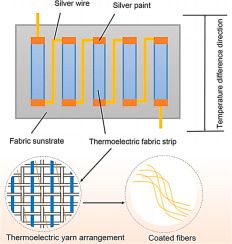
Thermoelectric Fiber and Yarn Systems Market for Wearable Power to Reach USD 4.8 Billion by 2036 at Nearly 14%
The global thermoelectric fiber and yarn systems for wearable powermarket is expected to experience remarkable growth over the next decade asdemand for self-powered wearable electronics and smart textiles continues torise. The market is projected to expand from approximately USD 1.3 billionin 2026 to around USD 4.8 billion by 2036, registering a CAGR of nearly14%, according to the latest analysis by Future Market Insights (FMI).
Market expansion is being fueled by increasing adoption of wearabletechnologies across healthcare, sports, defense, and consumer electronicssectors. Thermoelectric fiber and yarn systems enable wearable devices togenerate electricity from body heat, reducing reliance on conventionalbatteries and enabling continuous device operation.
As wearable technology becomes more integrated into everyday life,manufacturers are increasingly focusing on flexible, lightweight, andenergy-efficient power solutions. Thermoelectric textile technologies areemerging as a promising innovation that allows garments to convert temperaturedifferences between the human body and the surrounding environment into usableelectrical energy.
Thermoelectric Fiber and Yarn Systems for WearablePower Market Snapshot (2026–2036)
• Market size outlook toward 2036: ~USD 4.8 billion
• Market value in 2026: ~USD 1.3 billion
• Forecast CAGR: ~14%
• Dominant application: Healthcare wearables
• Fastest-growing segment: Smart textile integration
• Key growth regions: North America, Europe, Asia-Pacific
• Primary demand channel: Wearable device and smart garmentmanufacturers
Momentum in the Market
The thermoelectric fiber and yarn systems market is gaining momentum aswearable technology evolves toward autonomous, energy-harvesting systems.
From 2026 to 2030, the market will be driven primarily byincreased adoption of wearable health monitoring devices and smart clothingcapable of powering sensors through body heat. Healthcare institutions andfitness technology companies are increasingly integrating thermoelectrictextiles into wearable monitoring systems.
Between 2030 and 2036, advancements in nanomaterials, flexibleelectronics, and textile engineering are expected to further accelerate marketexpansion. Researchers and manufacturers are focusing on improvingthermoelectric efficiency while maintaining flexibility and comfort in wearablefabrics.
As smart clothing becomes more widely adopted across consumerelectronics, defense, and sports applications, thermoelectric yarn systems areexpected to play a crucial role in enabling battery-free wearable devices.
The Reasons Behind the Market’s Growth
Demand for thermoelectric fiber and yarn systems is rising due tomultiple technological and market factors reshaping the wearable technologyecosystem.
Growing Adoption of Wearable Electronics
Wearable devices such as smartwatches, health trackers, and biometricmonitoring systems are becoming increasingly common. Thermoelectric textilesprovide an innovative energy source that can power these devices continuously.
Increasing Demand for Smart Textiles
The development of smart fabrics capable of sensing, monitoring, andresponding to environmental or physiological changes is driving demand forthermoelectric fiber technologies.
Rising Healthcare Monitoring Applications
Wearable healthcare devices that monitor heart rate, body temperature,and other vital signs require reliable power sources. Thermoelectric yarnsystems enable energy harvesting directly from body heat, improving devicereliability.
Advancements in Material Science
Innovations in nanomaterials, conductive polymers, and thermoelectricmaterials are significantly improving the efficiency and durability ofthermoelectric fibers and yarns used in wearable systems.
Top Segment Application Type
Healthcare Wearables Lead Market Demand
Healthcare applications represent a major share of the thermoelectricfiber and yarn systems market due to the growing adoption of wearable medicalmonitoring devices.
Smart garments capable of generating power while monitoring patienthealth are gaining traction in hospitals, remote patient monitoring programs,and elderly care solutions.
Technology Segment Analysis
• Thermoelectric fibers: Enable efficient energy harvesting frombody heat
• Thermoelectric yarns: Offer flexibility and seamless integration intotextiles
• Hybrid textile systems: Combine multiple energy harvestingtechnologies
• Smart fabric integration: Enhances wearable functionality and energyefficiency
These technologies collectively enable the development of self-poweredwearable devices capable of operating without conventional battery replacement.
Regional Development: North America andAsia-Pacific Lead Innovation
North America currently represents a significant share of thethermoelectric wearable power market due to strong research initiatives andadvanced wearable technology development.
Key regional developments include:
• United States: Leading research in smart textiles and wearableelectronics
• Europe: Strong innovation in textile engineering and wearablehealthcare technology
• China and Japan: Rapid advancements in flexible electronics and smartfabrics
• South Korea: Increasing investment in wearable technology and smart garmentmanufacturing
Asia-Pacific is expected to experience the fastest growth due toexpanding electronics manufacturing capabilities and increasing consumer demandfor wearable devices.
Challenges, Trends, Opportunities, and Drivers
Drivers
• Rapid growth in wearable electronics adoption
• Increasing demand for battery-free wearable power solutions
• Expanding applications of smart textiles in healthcare and sports
• Continuous advancements in thermoelectric materials and nanotechnology
Opportunities
• Development of fully self-powered wearable ecosystems
• Integration with IoT-enabled wearable sensors
• Expansion in military and defense wearable systems
• Growth in remote health monitoring technologies
Trends
• Increasing research into flexible thermoelectric materials
• Integration of energy harvesting technologies into smart clothing
• Development of ultra-lightweight wearable power systems
• Growing collaboration between textile and electronics manufacturers
Challenges
• High production costs of advanced thermoelectric materials
• Efficiency limitations of current thermoelectric fibers
• Integration challenges in mass-produced textiles
• Need for improved durability and washability of smart fabrics
Country Growth Outlook
The market’s expansion is closely linked to wearable technology adoptionand research investments across key countries:
United States: Strong wearable technology innovation and healthcare applications
Germany: Advanced textile engineering and smart fabric research
China: Rapid expansion of electronics and wearable manufacturing
Japan: Development of high-efficiency thermoelectric materials
South Korea: Growth in smart clothing and consumer wearable devices
The Competitive Environment
The thermoelectric fiber and yarn systems market is evolving rapidly,with companies focusing on research, innovation, and strategic partnerships todevelop next-generation wearable power solutions.
Leading companies and research innovators in the market include:
• TE Connectivity
• DuPont
• Gentherm Inc.
• 3M Company
• Toray Industries, Inc.
These organizations are investing heavily in advanced thermoelectricmaterials, flexible electronics, and smart textile technologies to acceleratecommercialization and improve wearable energy harvesting performance.
Future Outlook: Toward Self-Powered Smart Wearables
The thermoelectric fiber and yarn systems market is entering atransformative phase driven by advancements in smart textiles, wearableelectronics, and sustainable energy solutions. Future wearable devices areexpected to integrate thermoelectric power generation directly into clothing,enabling continuous device operation without traditional batteries.
As wearable technology continues to expand across healthcare, sports,defense, and consumer electronics, thermoelectric textiles will play a crucialrole in creating energy-autonomous wearable ecosystems.
For a comprehensive strategic outlook and detailed analysis oftechnological developments shaping the industry, readers can explore the fullreport on the official Future Market Insights website:
For anin-depth analysis of evolving formulation trends and to access the completestrategic outlook for the Thermoelectric Fiber and Yarn Systems for WearablePower Market through 2036, visit theofficial report page at: https://www.futuremarketinsights.com/reports/thermoelectric-fiber-and-yarn-systems-for-wearable-power-market
Appreciate the creator