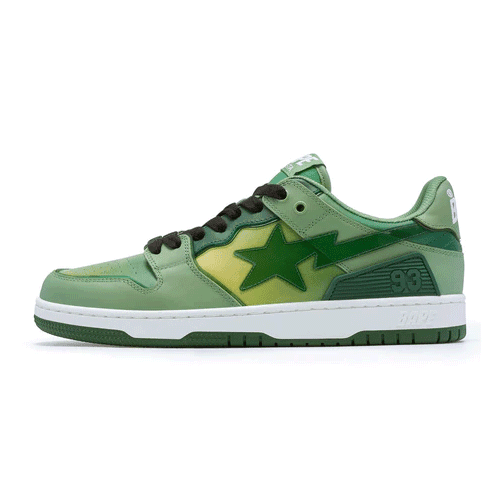
The Iconic Bapesta Sneaker: A Streetwear Legend Reimagined
If you're even remotely connected to the world of sneakers or streetwear, you've probably heard of Bapesta. A brainchild of Japanese fashion label A Bathing Ape (BAPE), the Bapesta has cemented its place in sneaker history with its bold designs, hip-hop affiliations, and unapologetic flair. But how did this sneaker go from a niche product in Tokyo to a global icon in fashion?
Let’s dive into the story, evolution, and influence of Bapesta — the sneaker that blurred the line between fashion rebellion and cultural homage.
What is Bapesta?
Bapesta is a sneaker released by Japanese streetwear brand A Bathing Ape, founded by Nigo in 1993. Launched in the early 2000s, the Bapesta quickly became known for its flashy colors, patent leather uppers, and the signature star logo in place of Nike’s iconic Swoosh. Many sneaker enthusiasts consider the Bapesta a reinterpretation of the Nike Air Force 1, both in silhouette and influence.
But Bapesta is more than just a shoe — it’s a cultural statement. It represents the intersection of Japanese streetwear and American hip-hop culture at a time when globalization was transforming fashion trends across borders.
The Origin Story: Nigo's Vision
Nigo, the mastermind behind BAPE, was heavily influenced by Western pop culture, especially music and fashion. He was fascinated by the sneaker culture emerging from the U.S., particularly in cities like New York and Los Angeles. Recognizing the cultural power of sneakers like the Air Force 1, Nigo set out to create something similar, but uniquely BAPE.
Enter the Bapesta. With its shiny, colorful uppers and instantly recognizable star logo, it wasn’t just a copy — it was a remix. A remix that paid homage to the original while creating its own identity rooted in Japanese street culture and BAPE’s design language.
Cultural Impact: From Tokyo to New York
The rise of the Bapesta paralleled the growing influence of streetwear in music and media. In the early 2000s, collaborations with hip-hop artists helped catapult the sneaker into the mainstream.
One of the most pivotal moments in Bapesta’s journey came when Pharrell Williams, Kanye West, and Lil Wayne were spotted wearing them. Pharrell even collaborated with Nigo to form Billionaire Boys Club (BBC) and Ice Cream, which carried the same colorful aesthetic that made Bapesta famous.
Suddenly, Bapesta wasn’t just a sneaker from Japan — it was the sneaker for a new generation of fashion-conscious hip-hop fans. It crossed continents, becoming a symbol of status, self-expression, and creativity.
Design Philosophy: Loud, Proud, and Distinct
What sets the Bapesta apart is its daring approach to design. At a time when most sneakers stuck to safe color palettes, Bapesta went all-in on high-gloss patent leather, neon hues, and camouflage patterns. The shoe became a canvas for experimentation, often featuring wild color-blocking, cartoon graphics, and even limited-edition themes tied to anime or video games.
The signature lightning bolt/star logo, often referred to as the "STA," is an unmistakable design cue. Positioned where Nike’s Swoosh would be, it serves as a playful yet bold statement of originality.
Despite the obvious Air Force 1 influence, Bapesta carved its niche by being unapologetically different.
Limited Drops and Hype Culture
Scarcity has always played a huge role in the allure of the Bapesta. Limited releases, regional exclusives, and surprise collaborations created a sense of urgency and exclusivity that drove resale prices through the roof. For collectors and fashion insiders, getting their hands on a pair was a badge of honor.
BAPE also mastered the art of the collaboration drop, working with pop culture brands, anime franchises, and luxury designers to create hype-fueled capsules. From Marvel Comics to Hello Kitty, the Bapesta became a medium for cross-cultural storytelling.
These releases weren’t just about the shoes — they were about community, hype, and the hunt.
Bapesta vs Air Force 1: Homage or Imitation?
One of the most frequent discussions around the Bapesta is its resemblance to the Nike Air Force 1. On the surface, the two sneakers share nearly identical silhouettes. The shape, outsole, and paneling echo Nike’s beloved classic. Yet, Nigo's design took liberties with materials, colors, and branding that made the Bapesta stand on its own.
While some critics saw it as a knockoff, many viewed it as a bold reinterpretation. In the world of fashion, where inspiration often walks a fine line with imitation, Bapesta leaned into its influences and created something refreshingly distinct.
It’s worth noting that in recent years, BAPE has adjusted the Bapesta’s shape to further differentiate it from the AF1, while still maintaining the retro aesthetic fans love.
The Modern Bapesta: A Resurgence
In recent years, Bapesta has seen a strong resurgence. With retro styles making a comeback and Gen Z diving deep into 2000s nostalgia, the Bapesta is once again in the spotlight.
New collaborations, upgraded materials, and wider global distribution have helped the brand regain momentum. BAPE has even expanded the line to include low-tops, high-tops, and platform silhouettes, catering to evolving fashion preferences.
Additionally, celebrities like ASAP Rocky, Travis Scott, and J. Cole have brought Bapestas back into the limelight, pairing them with oversized fits and modern streetwear staples.
Styling the Bapesta: How to Rock It
The Bapesta is inherently loud, so the key to styling it lies in balance. Let the shoe be the statement piece. Pair it with neutral streetwear — think black cargos, oversized hoodies, or minimalist outerwear — and let the colors pop.
For those bold enough to go full streetwear mode, match your Bapestas with other BAPE pieces or mix and match with brands like Supreme, Stüssy, or Off-White for a layered, curated look.
Regardless of your style, wearing Bapestas is less about fitting in and more about standing out.
Where to Buy Bapesta Today
While once limited to Japan or niche resellers, Bapesta is now more accessible. BAPE’s official website and flagship stores regularly restock popular styles, though collaborations and rare colorways still sell out quickly.
Resale platforms like StockX, GOAT, and Grailed remain essential for finding vintage or limited-edition pairs. For those new to the sneaker game, it’s worth researching legit check guides to avoid counterfeits, which are unfortunately common due to the shoe’s popularity.
Final Thoughts: Why Bapesta Still Matters
Bapesta isn’t just another sneaker. It’s a cultural artifact that tells the story of fashion's global evolution — from Tokyo streetwear to American hip-hop, and back again. Its boldness, history, and cultural relevance make it a staple in any serious sneakerhead’s collection.
Appreciate the creator