The Essential Role of the Needle Holder in Modern Surgery
In the world of surgery, precision and control are everything. Among the many tools that help surgeons perform their duties with accuracy, the needle holder stands as one of the most vital. This instrument is specifically designed to hold and guide the needle while suturing tissues during an operation. Its function might appear simple, but it plays a crucial part in every surgical procedure, from minor wound closures to complex operations involving delicate organs.
Understanding the Needle Holder
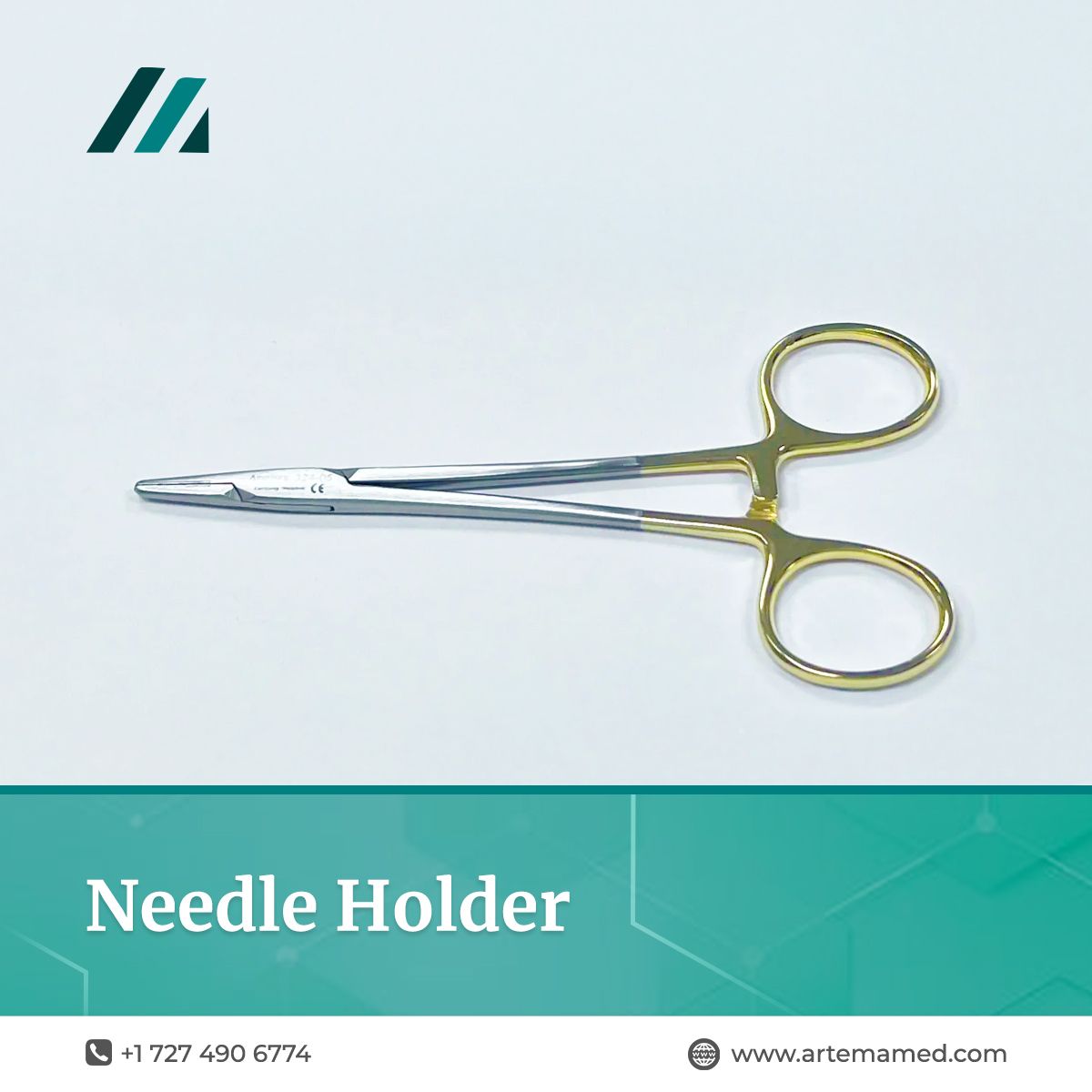
A needle holder, sometimes known as a needle driver, is a type of surgical instrument used to grasp and manipulate the needle during suturing. Its design allows surgeons to apply steady pressure and maintain control without causing damage to the needle or tissue. The typical needle holder features a handle, a locking mechanism, and jaws at the tip that securely grip the needle. The locking system, often called a ratchet, ensures that the needle remains firm in place while the surgeon performs precise movements.
The material used to make needle holders is usually stainless steel, which provides durability, corrosion resistance, and easy sterilization. Some versions are designed with tungsten carbide inserts in the jaws for added grip and longer lifespan. Regardless of design or size, the main purpose remains the same—to give the surgeon steady control during suturing.
Importance of the Needle Holder in Surgery
The needle holder plays a key role in ensuring that suturing is both accurate and safe. During surgery, the surgeon needs to pass the needle through tissues multiple times, and doing so by hand is not practical or safe. The instrument provides a firm grip, prevents needle slippage, and reduces the risk of needle-stick injuries. Furthermore, it allows the surgeon to make consistent and clean stitches, which are essential for proper wound healing.
In procedures that require deep or narrow access, such as abdominal or gynecological surgeries, the needle holder becomes even more important. The surgeon can adjust the angle of the instrument to reach difficult areas without causing unnecessary trauma to the surrounding tissues.
The Mayo Hegar Needle Holder
Among the various types of needle holders, the Mayo Hegar needle holder is one of the most commonly used in general surgery. Known for its strength and versatility, it is suitable for holding medium to large needles used in heavy tissue suturing. The Mayo Hegar needle holder has a robust design with a ratchet locking mechanism that provides secure control. It is often used in procedures involving fascia, muscles, and other dense tissues.
This instrument is widely preferred because of its durability and the comfort it offers during long operations. The handles are ergonomically designed, allowing the surgeon to maintain a firm grip without fatigue. Whether in general surgery, veterinary procedures, or orthopedic operations, the Mayo Hegar needle holder proves to be a reliable tool that ensures precision and consistency.
The Heaney Needle Holder
Another specialized form of needle holder is the Heaney needle holder, which is particularly common in gynecological and obstetric surgeries. Its design is slightly curved, giving surgeons better access and visibility in confined spaces such as the pelvic region. The curved shape allows for improved control when suturing around complex anatomical structures.
The Heaney needle holder is especially valuable in procedures like hysterectomies or other uterine surgeries, where precise placement of sutures is critical. Its fine jaws and smooth locking mechanism help in handling delicate tissues without excessive pressure. This balance of strength and sensitivity makes it a favorite among surgeons working in specialized fields.
Design Features That Enhance Performance
Both the Mayo Hegar needle holder and the Heaney needle holder have been refined over the years to improve surgical outcomes. The addition of tungsten carbide inserts provides extra grip and reduces wear, extending the life of the instrument. The ratchet lock ensures a firm hold on the needle, preventing slippage during suturing.
The weight and balance of the instrument are also key to its performance. A well-balanced needle holder allows surgeons to work efficiently, reducing hand fatigue and improving the accuracy of each stitch. Some modern versions come with ergonomic handles designed to minimize strain during lengthy operations.
The Role of Technique and Training
Even with a well-designed instrument, the effectiveness of a needle holder depends greatly on the surgeon’s skill and technique. Proper handling ensures that the needle enters the tissue at the correct angle, reducing trauma and promoting faster healing. Training on how to hold and manipulate the needle holder is a core part of surgical education. Students learn how to maintain the right tension and how to handle different needle types with the same tool.
The Mayo Hegar needle holder is often the first type introduced in surgical training due to its wide range of applications. Once proficiency is achieved, surgeons move on to more specialized instruments like the Heaney needle holder for complex procedures. This progression helps in developing precision and control, which are essential qualities for every surgeon.
Maintenance and Care of Needle Holders
Like all surgical instruments, needle holders require proper maintenance to ensure their reliability and longevity. After each use, they must be thoroughly cleaned, disinfected, and sterilized. Any residue or corrosion can compromise their performance. The ratchet and hinge areas should be regularly inspected for signs of wear or stiffness.
Instruments with tungsten carbide inserts must be handled with care to prevent chipping or cracking. Proper storage in a dry environment also prevents rusting. Regular inspection by surgical staff ensures that the Mayo Hegar needle holder, the Heaney needle holder, and other instruments remain in excellent working condition for every procedure.
The Future of Needle Holders
Advancements in surgical technology continue to influence the design of instruments like the needle holder. Modern versions now feature lightweight materials, improved grip textures, and enhanced ergonomic shapes. Some even incorporate magnetic or self-locking systems for faster handling.
In robotic and minimally invasive surgeries, specialized needle holders are being designed to work with robotic arms, allowing even greater precision than traditional hand-held tools. However, the basic principle remains the same—providing surgeons with complete control over the needle during suturing.
Conclusion
The needle holder may appear as a simple tool, but its role in surgery is irreplaceable. From closing incisions to performing complex suturing deep within the body, it ensures that every stitch is placed with precision and care. The Mayo Hegar needle holder continues to serve as a dependable choice for general surgical use, while the Heaney needle holder provides specialized control in gynecological procedures. Together, they represent the blend of functionality, strength, and finesse that defines modern surgical practice.
As technology evolves, the design of these instruments will continue to improve, but their importance will never diminish. The needle holder will always remain a symbol of surgical precision—a small but powerful tool that shapes the success of every operation.
More info: Artema Medical
Appreciate the creator