The Danger of Passing a Dead Car to a New Driver
Many parents look at the non-operational car sitting beside their house and see a perfect future opportunity. They plan to keep the broken vehicle around until their teenager gets a driving licence, assuming that fixing it up will provide cheap, reliable transport for a new driver. This well-intentioned idea is based on a fundamental misunderstanding of how deeply mechanical systems degrade when left motionless for years. Reviving a machine that has suffered through multiple seasons of neglect does not produce a safe, dependable family car. It produces a highly unpredictable liability that lacks the modern structural protections your teenager desperately needs on today's busy roads.
The most severe, unseen damage occurs within the braking system. Brake fluid is inherently hygroscopic, meaning it actively absorbs moisture from the surrounding air over time. When a car sits unused for an extended period, the fluid pulls in dampness, which settles in the master cylinder and travels down the steel brake lines. This moisture rusts the lines from the inside out, completely hidden from a visual inspection. A parent might replace the brake pads and think the car is safe, completely unaware that the rusted internal lines are dangerously weak. During an emergency stop, the sudden hydraulic pressure can burst these weakened lines, resulting in total brake failure exactly when a young, inexperienced driver needs them most.
Rubber degradation is another massive safety threat that cannot be fixed without a heavy financial investment. Tyres that have sat in one position for years develop flat spots and deep, structural dry rot across the sidewalls, making them prone to sudden blowouts at highway speeds. More importantly, the rubber bushings that connect the suspension components become incredibly brittle and shatter under pressure. When a young driver attempts to swerve around a sudden obstacle, the shattered suspension bushings cause the car to handle unpredictably, dramatically increasing the risk of a loss of control or a rollover accident.
Beyond the mechanical decay caused by sitting idle, there is a stark reality regarding generational safety standards. Automotive safety technology advances incredibly fast. A car from fifteen years ago completely lacks the structural crash protections that are standard today. Older vehicles do not possess the same high-strength steel safety cages, advanced crumple zones, electronic stability control, or multiple side-curtain airbags found in modern designs. Putting a newly licenced teenager into an outdated, mechanically compromised machine is a terrible mathematical risk. New drivers have the highest statistical probability of being involved in an accident, meaning they require the absolute highest level of passive safety technology to protect them.
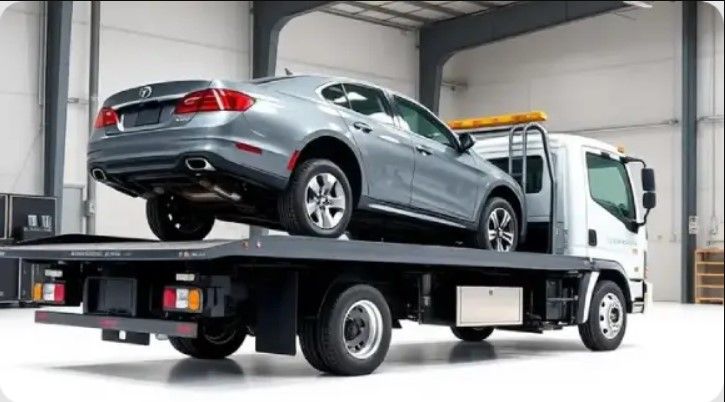
Rebuilding a stationary vehicle is also a terrible financial equation for the household budget. By the time you pay a mechanic to replace the rusted brake lines, the dry-rotted tyres, the seized callipers, and the dead battery, you have easily spent thousands of dollars. You are pouring money into a depreciating asset that will never be as safe as a newer model. Choosing to rely on a professional Junk Car Removal Brampton service is the most logical alternative. The recycling facility pays you directly for the heavy steel and remaining catalytic materials, providing a lump sum of cash that you can apply immediately toward purchasing a much safer, road-ready used car.
Trading a dangerous mechanical project for a reliable modern vehicle gives parents total peace of mind. You know that when your teenager pulls out of the driveway, they are protected by active stability controls, functioning anti-lock brakes, and a structurally sound chassis. Do not gamble with family safety just to save a rusting piece of metal from the scrapyard. Letting the old car go is the responsible choice for your child's future on the road.
Conclusion
Reviving a stationary vehicle for a new driver exposes them to catastrophic mechanical failures, including rusted brake lines and dry-rotted suspension components. Selling the heavy metal provides direct cash that can be used to purchase a structurally sound, modern vehicle equipped with appropriate safety technology.
Call to Action
Prioritise your family’s safety on the road by trading that dangerous, non-running car for an immediate cash payment today.
Appreciate the creator