The Cost of Ignoring Medico-Legal Advice in Medical Practice
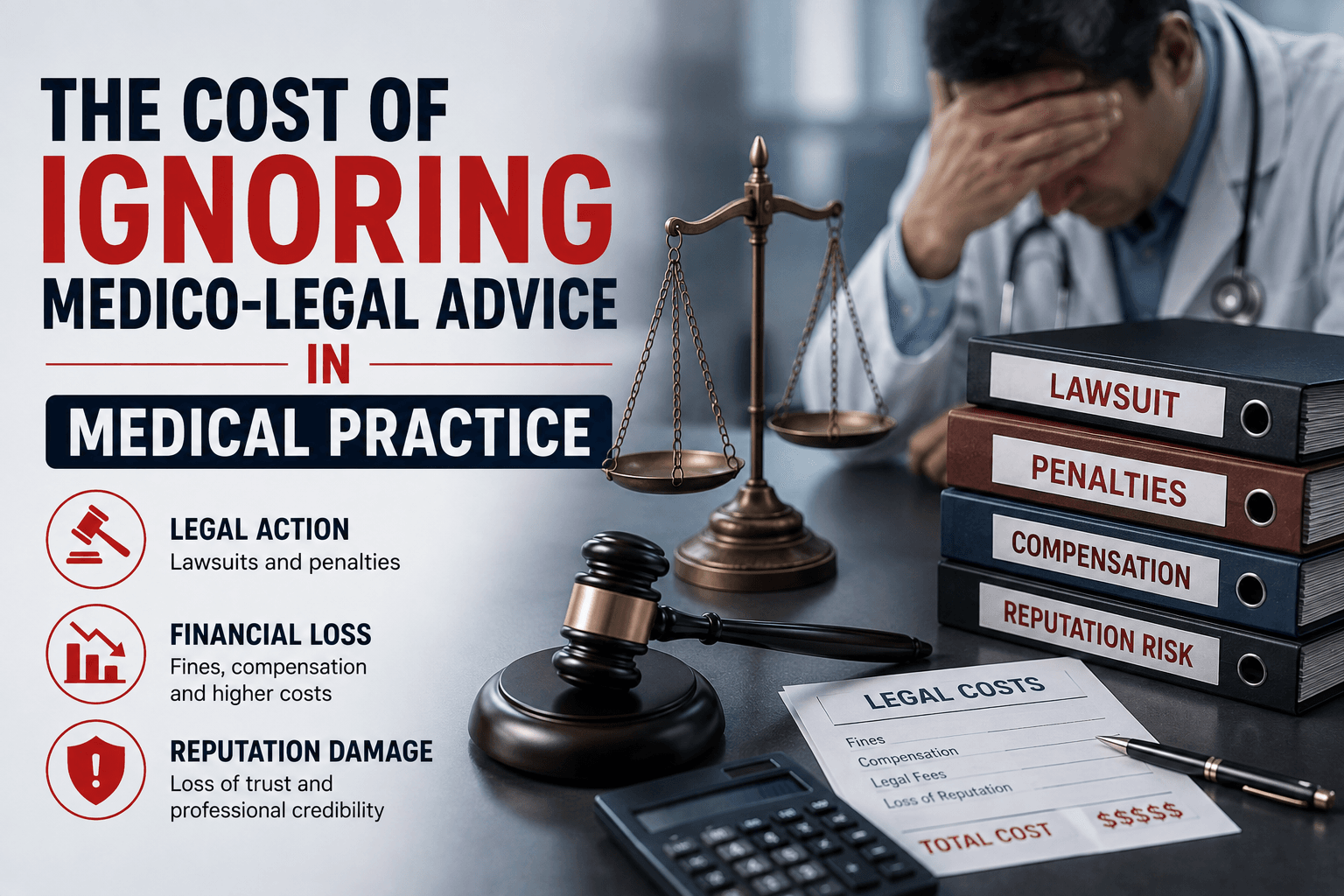
Most doctors don't think about medico-legal advice until something has already gone wrong — a complaint has been filed, a patient's family is asking pointed questions, or a legal notice has landed on the clinic's desk. By that point, the options are narrower and the stress is much higher. Working with a top medicolegal advisor Delhi (https://drvimalkantgoyal.com/best-medicolegal-consultant-in-delhi.php) doctors trust early on, rather than only after trouble starts, usually changes how smoothly these situations get resolved.
This article looks at what actually happens when medico-legal advice gets skipped, what it tends to cost in real terms, and when it makes sense to bring in outside expertise before a problem grows bigger than it needs to be.
Why Doctors Often Delay Getting Medico-Legal Advice
Question: Why do doctors avoid consulting a medico-legal expert until there's a complaint?
Most doctors avoid consulting a medico-legal expert early because clinical practice keeps them busy, and legal or compliance matters feel like something to deal with only if a problem actually arises. This reactive approach often means advice is sought only after a dispute has already escalated, when fewer options remain.
This isn't a sign of carelessness. It's a natural result of a packed OPD schedule, back-to-back surgeries, and the assumption that good clinical care is enough protection on its own. In many cases it is — but not always, and not in every situation a busy clinic faces.
The Assumption That Clinical Skill Is Enough
Good medical care and good documentation don't always go hand in hand. A doctor can make the right clinical decision and still struggle to explain it later if the reasoning wasn't recorded clearly, or if the patient's consent for a procedure was never properly documented. A medico legal expert in Delhi typically sees this pattern repeat across specialties — strong clinical judgment undermined by weak paperwork.
What Gets Missed Without Medico-Legal Guidance
Skipping medico-legal input doesn't usually cause an immediate problem. The cost shows up later, when something needs to be explained or defended.
Common Gaps That Go Unnoticed
Clinics without regular medico-legal review often carry small, avoidable weaknesses: consent forms that are signed but never explained in detail, discharge summaries completed too quickly to capture everything the patient needs to know, unclear internal policies for handling complaints, and no consistent process for escalating a dissatisfied patient before things get formal. None of these problems are visible day to day. They become visible only when a complaint arrives and there's nothing solid to point to.
The Real Cost Isn't Just Financial
Legal disputes cost money, but the bigger cost is often time, focus, and peace of mind. Responding to a formal complaint means gathering old records, recalling conversations from months earlier, and stepping away from clinical work to deal with correspondence and meetings. A doctor who has never needed to defend a decision before often finds this process more disruptive than expected, even when the underlying care was sound.
Situations Where Ignoring Advice Becomes Expensive
Question: When does skipping medico-legal advice cause the most damage?
Skipping medico-legal advice tends to cause the most damage in situations involving unclear consent, poorly documented complications, disputes over fees or outcomes, and cases where a patient refused treatment without that refusal being recorded properly. These are the moments where a small documentation gap can turn into a much larger dispute.
A few patterns show up repeatedly across clinics and hospitals:
A complication after a procedure, with no clear record of what was explained to the patient beforehand
A patient refusing part of a treatment plan, with no note capturing that refusal or the risks discussed
A referral to another specialist made verbally, without any written reasoning in the file
A billing disagreement that escalates because there was no clear, documented explanation of costs upfront
A discharge that happened quickly, without follow-up instructions being written down anywhere
In each of these, the underlying medical decision might have been entirely reasonable. The dispute grows because there's little on record to support it.
What a Legal Compliance Guide for Doctors Actually Covers
A solid legal compliance guide for doctors in Delhi isn't about memorizing regulations. It's about building habits that make everyday practice easier to explain if questions ever come up.
Practical Areas Worth Reviewing Regularly
Doctors and clinic administrators benefit from periodically reviewing a few specific areas: how consent conversations are documented, how complications and adverse events are recorded, how patient complaints are handled internally before they escalate, and how long records are retained and how securely they're stored. Reviewing these areas doesn't need to happen constantly — even a yearly check can catch problems before they turn into disputes.
Building a Habit, Not Just Reacting to Trouble
Clinics that treat medico-legal review as a routine part of running the practice, rather than a one-time fix after a scare, tend to handle complaints with far less disruption. Dr. Vimal Kant Goyal, who has advised several Delhi hospitals and clinics on medico-legal compliance, often points out that the doctors who reach out early — before a dispute, not during one — usually resolve concerns faster and with far less stress than those who wait.
When to Bring in a Medico-Legal Advisor
There's no need to consult an expert for every routine decision. But certain moments genuinely call for outside input rather than guesswork.
It's worth reaching out to a medico legal expert in Delhi (https://drvimalkantgoyal.com/) when setting up a new clinic's documentation systems, after a serious complication that could raise questions later, when a patient's family has already raised concerns informally, or when a formal legal notice has been received. Waiting until a notice arrives to seek help usually means starting from a weaker position than if the same advice had come earlier. Dr. Vimal Kant Goyal notes that many of the calls he receives could have been simpler conversations months earlier, before the situation escalated into something formal.
Common Mistakes That Make Things Worse
A few patterns tend to turn a manageable situation into a harder one. Responding to a patient's complaint defensively, without first reviewing the actual documentation, often escalates tension rather than resolving it. Making changes to old records after a complaint has been raised — even with good intentions — can create far bigger problems than the original gap ever would have. Assuming a verbal explanation will be remembered accurately months later, instead of writing it down at the time, is another mistake that surfaces again and again in medico-legal reviews.
Frequently Asked Questions
Do doctors need a medico-legal advisor even if they've never had a complaint? It helps to have one, even without a prior complaint. A brief review of consent processes, documentation habits, and complaint-handling procedures can catch small gaps before they become bigger problems.
What is the difference between a medico-legal expert and a lawyer? A medico-legal expert typically understands both clinical practice and the legal considerations around it, which allows them to advise on documentation, consent, and risk management in a way that's specific to healthcare settings, rather than general legal practice alone.
How often should a clinic review its medico-legal compliance? Reviewing documentation and consent practices once a year is a reasonable starting point for most small to mid-sized clinics, with more frequent checks for hospitals handling higher patient volumes or complex procedures.
Can good clinical care still lead to a legal complaint? Yes, depending on the circumstances. Even appropriate clinical care can lead to a complaint if the patient feels they weren't informed properly, or if the documentation doesn't clearly reflect what was explained and decided.
What should a doctor do immediately after receiving a legal notice? The first step is usually to gather the relevant patient records and consult a medico-legal expert before responding, rather than replying directly to the patient or their representative without guidance.
Is medico-legal advice only useful for hospitals, or also for small clinics? It's useful for both. Smaller clinics often have fewer formal systems in place, which can make basic documentation and consent gaps more common, not less.
A Practical Takeaway
Ignoring medico-legal advice rarely causes a problem overnight. It quietly builds risk that only becomes visible when a complaint or dispute forces a clinic to explain decisions made months or years earlier. Doctors who treat a legal compliance guide for doctors in Delhi (https://drvimalkantgoyal.com/best-medicolegal-consultant-in-delhi.php) as part of routine practice, rather than something to think about only in a crisis, tend to face fewer disputes — and handle the ones that do arise with far more confidence.
Appreciate the creator