Subclinical Hypothyroidism and Female Infertility: Screening and Management
Introduction
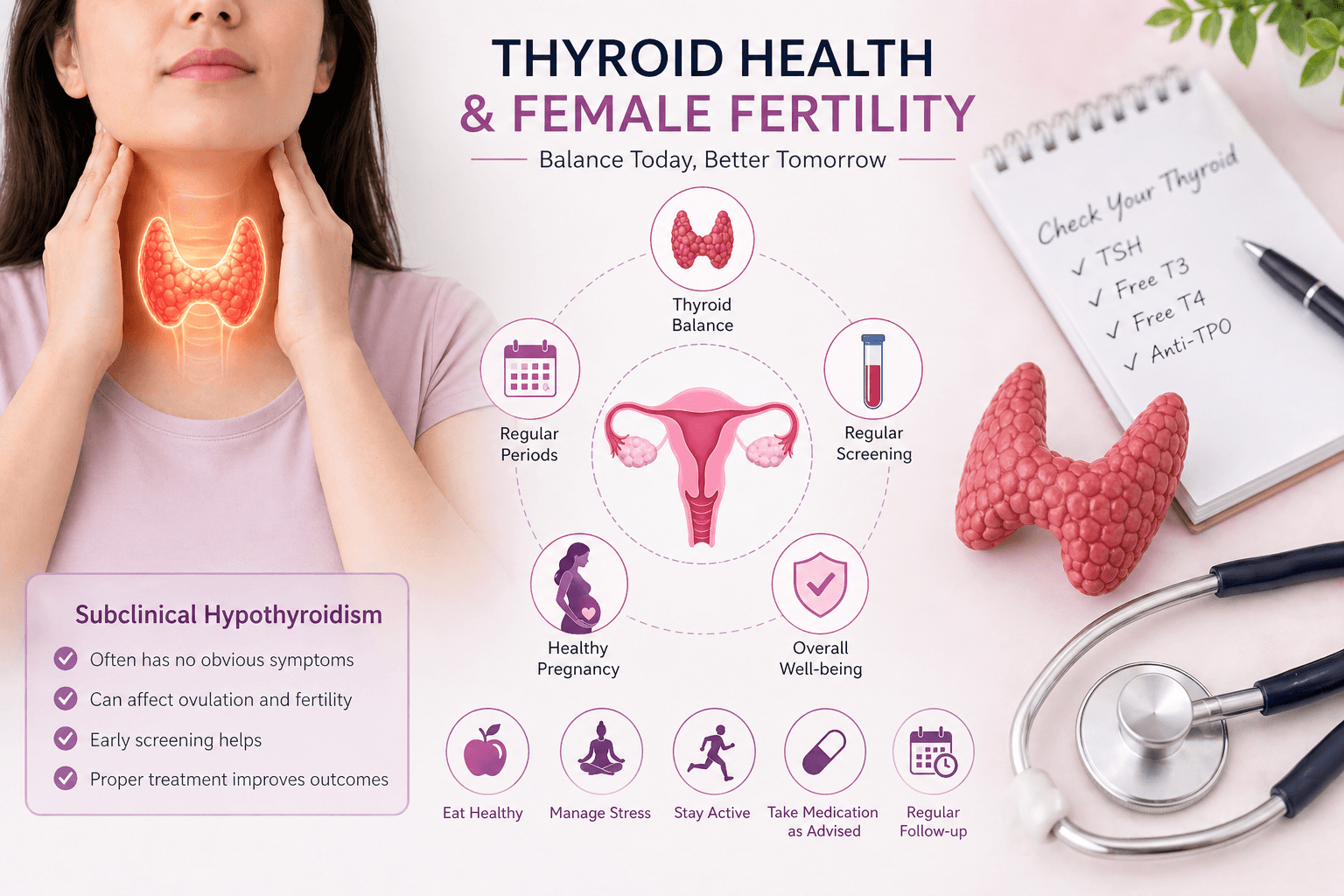
Subclinical hypothyroidism is a mild thyroid disorder where thyroid hormone levels may appear normal, but the Thyroid Stimulating Hormone (TSH) is slightly elevated. Many women do not experience clear symptoms, yet this condition can silently affect fertility.
The thyroid gland plays a very important role in regulating hormones, menstrual cycles, and ovulation. Even a small imbalance can disturb reproductive health and reduce the chances of conception.
In modern infertility practice, subclinical hypothyroidism is increasingly recognized as a key factor. According to Dr. Poonam Goyal, early screening and proper management can significantly improve fertility outcomes and pregnancy success rates.
Understanding this condition in simple terms helps women take timely action and avoid unnecessary delays in treatment.
Common Causes of Subclinical Hypothyroidism
Subclinical hypothyroidism can develop due to several reasons. Identifying the cause helps in effective treatment.
Autoimmune Disorders (Hashimoto’s Thyroiditis)
This is the most common cause, where the immune system attacks the thyroid gland.
Iodine Imbalance
Both deficiency and excess iodine intake can affect thyroid function.
Hormonal Changes
Pregnancy, stress, or other hormonal disorders can disturb thyroid balance.
Medications
Certain medicines may affect thyroid hormone production.
Age and Lifestyle Factors
Increasing age, poor diet, stress, and lack of exercise can also contribute.
As explained by Dr. Poonam Goyal, even mild thyroid imbalance should not be ignored, especially in women planning pregnancy.
Signs You Should Not Ignore
Subclinical hypothyroidism may not show obvious symptoms, but some subtle signs can indicate a problem.
Irregular periods
Difficulty in conceiving
Unexplained weight gain
Fatigue or low energy
Hair thinning or dry skin
Repeated early pregnancy loss
Many women delay testing while searching for the Best female infertility in Delhi, but early diagnosis can improve treatment success.
A simple blood test to check TSH levels can help in early detection.
How to Fix / Treat Subclinical Hypothyroidism
The good news is that subclinical hypothyroidism is easy to manage with proper medical care.
Thyroid Hormone Medication
Doctors may prescribe levothyroxine to normalize TSH levels.
Regular Monitoring
TSH levels should be checked regularly to ensure proper control.
Preconception Care
Maintaining optimal thyroid levels before pregnancy improves chances of conception and reduces complications.
Lifestyle Improvements
Healthy diet, proper sleep, and stress management support better thyroid function.
Fertility Treatments (if needed)
In some cases, treatments like ovulation induction, IUI, or IVF may be recommended.
Clinics known for the Best female fertility in Delhi focus on correcting thyroid imbalance before starting fertility treatments. Dr. Poonam Goyal emphasizes that controlled thyroid levels improve both conception and pregnancy outcomes.
It is also important to evaluate the male partner. Consulting experts in the Best male fertility in Delhi ensures a complete fertility assessment for couples.
Expert Tips
Get thyroid tests done before planning pregnancy
Do not ignore mild TSH elevation
Take medication regularly as prescribed
Maintain a balanced diet rich in nutrients
Reduce stress with yoga or meditation
Follow up regularly with your doctor
Early management can prevent complications and improve fertility results.
Conclusion
Subclinical hypothyroidism may seem like a minor condition, but it can have a significant impact on fertility if left untreated. The good news is that it is easy to diagnose and manage with timely care.
With proper screening, treatment, and lifestyle changes, many women can achieve successful pregnancies. Dr. Poonam Goyal highlights the importance of early diagnosis and personalized care for better outcomes.
If you are facing difficulty in conceiving or planning pregnancy, do not ignore your thyroid health. Early action can make your journey smoother and more successful.
FAQs
1. What is subclinical hypothyroidism?
It is a condition where TSH levels are slightly high, but thyroid hormones are normal.
2. Can it affect fertility?
Yes, it can disturb ovulation and increase the risk of miscarriage.
3. Is treatment necessary?
Yes, especially for women trying to conceive or during pregnancy.
4. How often should thyroid levels be checked?
As advised by your doctor, usually every few months during treatment.
Appreciate the creator