Steps to Take Immediately After Receiving a Medico-Legal Complaint
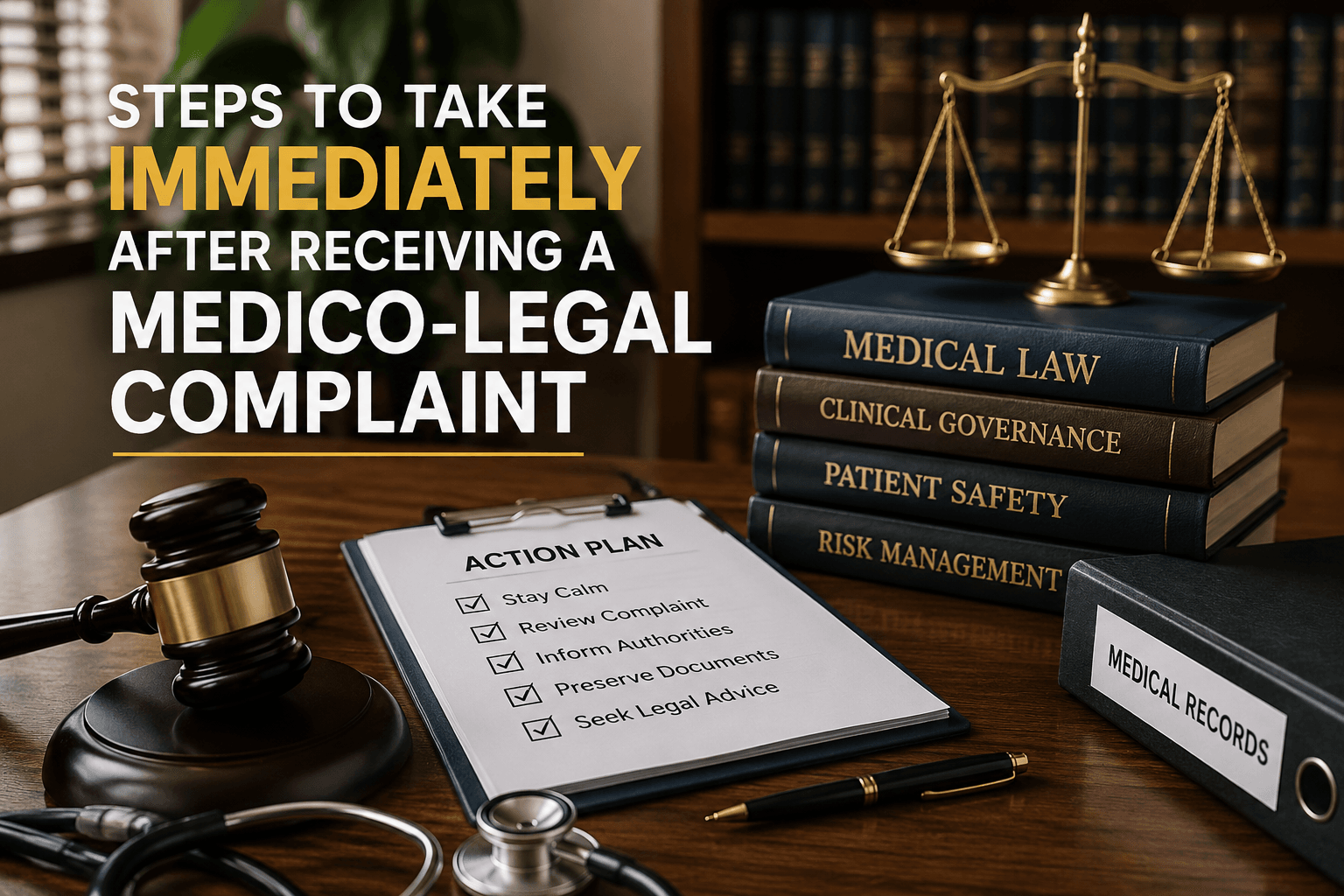
The moment a complaint arrives, panic is the most natural reaction. But how a doctor responds in the first few hours often shapes the entire outcome. Following a clear legal guide for medical in Delhi helps practitioners stay calm and act correctly from the very first step.
Most doctors never expect to face a formal complaint, which makes the initial response even harder. Reacting emotionally or defensively can weaken a case that might otherwise be easy to resolve. A solid legal compliance guide for doctors in Delhi (https://drvimalkantgoyal.com/best-medicolegal-consultant-in-delhi.php) starts with knowing exactly what to do, and what to avoid, right away.
Why the First Few Hours After a Complaint Matter Most
The earliest response to a complaint often sets the tone for everything that follows. Mistakes made in this window are hard to undo later.
How Early Actions Shape the Outcome
Preserving records correctly and staying calm during initial conversations protects a doctor's position. Rushed or emotional responses can unintentionally suggest fault, even when none exists. Careful, measured action early on often prevents a complaint from escalating further.
Common Mistakes Doctors Make Under Pressure
Some doctors alter records after a complaint, hoping to clarify details, which can look like tampering. Others avoid communicating with the patient entirely, which can appear dismissive. A trusted legal guide for medical in Delhi helps doctors avoid both extremes.
Immediate Steps to Take After Receiving a Complaint
Certain actions should happen right away, regardless of how serious the complaint seems. These steps create a strong foundation for whatever follows.
Stay Calm and Avoid Immediate Reactions
Take time to read the complaint fully before responding to anyone. Avoid discussing details informally with colleagues or on social media. A composed, private review of the situation prevents unnecessary complications later.
Notify the Right People Promptly
Inform hospital administration or clinic management as soon as possible. If the complaint involves potential legal action, reach out to a medico legal guide for hospitals in Delhi (https://drvimalkantgoyal.com/medico-legal-guide.php) early. Prompt internal communication ensures the right support is in place from the start.
Preserving and Reviewing Medical Records
Medical records become the centerpiece of almost every medico-legal review. Handling them correctly from the start is essential.
Why Records Must Remain Untouched
Never add, delete, or modify any part of the existing record after a complaint is received. Even well-intentioned corrections can be misread as an attempt to alter evidence. If clarification is needed, it should be added as a separate, clearly dated note.
Gathering Supporting Documentation
Collect related documents such as consent forms, lab reports, and prescription records. Organizing these chronologically makes it easier to review the full sequence of care. Complete documentation supports a stronger, clearer response to the complaint.
Communicating Carefully With the Patient and Family
How a doctor communicates after a complaint can influence whether the issue escalates or resolves quietly. Careful, respectful communication matters at every stage.
What to Say and What to Avoid
Acknowledge the patient's concern without admitting fault or offering informal explanations. Avoid making promises about outcomes before a proper review is complete. Simple, respectful acknowledgment often reduces tension significantly.
Keeping Communication Documented
Any conversation with the patient or family about the complaint should be noted afterward. This includes the date, key points discussed, and who was present. This kind of documentation reflects the standards found in any thorough medico legal guide for hospitals in Delhi.
Involving Hospital Administration and Legal Support
Complaints rarely need to be handled alone. Involving the right people early leads to a more organized and effective response.
When to Loop in Hospital Leadership
Hospital administration should be informed as soon as a complaint is formally received, not after internal discussions have taken place. Their involvement helps coordinate a consistent response across departments. This also ensures proper documentation is preserved centrally.
Seeking Legal Guidance Early
Reaching out for legal support early gives doctors time to prepare a thoughtful, accurate response. A legal compliance guide for doctors in Delhi typically recommends involving legal counsel well before any formal hearing or inquiry begins. Waiting too long often limits the available options.
Following a Legal Guide for Medical in Delhi to Prevent Future Complaints
Responding well to one complaint is important, but preventing future ones matters just as much. A structured legal guide for medical in Delhi (https://drvimalkantgoyal.com/medico-legal-guide.php) helps build lasting safeguards.
Reviewing the Case for Lessons Learned
Once resolved, review the complaint to identify any documentation or communication gaps that contributed to it. This reflection often reveals simple, fixable issues. Addressing these gaps reduces the chance of similar complaints in the future.
Strengthening Ongoing Compliance Practices
Regular audits, updated consent forms, and consistent staff training all support long-term hospital compliance. Treating these practices as routine, rather than reactive, keeps risk levels low. A dependable legal guide for medical in Delhi supports this kind of steady, preventive approach.
Conclusion
A medico-legal complaint can feel overwhelming, but a clear, calm response makes all the difference. Following a structured legal guide for medical in Delhi helps doctors protect themselves while handling the situation professionally.
Dr. Vimal Kant Goyal advises doctors to prepare for this possibility in advance, not scramble when it happens. With sound legal compliance guide for doctors in Delhi practices already in place, most complaints can be managed smoothly and resolved fairly.
Frequently Asked Questions
What should a doctor do first after receiving a medico-legal complaint?
The doctor should read the complaint carefully, avoid altering any records, and notify hospital administration promptly. Staying calm and organized in this first step is essential.
Is it okay to correct a medical record after a complaint is filed?
No, existing records should never be altered. Any clarification needed should be added as a new, clearly dated note instead.
How can hospitals support doctors facing a complaint?
Hospitals should provide access to a medico legal guide for hospitals in Delhi and coordinate a consistent internal response. Early administrative support reduces confusion and delays.
When should a doctor involve legal counsel after a complaint?
Legal guidance should be sought as early as possible, ideally before any formal hearing or inquiry begins. Early involvement allows more time to prepare an accurate response.
How can doctors reduce the chances of future complaints?
Reviewing past complaints for documentation or communication gaps helps prevent repeat issues. Regular training and audits, guided by sound compliance practices, keep risk levels low over time.
Appreciate the creator