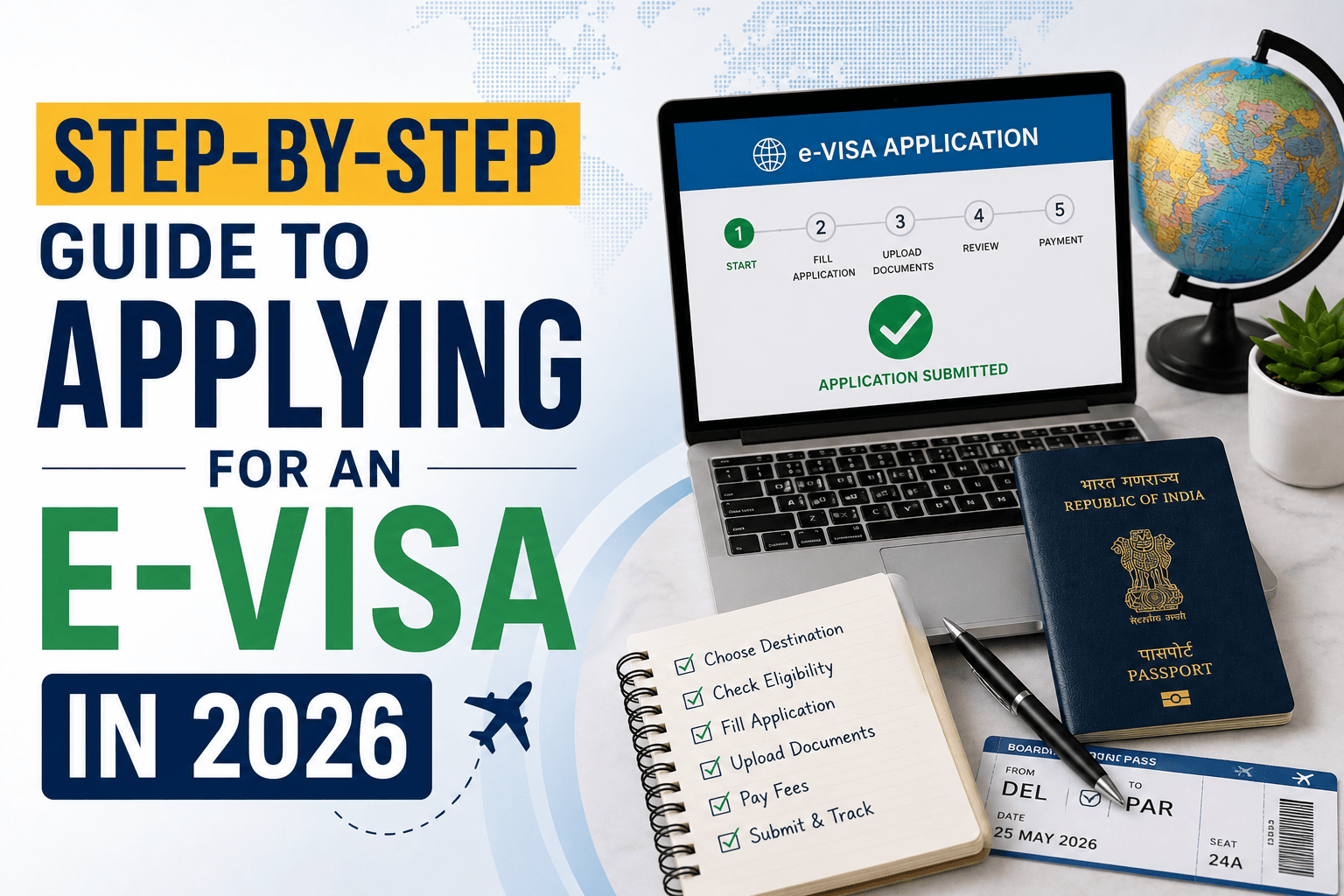
Step-by-Step Guide to Applying for an E-Visa in 2026
More than 70 countries now offer e-visa access to Indian travellers, making international travel faster and more convenient in 2026. Governments are increasingly adopting digital visa systems to improve security checks, reduce paperwork, and simplify immigration processes. However, many travellers still face visa delays or rejections due to incorrect documents, application errors, or incomplete information during the online visa application process.
This detailed E-visa application guide helps Indian travellers understand how to apply for a visa online step-by-step while avoiding common mistakes that affect approval chances. From choosing the correct visa type to preparing documents and tracking approvals, this guide covers everything needed for a smoother travel experience.
For seamless visa assistance, travel insurance, and expert support, Visa2Fly helps simplify international travel for Indian travellers.
What Is an E-Visa?
An e-visa, or electronic visa, is a digitally approved travel authorization issued online by a country’s immigration department. Unlike traditional sticker visas, e-visas do not usually require physical passport submission at embassies.
Travellers complete the entire online visa application process through an official immigration portal or authorized visa service platform.
Most e-visas are used for:
Tourism
Business travel
Medical visits
Conferences and events
Short-term family visits
Countries offering e-visa facilities to Indian travellers continue to increase every year because the process is faster, more secure, and easier to verify digitally.
Why Are E-Visas Becoming Popular in 2026?
The global travel industry has shifted toward digital verification systems. Immigration authorities now use AI-based screening, biometric matching, and automated document verification during visa processing.
Here are the main reasons travellers prefer e-visas:
Faster Processing: Many e-visas are approved within a few days compared to traditional embassy applications.
Fully Digital Process: Applicants can upload documents, pay fees, and track applications online.
Reduced Embassy Visits: Most e-visa applications do not require physical appointments.
Better Transparency: Travellers receive email notifications regarding approval status, corrections, or additional document requests.
Convenient for Frequent Travellers: Business travellers and tourists benefit from simplified repeat applications.
Step-by-Step E-Visa Application Guide for 2026
Step 1: Choose the Correct Visa Type
Before starting your online visa application, identify the purpose of your trip.
Common visa categories include:
Tourist e-visa
Business e-visa
Medical e-visa
Transit e-visa
Student entry permits
Selecting the wrong visa category is one of the biggest reasons for delays and refusals.
For example:
A business meeting requires a business visa.
Vacation travel requires a tourist visa.
Medical treatment abroad needs a medical visa.
Always read the eligibility rules carefully before you apply for a visa online.
Step 2: Check Passport Validity
Your passport is the most important document during the e-visa process.
Most countries require:
Minimum 6 months passport validity
At least 2 blank pages
Clear passport scan copies
No major passport damage
Ensure all passport information matches your supporting documents exactly.
Even small spelling mismatches can create processing issues.
Step 3: Prepare Required Documents
Different countries request different documents, but commonly required files include:
Mandatory Documents
Passport front and back scan
Passport-size photograph
Flight itinerary
Hotel booking confirmation
Financial proof
PAN card or Aadhaar (sometimes requested)
Cover letter (if applicable)
Additional Documents
Depending on your visa type, authorities may also request:
Business invitation letter
Employment proof
Travel insurance
Bank statements
Tax returns
Sponsorship documents
Use PDF or JPEG formats exactly as instructed by the immigration portal.
Step 4: Use Official or Trusted Platforms
One of the biggest mistakes travellers make is using fake visa websites. When completing your online visa application, always:
Use official government portals
Verify payment gateway security
Avoid suspicious agents
Double-check website URLs
Trusted visa assistance providers like Visa2Fly help travellers avoid fake portals, document errors, and submission mistakes.
Step 5: Fill the Application Carefully
This is the most critical step in the entire E-visa application guide.
Most rejections happen because of:
Incorrect passport numbers
Wrong travel dates
Spelling mistakes
Incomplete forms
False information
Missing hotel details
Important Tips
Match passport details exactly
Use active email and phone numbers
Do not leave mandatory fields blank
Upload clear documents only
Review every section before submitting
Immigration systems now automatically cross-check details digitally.
Step 6: Upload Documents Properly
Document quality directly affects approval chances.
Follow These Best Practices
Use high-resolution scans
Avoid shadows or blurry images
Keep file sizes within limits
Upload documents in required formats
Ensure photos meet size guidelines
Improper uploads often lead to:
Delays
Re-submission requests
Visa refusals
Step 7: Pay the Visa Fee Securely
After completing the form, applicants must pay visa fees online.
Accepted payment methods usually include:
Credit cards
Debit cards
UPI
International payment gateways
Important Advice
Save payment receipts
Take screenshots after payment
Avoid refreshing pages during transactions
Visa fees are usually non-refundable, even if the application gets rejected.
Step 8: Track Your Application
After submission, travellers receive:
Application ID
Reference number
Confirmation email
Use these details to track visa status online.
Processing timelines vary depending on:
Destination country
Travel season
Security checks
Public holidays
Many countries now provide automated tracking systems for easier monitoring.
Step 9: Download and Print the Approved E-Visa
Once approved, travellers receive their e-visa by email.
Check the Following Carefully
Passport number
Name spelling
Visa validity dates
Number of entries
Visa conditions
Print multiple copies before travelling.
Some airlines may deny boarding if travellers cannot show approved visa copies during check-in.
Step 10: Carry Supporting Documents While Travelling
Even with an approved e-visa, immigration officers may ask for:
Return tickets
Hotel bookings
Financial proof
Travel insurance
Invitation letters
Keep both digital and printed copies available.
Common Mistakes That Cause E-Visa Rejection
Understanding rejection risks is essential in any E-visa application guide.
Incorrect Information: Wrong names or passport numbers create automatic mismatches.
Weak Financial Proof: Insufficient bank balance may indicate lack of travel funds.
Poor Travel History: Frequent visa overstays or previous immigration violations can affect approval.
Fake Documents: Digitally verified immigration systems detect forged documents quickly.
Last-Minute Applications: Applying too close to departure increases risk if additional verification is required.
Expert Tips to Improve Approval Chances in 2026
Apply Early: Submit applications at least 2 to 4 weeks before travel.
Maintain Financial Stability: Keep consistent bank balances before applying.
Use Genuine Documents: Never edit or manipulate supporting files.
Purchase Travel Insurance: Many countries now prefer insured travellers.
Keep Travel History Organized: Previous visas and stamps help strengthen applications.
Why Human Support Still Matters in Digital Visa Processing?
Although e-visas are digital, expert review still matters.
Many travellers face issues like:
Confusing eligibility rules
Incorrect document formats
Repeated application corrections
Technical payment failures
Professional guidance can reduce errors significantly during the online visa application process. Visa support platforms like Visa2Fly assist Indian travellers with:
Visa documentation
Application reviews
Travel insurance
Processing guidance
End-to-end support
Final Words
The visa process in 2026 is faster, smarter, and more digital than ever before. However, immigration systems are also stricter and more data-driven. A single mistake in your online visa application can lead to delays or refusals.
By following this detailed E-visa application guide, travellers can confidently apply for a visa online while reducing common errors and improving approval chances.
Whether you are travelling for tourism, business, or family visits, preparation is the key to successful visa approval. For smoother documentation, expert guidance, and easier travel planning Visa2Fly continues helping Indian travellers simplify international journeys in 2026.
FAQs
Ques. How long does an e-visa take to process?
Ans. It depends but mostly e-visas are processed within three to seven working days, depending on the destination country, travel season, document verification process, and immigration security checks during application review.
Ques. Can I apply for a visa online without visiting an embassy?
Ans. Yes, many countries now allow complete online visa application processing without embassy visits. Applicants can upload documents, pay fees, and receive approved e-visas digitally through email.
Ques. What documents are needed for an e-visa?
Ans. Common documents include passport scans, photographs, travel itinerary, hotel bookings, financial proof, and travel insurance. Some countries may request employment, invitation, or sponsorship documents additionally.
Ques. Is travel insurance required for e-visa approval?
Ans. Many countries strongly recommend or require travel insurance during visa processing. Insurance helps cover medical emergencies, trip cancellations, and unexpected travel issues while travelling internationally safely.
Ques. What are the common reasons for e-visa rejection?
Ans. There are common reasons such as Incorrect information, weak financial proof, unclear documents, passport mismatches, fake records, and incomplete applications are among the most common reasons for e-visa refusals in 2026.
Appreciate the creator