Skydiving Adventure: What It Actually Feels Like — And How to Get Started
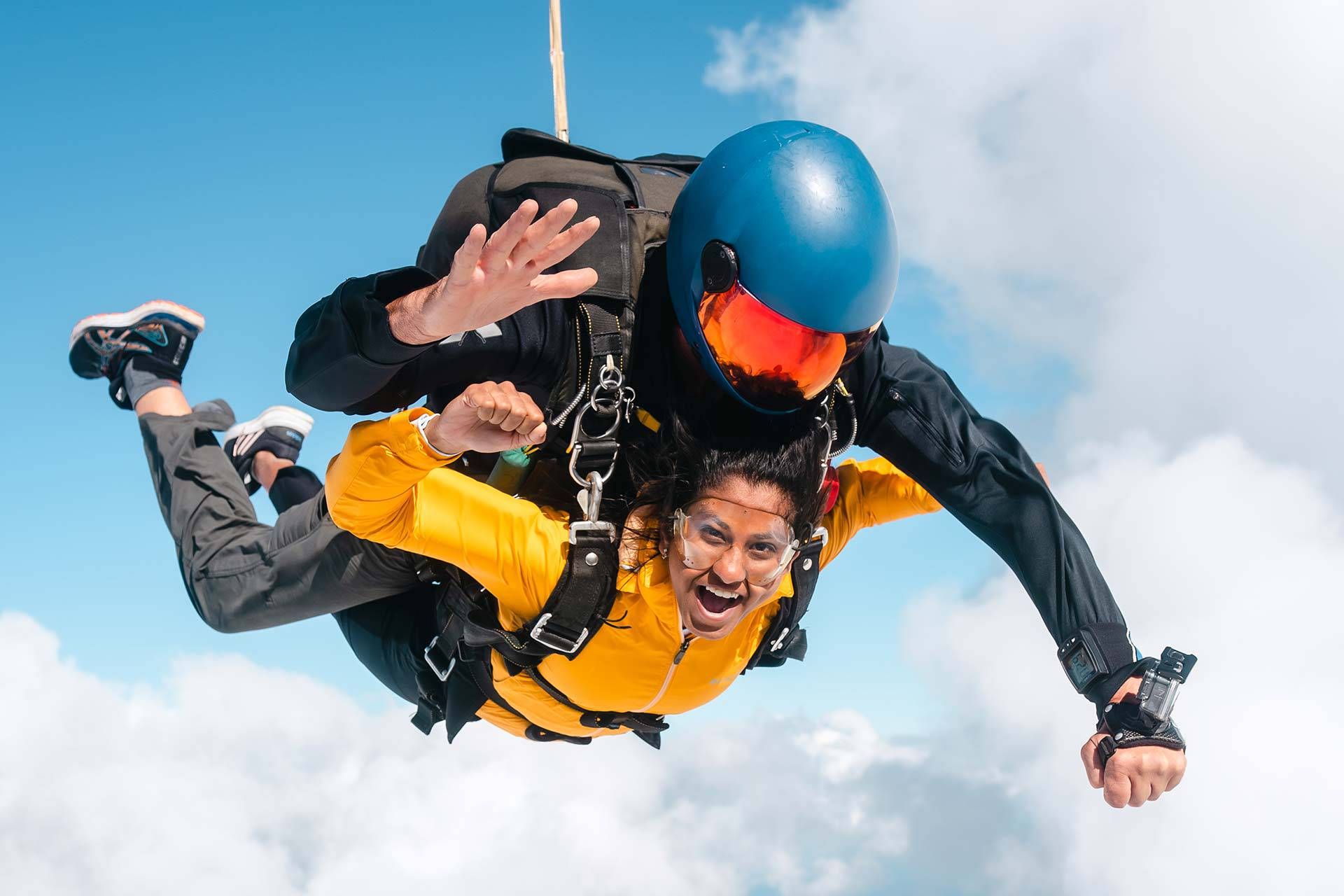
There's a moment, right at the edge of an open aircraft door at 15,000 feet, where your brain runs out of useful things to say. Every rational thought — what you had for breakfast, whether you locked the car — simply stops. What's left is something much more immediate. Then you're out, and the world becomes noise and speed and cold air and the strange, almost surreal sensation of falling around 120 miles per hour (roughly 190 km/h) in a stable belly-to-earth position toward a patchwork of fields you recognise, distantly, as England.
Most people describe their first skydiving adventure in almost identical terms: terrifying on the way up, overwhelming in the first two seconds, and then — unexpectedly — calm. The freefall lasts around 60 seconds from a standard jump altitude. The parachute opens, the noise drops away, and you're left floating in silence with a view that no photograph has ever done justice to. It's one of the few experiences in modern life that genuinely delivers on its billing.
This piece covers what you need to know before you jump — from your first tandem to the skydiving courses that take you from passenger to fully licensed solo skydiver.
The Numbers Behind the Sport
Skydiving is more mainstream than most people assume. In the UK alone, approximately 200,000 jumps are recorded annually by British Skydiving (formerly the British Parachute Association), the sport's governing body since 1962. Worldwide, the United States Parachute Association estimates that around 3.5 million jumps take place in the US every year. The safety record has improved dramatically over the past three decades — modern equipment, mandatory reserve parachutes, and the widespread adoption of AADs (Automatic Activation Devices, which deploy the reserve chute automatically if a jumper is incapacitated) have made skydiving significantly safer than many high-risk recreational activities, with fatality rates now extremely low by historical standards with ~1 fatality per 200k–250k jumps globally.
In the UK, almost all commercial skydiving operations in the UK are affiliated with British Skydiving, which sets training standards, equipment requirements, and instructor qualifications. If a drop zone isn't affiliated, that's a significant red flag worth paying attention to.
Your First Jump: Tandem Skydiving
The entry point for almost everyone is a tandem jump. You're harnessed to a qualified instructor, an experienced instructor with hundreds to thousands of jumps and a certified tandem instructor rating, who handles the parachute throughout. Your job is to arch your back, keep your chin up, and try to take in as much of it as you can. Most people find the hardest part is the ten minutes in the plane on the way up, not the jump itself.
A tandem skydiving adventure typically involves:
A ground briefing of around 30 to 45 minutes covering body position, the exit, freefall, and landing
A flight to jump altitude — usually between 10,000 and 15,000 feet, which takes around 15 to 20 minutes depending on the aircraft
Approximately 30 to 60 seconds of freefall, depending on exit altitude
A parachute ride of around five to seven minutes from deployment to landing
The whole experience from arrival to landing usually takes half a day. Many drop zones offer video and photo packages so you actually have evidence of what your face did during freefall — worth considering, because memory alone tends to be impressionistic at best.
Going Further: Skydiving Courses for Solo Jumping
A tandem jump is brilliant. But for a significant number of people, it's also the moment they realise they want to do it themselves — without the instructor, making their own decisions, earning their own licence. That's where skydiving courses come in.
The standard pathway in the UK is the Accelerated Freefall programme, known as AFF. It's the route endorsed by British Skydiving and used by virtually every affiliated drop zone in the country. AFF skydiving courses take you from complete beginner to solo licensed skydiver across a structured series of levels, each building on the last.
The programme begins with a full day of ground school — covering the parachute system, emergency procedures, body position, altitude awareness, and the signals your instructors will use during freefall. The first jump involves two instructors jumping alongside you and physically holding your harness during freefall while you practice the skills you'll need for solo jumping. As you progress through the eight AFF levels, the instructor support reduces until you're jumping alone and demonstrating the competency required for your licence.
The full AFF skydiving course typically requires a minimum of 18 jumps (AFF level 1-8 plus 10 consolidation jumps) to reach the British Skydiving 'A' licence — the qualification that allows you to jump independently at any affiliated drop zone in the world. From there, higher licence grades (B, C, and D) unlock formation skydiving, freefly disciplines, wingsuit flying, and eventually instructor pathways. The sport has a genuinely deep progression curve for those who want it.
Where to Do It in the UK
The UK has around 30 British Skydiving-affiliated drop zones, spread from Cornwall to the Scottish Highlands. Conditions and jump altitudes vary — some inland sites offer 15,000-foot exits, others are limited to 10,000 feet by local airspace restrictions. Coastal and rural drop zones tend to offer the most spectacular views during the parachute ride. Hinton Skydiving Centre in Oxfordshire, Skydive Hibaldstow in Lincolnshire, and Skydive Langar in Nottinghamshire are among the most active in terms of jump volume and course availability, but the right drop zone for you will depend partly on location and partly on which AFF instructors and schedules suit your availability.
Finding and Booking Through Adventuro
Comparing skydiving adventure experiences and skydiving courses across different UK drop zones used to mean navigating a sprawl of individual provider websites with no easy way to check availability, compare prices, or verify credentials side by side. adventuro solves that directly.
As the UK's leading adventure sports marketplace, adventuro lists tandem skydiving experiences and AFF skydiving courses across affiliated drop zones nationwide — all vetted, all searchable by location, experience level, and price. Whether you're booking your first tandem or looking to start a full AFF course, the platform makes it straightforward to find the right option without the research overhead. adventuro gift vouchers are valid for 18 months and work across any activity on the platform, making them a genuinely compelling gift for anyone who's ever said they'd 'like to try it one day.'
The Short Version
A skydiving adventure is one of those things that sounds extreme until you've done it, at which point it mostly sounds like something you want to do again. The tandem route is accessible to almost anyone in reasonable health between 16 and around 65 (weight limits apply — typically 100kg maximum, though this varies by drop zone and some dropzones limit AFF students to 55 years old). The AFF skydiving courses are structured, well-taught, and take you somewhere genuinely remarkable: the point where jumping out of an aircraft at altitude starts to feel, improbably, like something you're good at.
Browse tandem skydiving adventures and AFF skydiving courses across the UK on adventuro — and take the step that most people only think about.
Appreciate the creator