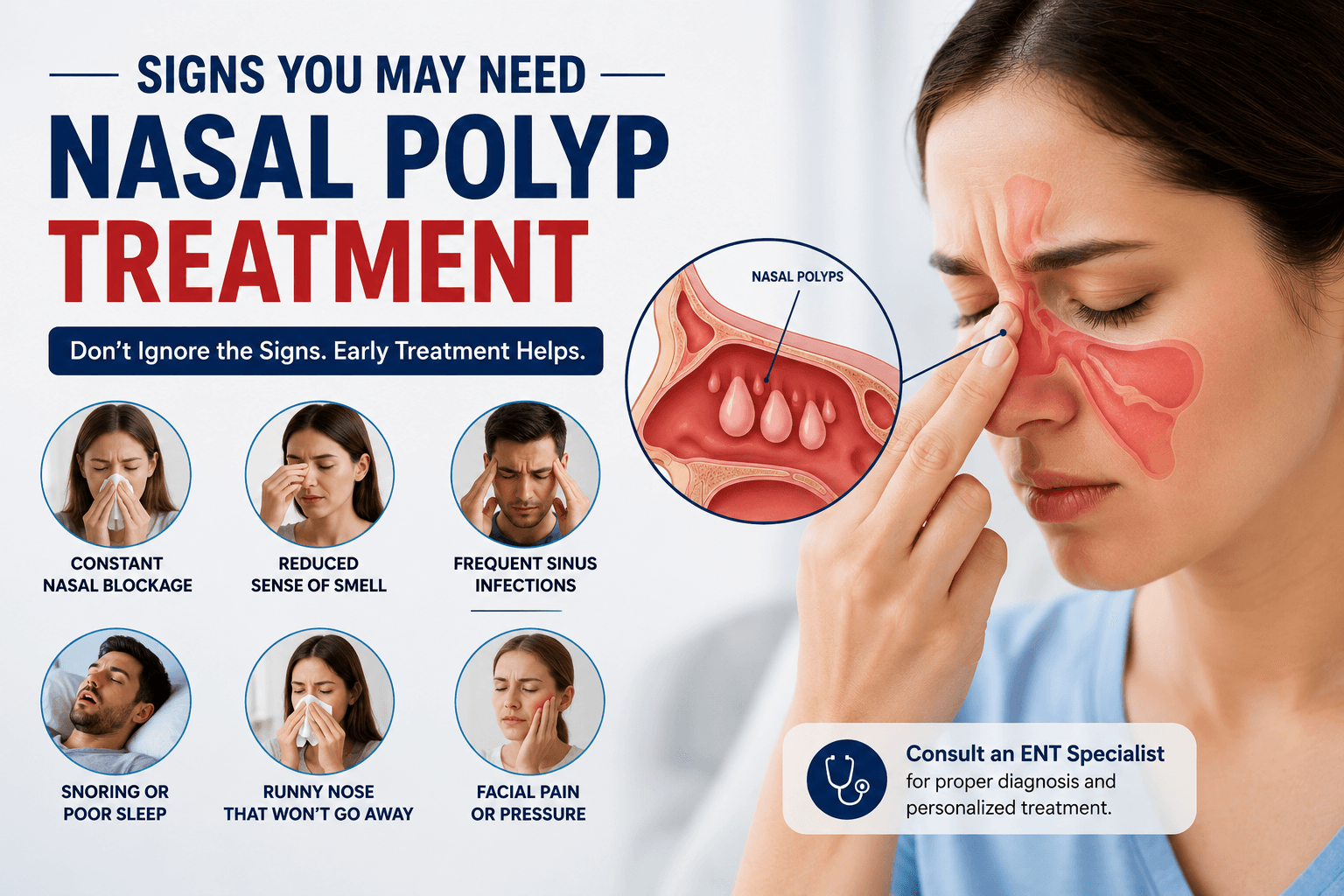
Signs You May Need Nasal Polyp Treatment
Breathing clearly through your nose is something most people do not think about until it becomes difficult. A blocked nose for a few days may seem normal because of weather changes, allergies, or a cold. But when the problem continues for weeks or keeps coming back, it may be a sign of something more serious.
One possible reason behind long-term nasal blockage is nasal polyps. These are soft growths inside the nose or sinuses that can affect breathing, sleep, and even your sense of smell.
Many people ignore the symptoms at first because they think it is just sinus trouble. However, understanding the warning signs early can help you get proper treatment and avoid bigger problems later.
If you are searching for Nasal polyp treatment in Gurgaon, this guide will help you understand the common signs that may mean it is time to visit an ENT specialist.
Dr. Manish Parshad, an experienced ENT specialist, helps patients understand nose and sinus-related problems and guides them toward suitable treatment options.
What Are Nasal Polyps?
Nasal polyps are soft, painless growths that form inside the nose or sinus passages. They are usually not dangerous, but if they become larger, they can block airflow and create breathing problems.
Small polyps may not cause symptoms. However, larger ones may slowly affect your daily comfort and quality of life.
Common Signs You May Need Nasal Polyp Treatment
Many symptoms of nasal polyps look similar to allergies or sinus infections. This is why people often ignore them.
Below are some important warning signs that should not be ignored.
Constant Nasal Blockage
Do you feel like your nose is blocked all the time?
If you find it difficult to breathe through your nose for weeks, even after taking medicines, it may be a sign of nasal polyps.
A blocked nose that does not improve deserves proper medical attention.
Trouble Breathing Through the Nose
When airflow becomes blocked, breathing through the nose may feel uncomfortable.
You may notice:
Mouth Breathing
Some people start breathing more through the mouth.
Shortness of Breath During Sleep
Breathing problems may become worse at night.
Feeling Uncomfortable While Exercising
Poor airflow may affect physical activity.
Reduced Sense of Smell
One common sign of nasal polyps is difficulty smelling things properly.
Food may not smell the same, perfumes may feel weak, or daily surroundings may seem different.
Some people also notice a reduced sense of taste because smell and taste are connected.
Frequent Sinus Infections
Do you often suffer from sinus infections?
Repeated infections may happen when polyps block proper drainage inside the nose.
Signs may include:
Facial Pressure
A heavy feeling around the forehead or eyes.
Thick Nasal Discharge
Constant mucus or blockage.
Headache
Some people experience pressure-related headaches.
Ignoring repeated sinus infections may make symptoms worse over time.
Snoring or Poor Sleep
If your nose stays blocked, sleep quality may also suffer.
You may notice:
Loud Snoring
Blocked airflow can lead to snoring.
Poor Sleep Quality
You wake up feeling tired.
Interrupted Sleep
Breathing discomfort may disturb sleep.
Good sleep is important for overall health, so this sign should not be ignored.
Long-Term Runny Nose
A runny nose that continues for weeks without improvement may also be a warning sign.
People often think it is allergy-related, but sometimes the real issue is inside the sinus passages.
If symptoms continue despite treatment, medical evaluation becomes important.
Facial Pain or Pressure
Nasal polyps can create pressure around the nose, eyes, and forehead.
Some people feel:
Pain Around the Eyes
Pressure near the eye area.
Forehead Heaviness
A heavy feeling above the eyebrows.
Constant Sinus Discomfort
Pain that keeps coming back.
Persistent discomfort may indicate blocked sinus passages.
Who Is More Likely to Need Treatment?
Some people have a higher chance of developing nasal polyps.
You may be at higher risk if you have:
Allergies
Dust or seasonal allergies may increase irritation.
Asthma
People with asthma sometimes experience sinus problems too.
Chronic Sinus Problems
Long-term sinus infections may increase the risk.
Family History
Sometimes genetics may play a role.
Dr. Manish Parshad carefully examines symptoms and recommends suitable treatment based on individual needs.
When Should You Visit an ENT Specialist?
You should consider visiting an ENT specialist if:
Your nose stays blocked for many weeks
You have repeated sinus infections
Breathing feels difficult
Your sense of smell becomes weak
Sleep problems continue because of nasal blockage
Early treatment often helps prevent bigger problems later.
Some people may improve with medicines, while others may require advanced care. In severe cases, doctors may discuss Nasal Polyp Surgery in Gurgaon if medicines do not provide enough relief.
Treatment Options for Nasal Polyps
Treatment depends on the size of the polyps and severity of symptoms.
Medicines
Doctors may recommend nasal sprays or medicines to reduce swelling.
Allergy Management
Controlling allergies may help reduce symptoms.
Lifestyle Advice
Avoiding dust and smoke may help support better breathing.
Surgery
In severe cases, Polyp Surgery in Gurgaon may be recommended to remove larger growths and improve airflow.
Frequently Asked Questions (FAQs)
What are nasal polyps?
Nasal polyps are soft growths inside the nose or sinus passages that may block airflow.
Can nasal polyps go away without treatment?
Smaller polyps may improve with medicines, but some cases need medical care.
How do I know if I need treatment?
If symptoms continue for weeks or affect breathing and sleep, it is a good idea to consult an ENT specialist.
Is nasal polyp treatment painful?
Most treatments are manageable and depend on the severity of the condition.
When is surgery needed?
Surgery may be suggested if medicines do not provide relief or symptoms become severe.
Conclusion
Ignoring nasal blockage for too long may affect breathing, sleep, and daily comfort. Understanding the warning signs early can help you get proper care before symptoms become worse.
If you are experiencing long-term nasal blockage, repeated sinus infections, or trouble breathing, it may be time to seek expert advice. For people looking for proper care, Dr. Manish Parshad provides detailed evaluation and patient-focused guidance to help improve nose and sinus health.
Appreciate the creator