
Security Company in Sheffield: The Difference Between Crowd Management and Crowd Control
Nobody remembers a well-managed event. That sounds harsh, but it is true. People remember the band, the atmosphere, the experience. What they do not remember is the queue moving smoothly, the entrance working properly, or the absence of panic. They only remember when something goes wrong.
That is the challenge every event organiser faces. The security should be invisible. When it works, nobody notices. When it fails, it is all anyone talks about.
Yet many organisers still use crowd management and crowd control as if they are the same thing. They are not. And treating them as interchangeable is exactly how problems start.
A security company in Sheffield worth its salt will explain the difference before anyone even buys a ticket. Management is about planning. Control is about response. One happens before the event. The other happens during it. Both matter. But understanding which tool fits which situation separates professional event security from a group of people in high-vis vests.
The Real Difference — And Why It Matters More Than You Think
Plan Before People Arrive
Crowd management is all about anticipation. It is the quiet work that takes place weeks, sometimes months, before the first attendee walks through the gate.
Think about queuing layouts. Where do people form lines? How many entry points exist? What happens when one scanner stops working? These are not details you figure out on the day. They are decisions that shape the entire visitor experience.
Good management considers flow. Not just how many people fit in a space, but how they move through it. The difference between a bottleneck and a smooth entry is almost always planning. That is why Event security Sheffield specialists spend so much time on site visits and walkthroughs before an event.
Exit strategy matters just as much. (Probably more, actually.) Getting people out safely in an emergency is not something you improvise. Routes need to be clear, staff need to know their positions, and the crowd needs to understand where to go. That clarity comes from management, not reaction.
Respond When Situations Change
Crowd control is different. It is reactive. It is the visible, physical response when things deviate from the plan.
A crush at the front of the stage. An aggressive patron near the bar. A group trying to push through a restricted area. These moments demand immediate action. Control is about preventing panic, managing aggressive behaviour, and containing incidents before they escalate.
Here is the honest truth. Sometimes control fails because management is weak. A crowd that becomes unmanageable is often a crowd that was poorly managed in the first place. But even the best plan can break down. That is why having trained personnel who can step in and take charge matters.
The best security teams do not see this as a binary choice. They see management and control as a spectrum. The goal is always to manage as much as possible, because controlled situations are stressful for everyone involved. But when control is needed, it must be decisive.
Two Strategies, One Safe Event
A professional security company in Sheffield understands that both approaches work together. Management sets the stage. Control steps in when the stage gets chaotic.
The mistake is relying on control to solve problems that management should have prevented. Throw enough security guards at a poorly planned event, and it might still work. But it will not be pleasant. The crowd will feel heavy-handed. The atmosphere will suffer.
But here is the other side. No amount of planning removes the need for trained responders. Events are unpredictable. People are unpredictable. That is not a flaw in the system. It is reality. Acknowledge it, plan for it, and build a team that can handle both the quiet moments and the loud ones.
Where Event Security Sheffield Makes the Biggest Difference
Every Entrance Sets the Tone
The entrance is the first interaction attendees have with event security. It colours everything that follows.
Access control is not just about stopping people without tickets. It is about managing expectations. Clear signs, visible staff, and efficient processes tell people this event is organised. It builds trust in the first thirty seconds.
Ticket verification needs to be quick but thorough. Bag checks should be professional, not invasive. And preventing unauthorised entry is about maintaining the integrity of the space — not just keeping people out, but keeping the right people in.
High-risk areas demand extra attention. Bars get busy, and people drink. VIP sections attract crowds who want access. Stage front gets packed, and emotions run high. Emergency routes must stay clear at all times. These are not optional extras. They are non-negotiable parts of event safety.
Stay Visible, Stay Reassuring
Patrols serve two purposes. They deter bad behaviour and they reassure everyone else. A visible presence reduces the likelihood of incidents and increases the confidence of attendees.
Customer assistance is part of the job too. Lost children, confused visitors, people who have had too much to drink — these are not security failures. They are normal parts of running an event. The difference is how they are handled. Professional teams treat every interaction as an opportunity to de-escalate. That is why Crowd safety services Sheffield providers emphasise soft skills alongside physical training.
Early intervention is the goal. Spot the potential issue before it becomes a real one. That takes experience. It also takes the right staffing levels and the ability to communicate across a team in real time.
Crowd Safety Services Sheffield Across Different Event Types
Not Every Event Faces the Same Risks
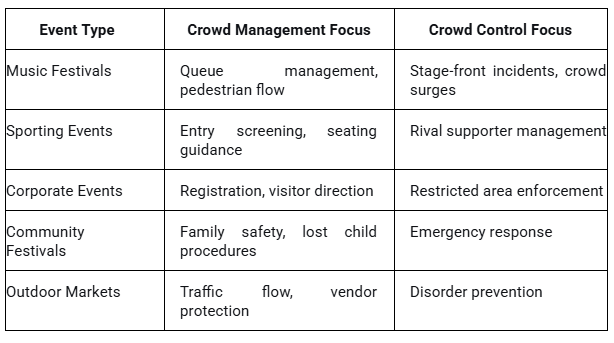
A music festival is not a corporate conference. A football match is not a community fayre. The security priorities shift depending on venue size, audience demographics, alcohol sales, and the nature of the event itself.
That sounds obvious. But organisers sometimes apply a one-size-fits-all approach to security. It rarely works.
This table gives a rough sense of how different events prioritise management and control differently. Broadly speaking, larger crowds and higher alcohol consumption tilt the balance toward control.
Flexible Teams Improve Event Safety
Scalability matters. A team that works for 500 people might be entirely wrong for 5,000. Professional providers adjust numbers, deployment patterns, and communication protocols based on the specific event.
Dynamic patrols keep the team responsive. Static posts provide a visible presence in key areas. Real-time communication ties it all together. None of this is complicated. It just requires planning and experience.
SIA Security Sheffield Helps Events Stay Prepared
Prevention Always Beats Reaction
Event risk assessment is where everything starts. Walking the site, identifying hazards, understanding crowd behaviour, and building a plan that addresses real threats — not theoretical ones.
Security planning follows the assessment. What are the entry and exit points? Where will staff be positioned? What is the communication chain? How do you handle an evacuation? These are not questions that answer themselves. They require deliberate thought.
Emergency preparedness is the final piece. Not just having a plan, but making sure everyone knows it. Staff need to understand their roles. The crowd needs to understand the instructions. Emergency services need to know the site layout. Without this coordination, even the best plan is just words on paper.
When Seconds Matter Most
Emergency evacuation planning demands clarity. In a crisis, people do not rise to the occasion. They fall to their training. That is why rehearsals matter.
Incident coordination is the bridge between security and emergency services. Who makes decisions? Who communicates with the authorities? Who takes charge if the event organiser is unavailable? These details should be settled long before they are needed.
Professional event security in Sheffield builds confidence. Not through aggression, but through competence. Event organisers feel more secure knowing they have a capable team in place. Attendees feel safer because the environment feels controlled. That confidence is contagious. It transforms the atmosphere of the entire event.
Professional Security Builds Confidence
Better visitor experience comes from getting the basics right. People want to enjoy themselves without worrying about safety. Professional security supports that by creating a stable environment.
Organiser confidence grows when they know the team is experienced. Event reputation benefits from incidents that never happened and issues that were handled quietly. A safer environment is not just good for attendees. It is good for business.
Conclusion
Crowd management and crowd control serve different purposes. One plans. One responds. One prevents. One contains. But they are not enemies. They are partners in creating events that run smoothly and finish safely.
The best way to avoid a problem is to plan for it. The best way to handle a crisis is to have trained people ready to respond. If you're planning an event, Region Security Guarding is a security company in Sheffield that understands the balance between crowd management and crowd control.
When the day arrives, the goal is simple. Nobody should remember the security. They should only remember what happened on stage. That requires getting the planning right — and having the right team in place if things do not go to plan.
Appreciate the creator