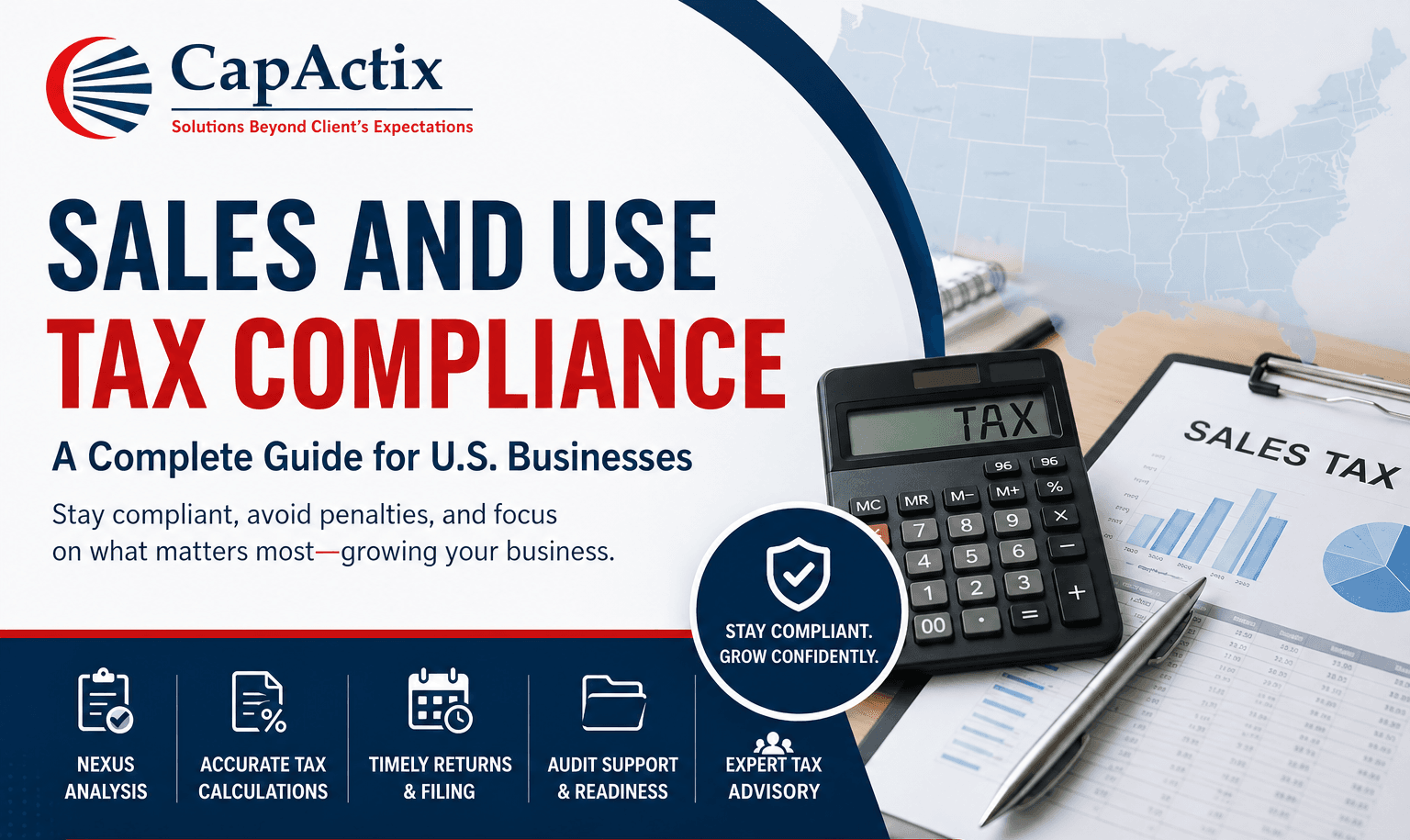
Sales and Use Tax Compliance: A Complete Guide for U.S. Businesses
Managing taxes is one of the biggest responsibilities for businesses operating in the United States. With varying tax laws across states and ever-changing regulations, maintaining sales and use tax compliance can quickly become overwhelming. Whether you run an eCommerce store, retail business, manufacturing company, or service-based organization, staying compliant is essential to avoid penalties, audits, and unnecessary financial risks.
In this guide, we'll explain what sales and use tax compliance means, why it matters, and how businesses can simplify the process with the right expertise.
What Is Sales and Use Tax Compliance?
Sales and use tax compliance (https://www.capactix.com/service/sales-use-tax-compliances/) refers to the process of accurately collecting, reporting, and remitting sales and use taxes according to state and local tax regulations.
Sales tax is collected by sellers at the point of purchase and remitted to the appropriate tax authority. Use tax, on the other hand, applies when taxable goods or services are purchased without sales tax being collected, and the buyer is responsible for paying the tax.
Because tax rules differ from state to state, businesses operating across multiple jurisdictions must understand where they have tax obligations, commonly known as "nexus," and ensure they comply with each state's requirements.
Why Sales and Use Tax Compliance Matters
Maintaining proper tax compliance is about more than simply filing returns on time. It protects your business from costly consequences while supporting long-term growth.
Some of the key benefits include:
Avoiding penalties, interest, and late filing fees
Reducing the likelihood of state tax audits
Maintaining accurate financial records
Building credibility with tax authorities
Supporting business expansion into new states with confidence
As businesses continue to grow through online sales and interstate operations, tax compliance has become increasingly important for organizations of all sizes.
Common Sales and Use Tax Compliance Challenges
Many businesses struggle with tax compliance because regulations are constantly evolving. Some of the most common challenges include:
Managing Multi-State Tax Obligations
Each state has its own tax laws, filing deadlines, and reporting requirements. Businesses selling products or services across state lines often need to register, collect, and remit taxes in multiple jurisdictions.
Determining Economic Nexus
Following changes in U.S. sales tax laws, businesses may establish tax obligations based on sales volume or transaction thresholds, even without having a physical presence in a state. Tracking these thresholds can be difficult without regular monitoring.
Keeping Up with Tax Rate Changes
State and local tax rates frequently change. Applying incorrect rates can lead to underpayment, overcollection, or compliance issues.
Managing Exemption Certificates
Businesses that sell to tax-exempt customers must properly collect, validate, and maintain exemption certificates. Missing or outdated documentation can create problems during audits.
Manual Processes and Filing Errors
Relying on spreadsheets or manual calculations increases the risk of mistakes, duplicate entries, and missed filing deadlines.
Best Practices for Sales and Use Tax Compliance
A proactive approach can help businesses stay compliant while reducing administrative burdens. Consider these best practices:
Review your nexus status regularly as your business expands into new states.
Maintain organized financial records and transaction data throughout the year.
Verify taxability rules for the products and services you sell.
Keep exemption certificates updated and securely stored.
File tax returns accurately and before state deadlines.
Conduct periodic internal compliance reviews to identify potential issues early.
Work with experienced tax professionals who understand multi-state tax regulations and changing compliance requirements.
Implementing these practices not only minimizes risk but also improves operational efficiency.
How CapActix Business Solutions Can Help
Navigating complex tax regulations requires experience, attention to detail, and a thorough understanding of state-specific requirements. CapActix Business Solutions (https://www.capactix.com/) provides comprehensive sales and use tax compliance services designed to help businesses remain compliant while reducing administrative workload.
Our services include:
Sales and use tax registration
Nexus analysis and compliance assessments
Sales and use tax return preparation and filing
Tax compliance monitoring
Audit support and documentation assistance
Ongoing advisory services for multi-state businesses
By partnering with CapActix Business Solutions, businesses gain access to experienced professionals who help simplify tax compliance, improve accuracy, and reduce the risk of costly errors.
Conclusion
As tax regulations continue to evolve across the United States, maintaining sales and use tax compliance has become an essential part of responsible business management. Staying compliant not only helps businesses avoid penalties and audits but also creates a strong foundation for sustainable growth.
Whether your company operates in one state or across multiple jurisdictions, partnering with experienced professionals can make compliance significantly easier. CapActix Business Solutions helps businesses navigate complex tax requirements with confidence, allowing you to focus on growing your business while we help keep your tax obligations on track.
Ready to simplify your sales and use tax compliance?
Contact CapActix Business Solutions today (https://capactix.com/inquiry/) to learn how our tax experts can help your business stay compliant and prepared for growth.
Appreciate the creator