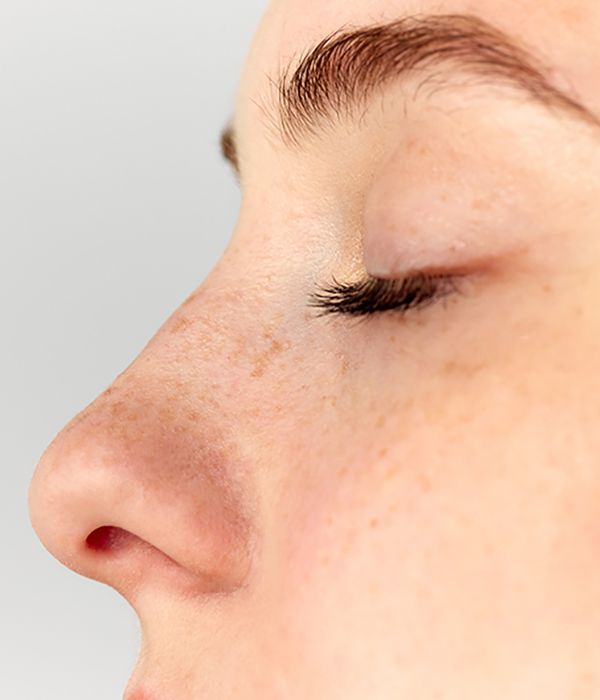
Rhinoplasty In Islamabad: Why Your Ideal Nose May Not Be Someone Else’s
Have you ever saved a photograph of a nose you loved and thought, “This is exactly what I want”? It is completely normal to have a reference in mind, but there is an important detail many people overlook: the nose that looks perfect on someone else may not create the same effect on your face.
Your facial proportions, bone structure, cartilage, skin thickness, and even your profile all influence how a particular nose shape will look. This is why Rhinoplasty in Islamabad (https://www.dynamiclinic.com.pk/how-much-does-rhinoplasty-cost-in-islamabad/) should be approached as a personalised procedure rather than an attempt to copy someone else's features.
There Is No Universal “Perfect” Nose
Beauty does not follow one fixed formula. A nose can be straight, slightly curved, narrow, broad, softly defined, or more prominent and still look attractive when it complements the person's facial structure.
The ideal nose is the one that creates balance with your face. What works beautifully for one person may make another person's cheeks, lips, or chin appear out of proportion.
This is one reason experienced rhinoplasty planning starts with the patient's face rather than a predetermined nose shape.
Why Celebrity Noses Can Be Misleading
Celebrities and influencers are often the source of rhinoplasty inspiration. A particular nose may look elegant in photographs because it works with that person's facial proportions, lighting, camera angle, and overall appearance.
Trying to recreate it exactly can create unrealistic expectations. A reference photo should communicate what you like, not dictate exactly what your surgeon must create.
Perhaps you like the smooth bridge in one photograph or the refined tip in another. These preferences can be discussed during consultation and then adapted to suit your own anatomy.
Your Facial Proportions Change Everything
The nose occupies a central position on the face, so even relatively small changes can affect how the entire face appears.
The relationship between your nose and chin, for example, can influence your side profile. The width of your cheeks and the shape of your jaw can also affect how narrow or broad your nose appears.
Rhinoplasty is therefore about facial relationships, not just nasal measurements. A surgeon needs to understand how the nose fits into the overall structure before deciding how much it should be reshaped.
Your Anatomy Sets the Starting Point
Every patient begins with a different nasal structure. The bones may have different widths, cartilage can vary in strength, and the skin covering the nose can range from relatively thin to thicker.
These characteristics influence what can realistically be achieved. Your anatomy is the foundation of your rhinoplasty plan.
For example, a patient with thicker skin may not achieve exactly the same level of tip definition as someone with thinner skin. Likewise, differences in cartilage strength can influence how the tip can be reshaped and supported.
Rhinoplasty in Islamabad: What Makes Each Patient Different?
When planning Rhinoplasty in Islamabad, a surgeon needs to look beyond the patient's desired nose shape. Several individual characteristics can influence the recommended approach.
These may include:
Facial proportions: The relationship between the nose, cheeks, lips, chin, forehead, and jawline.
Bridge structure: Its width, height, contour, and alignment.
Nasal tip: Its size, projection, rotation, and definition.
Skin thickness: How the skin may respond to changes underneath.
Bone and cartilage: Their shape, strength, and existing position.
Nostril shape: Width, symmetry, and relationship with the tip.
Nasal function: Internal structures and any existing breathing concerns.
All of these details help determine what type of nose will look natural on you.
Smaller Does Not Always Mean Better
One of the most common assumptions about rhinoplasty is that a smaller nose automatically means a better result. But reducing the nose too much can sometimes create an imbalance with the rest of the face.
A nose that is appropriately sized for your features may actually look more attractive than an extremely small nose. Proportion matters more than size alone.
The same applies to the bridge and tip. Excessive reduction or refinement may produce a result that looks artificial rather than naturally integrated with the face.
Your Profile Tells a Different Story
You may like your nose from the front but dislike your profile, or the opposite may be true. A prominent bridge, downward-pointing tip, or excessive projection can become more noticeable from the side.
However, changing the profile can also influence how the nose looks from the front and three-quarter angles. Every major change needs to be considered from multiple viewpoints.
This is why rhinoplasty planning involves more than simply correcting the angle you dislike most.
The Tip Should Match the Rest of the Nose
The nasal tip can dramatically influence the character of the nose. Patients may want a sharper tip, less width, greater definition, or a different position.
But a tip cannot be designed independently from the bridge. The bridge and tip need to transition naturally into one another.
The surgeon also needs to consider the nostrils, skin, cartilage, and surrounding facial features. An excessively refined tip may look unnatural if the rest of the nose remains broader or if it does not suit the patient's face.
Skin Thickness Can Change Expectations
Patients sometimes compare their desired result with photographs without considering differences in skin. Yet the skin covering the nose can significantly influence the final appearance.
Thicker skin may soften fine structural details, while thinner skin can make subtle changes more visible. The underlying surgical work and the visible result are not always identical.
Understanding this difference can help patients develop realistic expectations and appreciate why two people receiving similar procedures may have different-looking outcomes.
Natural Asymmetry Is Normal
Perfect facial symmetry is rare. One side of the nose may sit slightly differently from the other, and nostrils may naturally vary in shape or size.
Rhinoplasty can improve noticeable asymmetry, but promising absolute symmetry would not be realistic. The goal is usually better balance, not mathematical perfection.
Recognising existing asymmetry before surgery also helps patients understand why the surgeon may make different adjustments to each side.
What If You Want a Nose That Is Not Suitable for You?
A good surgeon should not simply agree to every requested shape. If a particular nose design does not suit your anatomy or could create an unnatural relationship with your facial features, that should be explained during consultation.
Personalised rhinoplasty sometimes means adjusting the patient's original idea.
This is not about ignoring what you want. Instead, the surgeon can identify the features you like and determine how they can be incorporated into a shape that works better with your face.
Function Should Be Part of the Conversation
The nose is also responsible for breathing, so cosmetic changes should be considered alongside nasal function when appropriate.
Patients with previous injuries, nasal obstruction, or structural concerns may require additional evaluation. Aesthetic goals should not unnecessarily compromise the functional role of the nose.
A comprehensive assessment can help identify whether functional considerations need to be included in the surgical plan.
Rhinoplasty in Islamabad: Choose Personalised Planning
When researching Rhinoplasty in Islamabad, it is easy to become focused on before-and-after photographs and try to identify a single “best” nose shape. Photos can certainly help you understand a surgeon's work, but every patient's starting anatomy is different.
Look for a consultation where your individual features, expectations, nasal structure, and functional concerns are carefully discussed. The right rhinoplasty plan should be built around you, not around someone else's result.
The best question to ask is not simply, “Can I have this nose?” Instead, ask, “How can the features I like be adapted to suit my face?”
Your Ideal Nose Should Still Look Like You
Rhinoplasty can change the shape and proportions of the nose, but it does not need to erase the individuality of your face. The most convincing results often improve harmony while allowing the person's natural features to remain recognisable.
Your ideal nose is not someone else's nose—it is the version that works best with your own anatomy and proportions.
For patients considering Rhinoplasty in Islamabad, Dynamic Clinic PK (https://www.dynamiclinic.com.pk/) offers personalised care backed by extensive expertise, board-certified surgeons, and advanced rhinoplasty techniques designed to respect individual anatomy while creating balanced, natural-looking results.
Appreciate the creator