Reducing Labor Costs in Logistics with Smart Automation Tools
The global logistics industry is currently navigating a period of profound transformation. As consumer expectations for rapid delivery grow and the complexity of global supply chains increases, companies find themselves squeezed between rising operational costs and the need for competitive pricing. Among these costs, labor remains one of the most significant and volatile variables. In many traditional warehousing environments, human labor can account for up to 65 percent of the total operating budget. Consequently, the adoption of smart automation tools is no longer a luxury for forward-thinking firms; it is a fundamental requirement for financial sustainability and operational resilience.
The Economic Necessity of Logistics Automation
The primary driver behind the shift toward automation is the widening gap between labor availability and industry demand. Many regions are experiencing a persistent shortage of skilled warehouse workers, which drives up wages and increases the costs associated with recruitment and retention. When companies rely heavily on manual processes, they are also more susceptible to the costs of human error. Misplaced inventory, shipping delays, and packing mistakes do not just hurt the bottom line through immediate loss; they damage long-term brand reputation.
To understand the scope of this challenge, it is helpful to look at the technical definition of Automation provided by Wikipedia, which describes it as the use of various control systems for operating equipment with minimal human intervention. In the context of logistics, this intervention is being minimized not to eliminate jobs, but to redirect human talent toward higher-value tasks while machines handle the repetitive, physically demanding, and error-prone aspects of the supply chain.
By integrating smart tools, companies can achieve a more predictable cost structure. Unlike human labor, which involves fluctuating insurance premiums, overtime pay, and training expenses, automated systems offer a defined return on investment (ROI). Once the initial capital expenditure is amortized, the cost per unit handled drops significantly, allowing firms to scale their operations without a linear increase in headcount.
Core Technologies Driving Labor Efficiency
The landscape of smart automation is diverse, ranging from physical robotics to sophisticated software layers that orchestrate entire facilities. Each of these tools plays a specific role in reducing the hours required to move a product from the receiving dock to the end consumer.
1. Autonomous Mobile Robots (AMRs)
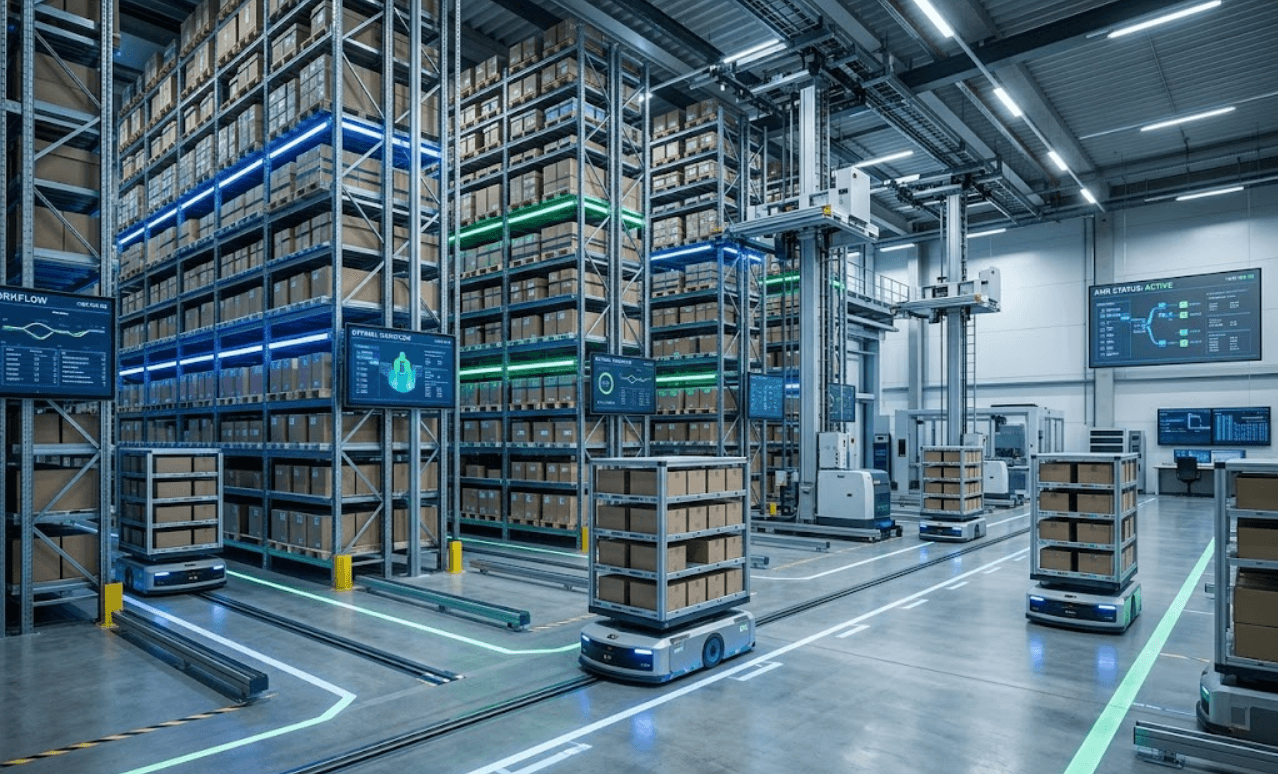
Unlike traditional conveyor belts or older Automated Guided Vehicles (AGVs) that require fixed paths, AMRs use sensors and artificial intelligence to navigate dynamic environments. These robots handle the "travel time" within a warehouse, which often accounts for half of a picker’s shift. By having robots deliver items to stationary human workers (a "goods-to-person" model), companies can triple their picking productivity without hiring additional staff.
2. Automated Storage and Retrieval Systems (AS/RS)
AS/RS technologies utilize vertical space to maximize storage density while using high-speed cranes or shuttles to retrieve items. This eliminates the need for manual forklift operation in high-density areas. These systems are particularly effective in reducing labor costs because they can operate in environments that are difficult for humans, such as cold storage or dark warehouses, where lighting and climate control costs can be minimized alongside labor.
3. Warehouse Management Systems (WMS) with AI
Software is the brain of the automated warehouse. Modern WMS platforms use predictive analytics to slot inventory based on anticipated demand. According to recent reports on Logistics Trends found via Google News, the integration of AI into these systems allows for real-time adjustments to workflow. If a sudden surge in orders occurs, the system automatically reallocates robotic resources and optimizes walking paths for the remaining manual tasks, ensuring that every labor hour spent is as productive as possible.
4. Automated Sorting and Packing
The final stages of the warehouse process are often the most labor-intensive. Smart sorting systems can categorize thousands of packages per hour with near-perfect accuracy. Furthermore, automated packing machines can create custom-sized boxes for every order, which reduces the need for manual dunnage application and lowers shipping costs by optimizing package volume.
Strategic Implementation and Global Reach
Transitioning to an automated model requires more than just buying new hardware; it requires a shift in how a company views its role in the global market. While the warehouse is the heart of automation, the benefits extend to the entire shipping lifecycle. For companies looking to expand their reach, coordinating these automated internal processes with expert external partners is vital. For example, TerraLinkLogistics offers international freight and forwarding services, ensuring that the efficiencies gained within the warehouse are mirrored in the transit phase.
A professional analysis of Logistics Leadership on Forbes suggests that the most successful companies are those that view automation as a scalable journey rather than a one-time event. They start by identifying the most significant labor bottlenecks, often in picking or sorting, and implement targeted solutions that can eventually be integrated into a larger, cohesive ecosystem.
To truly grasp the impact of these changes, one must understand the broader Supply Chain Definition provided by Google. Logistics is not merely moving boxes; it is the strategic management of the flow of goods. Automation allows managers to focus on this strategy by providing them with real-time data. When a manager knows exactly where every item is and how fast it is moving, they can make informed decisions about staffing levels for peak seasons, further refining their labor expenditure.
Overcoming Barriers to Automation
Despite the clear benefits, some organizations hesitate due to the perceived complexity of implementation. The most common concerns include the high upfront costs and the potential for technical downtime. However, the emergence of "Robotics as a Service" (RaaS) models has lowered the barrier to entry, allowing companies to lease automated systems and pay based on usage or throughput rather than an outright purchase.
Moreover, the "human element" remains crucial. Smart automation is most effective when it is designed to augment human capabilities. Training existing staff to manage and maintain these tools creates a more skilled workforce, which often leads to higher job satisfaction and lower turnover. This cultural shift is essential for long-term success; employees must see automation as a tool that removes the "dull, dirty, and dangerous" aspects of their jobs, rather than a threat to their livelihood.
Conclusion
Reducing labor costs in the logistics sector is no longer just about cutting hours; it is about maximizing the value of every second spent in the supply chain. Smart automation tools provide the precision, speed, and scalability required to thrive in a volatile market. By shifting from manual-heavy processes to AI-driven, robotic-supported operations, businesses can stabilize their costs and improve their service levels simultaneously.
The integration of AMRs, AS/RS, and advanced software creates a lean environment where errors are minimized and throughput is maximized. As these technologies continue to evolve, the gap between automated leaders and manual laggards will only widen. Companies that invest in these tools today are not just saving on labor costs; they are building the infrastructure necessary for the future of global trade.
Appreciate the creator