Reducing Energy Costs with Advanced Data Center Cooling Techniques
Introduction
Data centers are essential for modern businesses, but they consume vast amounts of energy, with cooling accounting for a significant portion of operational costs. As organizations strive for efficiency and sustainability, advanced cooling techniques have emerged as critical solutions. We will explore innovative cooling methods that reduce energy costs while maintaining optimal performance.
Definition
Data center cooling refers to the methods and technologies used to regulate the temperature within a data center to ensure that servers and other critical equipment operate efficiently and without overheating. This is crucial for preventing system failures, reducing energy consumption, and maintaining optimal performance. Cooling solutions typically include air conditioning, liquid cooling systems, and advanced heat dissipation techniques to manage the heat generated by high-performance computing equipment.
The Need for Efficient Data Center Cooling
Data centers generate enormous heat due to the continuous operation of high-performance servers. Traditional cooling methods, such as air conditioning and raised-floor cooling, are energy-intensive and often inefficient. Inefficient cooling not only drives up costs but also impacts environmental sustainability.
With increasing data demands and rising energy prices, businesses must adopt advanced cooling techniques to reduce costs, minimize carbon footprints, and improve overall efficiency.
Advanced Cooling Techniques
1. Liquid Cooling Technologies
Liquid cooling is gaining popularity as an effective way to dissipate heat from servers and other IT equipment. It involves direct or indirect use of fluids to absorb and remove heat.
a. Direct-to-Chip Cooling
Liquid-cooled cold plates that are fastened straight to the server's processors are used in this technique. The coolant absorbs heat and transfers it away efficiently, reducing the reliance on air-based cooling systems.
Benefits:
Higher cooling efficiency
Reduced energy consumption
Improved thermal management for high-performance computing
b. Immersion Cooling
In immersion cooling, entire servers are submerged in a non-conductive cooling liquid. The liquid absorbs heat and carries it away, eliminating the need for traditional air conditioning.
Benefits:
Significantly lowers energy usage
Eliminates the need for server fans
Reduces noise and mechanical wear
2. Free Cooling (Air Economization)
Free cooling takes advantage of ambient air temperatures to cool data centers, reducing dependence on mechanical cooling systems.
a. Direct Air Cooling
This method introduces outside air into the data center to cool the equipment, using filters to remove contaminants.
Benefits:
Lowers energy costs by reducing reliance on chillers
Improves sustainability by using natural resources
b. Indirect Air Cooling
Instead of bringing outside air directly into the facility, indirect air cooling transfers heat through heat exchangers, maintaining indoor air quality while benefiting from external cooling.
Benefits:
Eliminates risk of airborne contaminants
Reduces water usage compared to traditional cooling towers
3. Hot and Cold Aisle Containment
Aisle containment strategies improve airflow management by separating hot and cold air within the data center.
a. Hot Aisle Containment (HAC)
HAC captures and redirects hot air exhaust from servers, preventing it from mixing with cool air.
Benefits:
Enhances cooling efficiency
Reduces overall cooling energy consumption
b. Cold Aisle Containment (CAC)
CAC confines cold air to server inlets, ensuring that only necessary cooling is applied.
Benefits:
Increases server cooling effectiveness
Reduces the load on cooling systems
4. AI and Machine Learning for Cooling Optimization
AI-powered cooling solutions analyze real-time data to optimize cooling system performance dynamically. Machine learning algorithms predict cooling requirements and adjust system operations accordingly.
Benefits:
Reduces energy consumption by up to 40%
Enhances equipment lifespan through predictive maintenance
Improves cooling efficiency in fluctuating workloads
5. Renewable Energy Integration
Pairing cooling solutions with renewable energy sources such as solar and wind can significantly lower operational costs and carbon footprints.
Examples:
Using solar-powered chillers
Implementing wind energy for HVAC systems
Employing geothermal cooling for stable temperature control
Best Practices for Implementing Advanced Cooling
Conduct Energy Audits: Determine where cooling effectiveness can be raised.
Utilize Environmental Monitoring: Deploy sensors to monitor temperature, humidity, and airflow in real time.
Optimize Airflow Management: Implement containment strategies and adjust server rack placements.
Upgrade Cooling Equipment: Invest in energy-efficient cooling solutions such as liquid cooling and economizers.
Implement Smart Cooling Technologies: Use AI and automation to fine-tune cooling performance.
Leverage Renewable Energy Sources: Reduce reliance on grid power by integrating sustainable energy solutions.
Regular Maintenance and Upgrades: Keep cooling systems well-maintained to ensure peak efficiency.
Growth Rate of Data Center Cooling Market
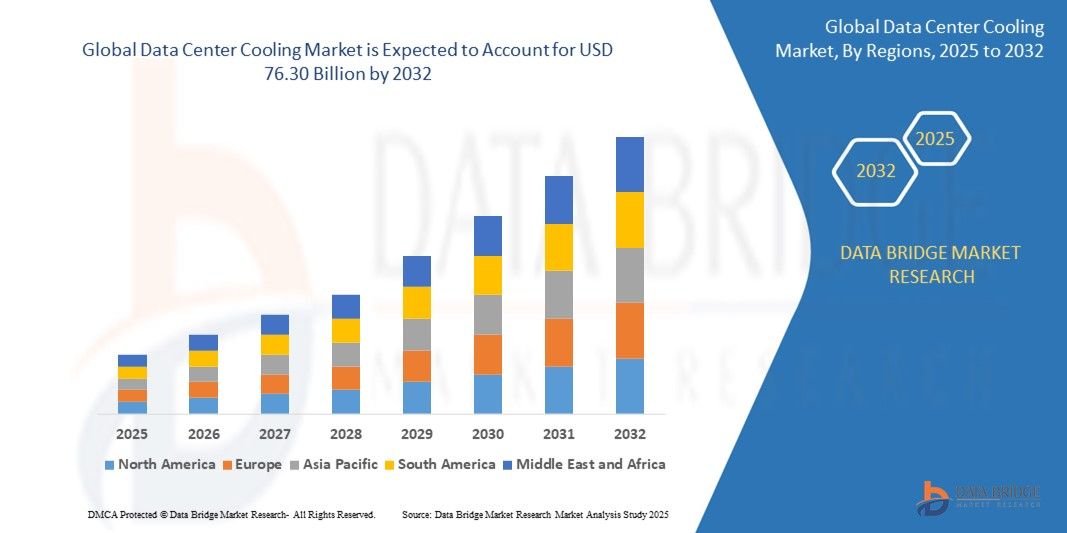
According to Data Bridge Market Research, the size of the worldwide data center cooling market was estimated at USD 18.43 billion in 2023 and is expected to grow at a compound annual growth rate (CAGR) of 17.1% from 2024 to 2031, reaching USD 65.17 billion.
Read More: https://www.databridgemarketresearch.com/reports/global-data-center-cooling-market
Conclusion
Advanced cooling techniques are essential for reducing energy costs and enhancing the sustainability of data centers. By adopting liquid cooling, free cooling, containment strategies, AI-driven optimizations, and renewable energy solutions, businesses can achieve significant cost savings while improving efficiency. Investing in these innovations ensures that data centers remain both financially and environmentally sustainable in the long run.
Appreciate the creator