qPCR Assays in Pharmaceutical and Drug Development Research
Pharmaceutical research uses genetic tracking systems to assess the safety and efficacy of nucleic acid therapies. qPCR assays enable precise quantification of gene expression changes in biological samples, supporting analysis of cellular responses during preclinical development. These molecular tools help laboratories monitor transcriptional alterations across the drug development lifecycle.
Standardized qPCR workflows improve data reproducibility and support regulatory validation. Understanding gene expression dynamics allows research teams to accelerate therapeutic discovery with high accuracy and consistency.
Fundamentals of Quantitative PCR in Biopharma
Genetic monitoring platforms use amplification techniques to detect low-abundance nucleic acid sequences in patient samples. In biopharma, qPCR Assays are designed to quantify viral vectors or therapeutic genetic material by tracking fluorescence signals generated during DNA amplification. Measurements taken during the exponential phase allow accurate estimation of the initial template quantity.
qPCR systems combine thermal cycling units with sensitive optical detectors:
Intercalating dyes bind to double-stranded DNA to generate real-time signals.
Hydrolysis probes provide sequence-specific detection with high accuracy.
Reference dyes correct for background optical variation across wells.
Internal controls confirm reaction efficiency and rule out inhibition.
These formats enable precise and adaptable genetic quantification for diverse research applications.
Gene Expression Profiling and Target Validation
Validating a therapeutic mechanism requires tracking how candidate molecules alter cellular transcription over time. Researchers use automated qPCR analysis to quantify relative mRNA levels in treated cells compared with controls, helping confirm whether a drug affects intended genetic pathways before advancing to costly in vivo studies.
High-throughput transcriptional workflows follow key validation steps:
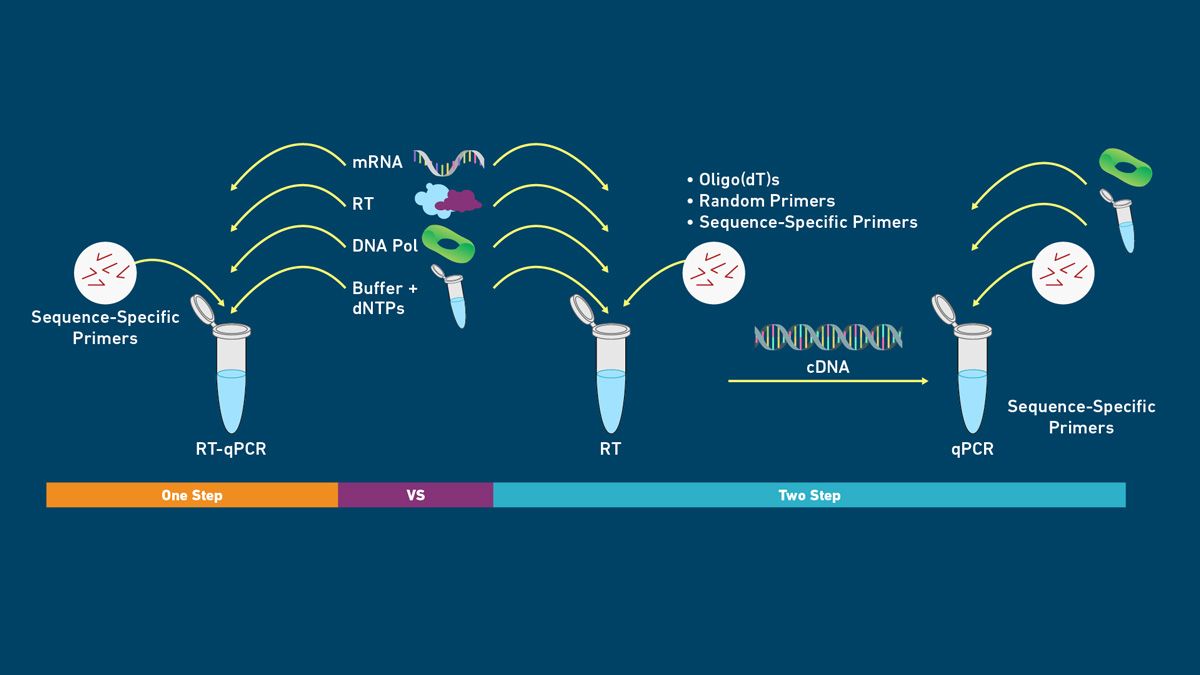
Reverse transcription converts RNA into stable cDNA for amplification.
Housekeeping genes normalize variations in input material across samples.
Melting curve analysis confirms a single, specific amplification product.
Efficiency checks ensure near-ideal doubling during each PCR cycle.
These controls ensure reliable and reproducible gene expression data for target validation.
Must Read: Cell Toxicity Assay Sample Preparation and Laboratory Guidelines
Quantifying Genetic Variations and Transgene Copy Numbers
Cell line development requires precise genetic mapping to ensure stable therapeutic protein expression across production generations. Scientists perform copy number analysis to determine how many transgene copies integrate into the host genome, helping prevent variability caused by gene loss or silencing.
Key steps in copy number variation assays include:
Genomic DNA extraction isolates high-quality DNA from cultured cells while preserving integrity and avoiding fragmentation that could distort copy number calculations.
Specific primers are designed to bind only transgene integration sites, ensuring amplification excludes native host genome sequences and improves measurement specificity.
Reference genes with known single-copy presence in the genome are used as internal controls to normalize and accurately quantify relative copy-number changes.
Multiplexing approaches enable simultaneous amplification of both target transgenes and reference sequences in the same reaction well, thereby improving efficiency and consistency.
These measurements help identify genetically stable clones suitable for consistent large-scale biomanufacturing.
Advanced Digital Droplet Methods for Absolute Quantitation
Standard real-time PCR methods rely on external standard curves to estimate nucleic acid concentrations. In contrast, advanced cell and gene therapies require higher precision without dependence on reference curves. The digital droplet PCR (ddPCR) approach addresses this by partitioning a single sample into thousands of droplets, each serving as an independent reaction unit that is either positive or negative for amplification.
Digital droplet platforms provide key advantages for low-frequency mutation and trace detection:
Absolute quantification removes the need for external standard curves and calibration series.
Sample partitioning reduces the impact of inhibitors present in complex biological matrices.
High mismatch tolerance enables detection of highly variable viral strains in clearance studies.
Poisson-based analysis converts positive- and negative-droplet ratios into precise absolute copy numbers.
These features make ddPCR essential for high-precision safety and quality assessment in advanced therapeutic development.
Bioanalytical Workflows for Macromolecules
The increasing complexity of biologics requires pharmacokinetic tracking approaches that go beyond traditional small-molecule chromatography. Large Molecule Bioanalysis plays a critical role in integrating molecular genomics into bioanalysis, enabling precise monitoring of gene therapy vector distribution in vivo. Researchers extract circulating nucleic acids from serum to confirm whether therapeutic vectors reach target tissues and maintain transgene expression over time.
Regulated bioanalytical workflows follow strict validation requirements for global regulatory compliance:
Lower limit of quantification (LLOQ) defines the smallest detectable nucleic acid copy number with acceptable precision and accuracy.
Dilution linearity studies ensure high-concentration samples remain quantitatively reliable after serial dilution.
Matrix stability assessments evaluate nucleic acid integrity under different storage conditions and freeze–thaw cycles.
Specificity testing confirms primers do not amplify endogenous host genomic sequences.
Adherence to these validation standards ensures robust genomic datasets suitable for regulatory review.
Conclusion
Quantitative genetic tracking systems are a core pillar of modern biopharmaceutical discovery and product safety assessment. Implementing real-time and digital polymerase chain reaction workflows enables evaluation of gene expression, transgene stability, and biodistribution profiles. These molecular methods provide the sensitivity and absolute quantification required to meet international regulatory expectations. By delivering precise and reproducible genomic data, these platforms help accelerate the translation of novel therapies into clinical applications. Validated genetic assays remain essential for ensuring data integrity in drug development.
Appreciate the creator