Preventing Legal Disputes Through Better Patient Communication
Introduction
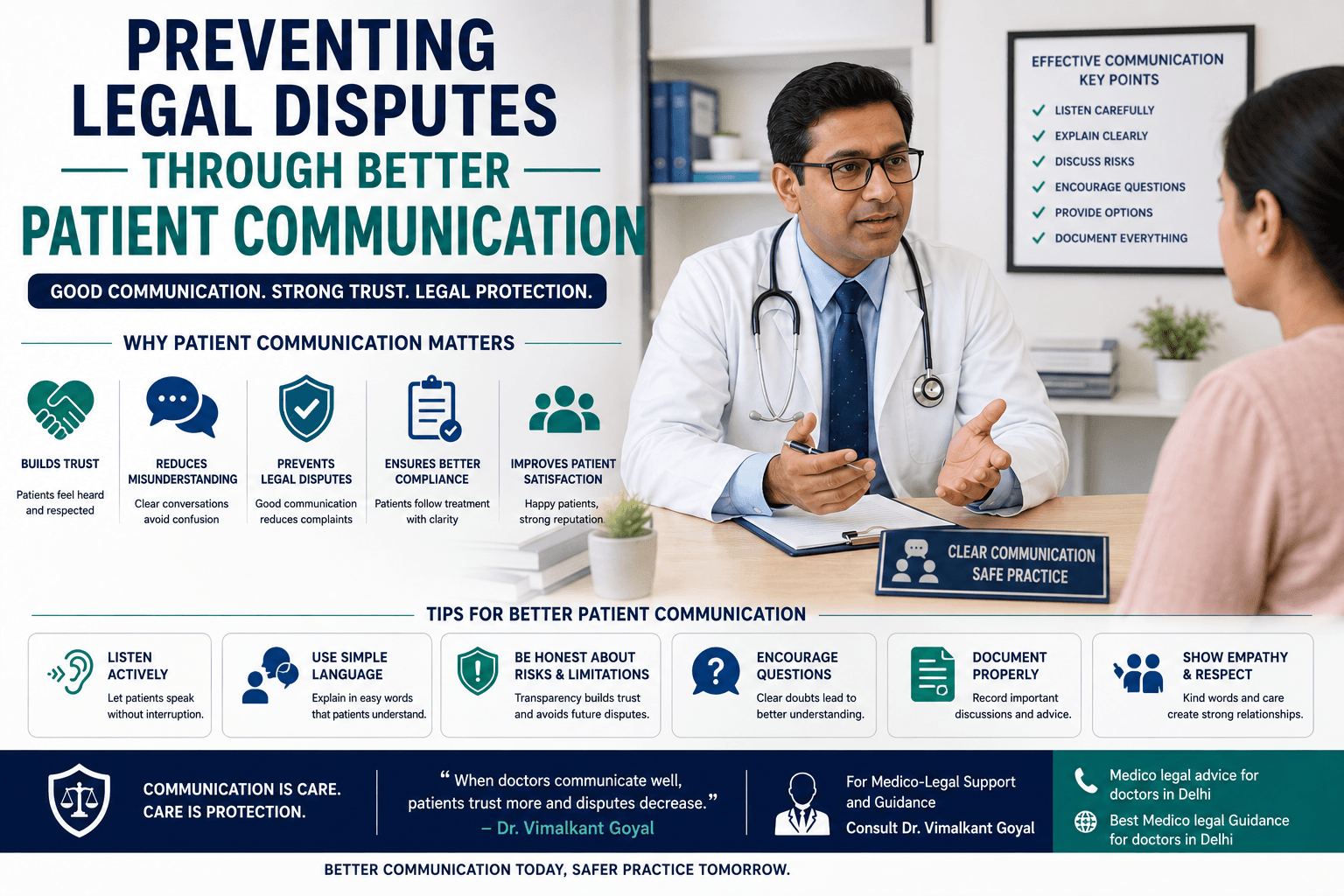
In modern healthcare practice, good communication is just as important as good treatment. Many medico-legal disputes today happen not because of medical negligence, but because patients feel confused, ignored, or poorly informed. A doctor may provide correct treatment, yet still face complaints due to communication gaps.
In a busy healthcare environment like Delhi, where patient expectations are increasing rapidly, doctors must focus on building trust through clear and respectful communication. According to Dr. Vimalkant Goyal, effective patient communication is one of the strongest protections against unnecessary legal disputes.
Patients want doctors who:
Listen carefully
Explain clearly
Show empathy
Discuss risks honestly
Answer questions patiently
Good communication improves patient satisfaction, strengthens trust, and reduces misunderstandings that may later become legal conflicts.
Today, many healthcare professionals seek Medico legal advice for doctors in Delhi to improve communication practices and reduce professional risks. This guide explains how better patient communication can help doctors prevent legal disputes and create safer medical practice environments.
Common Causes of Communication-Related Legal Problems
Most patient disputes begin with misunderstanding rather than intentional mistakes. Understanding these causes helps doctors improve their communication systems.
1. Rushed Consultations
Busy schedules often lead doctors to spend very little time explaining conditions or treatment plans. Patients may leave confused or dissatisfied.
2. Using Complicated Medical Language
Technical medical terms can make patients feel overwhelmed. If patients do not understand their diagnosis or treatment properly, they may later claim they were not informed.
3. Lack of Transparency About Risks
Patients should understand:
Possible complications
Treatment limitations
Recovery expectations
Side effects
Hiding or minimizing risks can damage trust later.
4. Poor Listening Habits
Interrupting patients or ignoring concerns can make them feel disrespected and emotionally disconnected from the doctor.
5. Miscommunication About Costs
Unexpected medical expenses often become a major reason for patient dissatisfaction and complaints.
6. Failure to Document Conversations
Verbal discussions without proper documentation can create legal problems if disputes arise later.
This is why every healthcare professional should follow a proper Legal compliance guide for doctors in Delhi while handling patient interactions.
Signs You Should Not Ignore
Certain warning signs indicate communication gaps that may eventually lead to medico-legal disputes.
1. Patients Frequently Asking the Same Questions
Repeated confusion suggests that explanations may not be clear enough.
2. Patients Appearing Angry or Frustrated
Emotional reactions often indicate dissatisfaction or misunderstanding.
3. Family Members Demanding Repeated Clarifications
Attendants who remain unconvinced after explanations may later escalate complaints.
4. Negative Online Reviews
Repeated complaints about doctor behavior, communication, or transparency should be taken seriously.
5. Patients Claiming “Nobody Told Us”
This is one of the most common statements in medico-legal disputes.
As explained by Dr. Vimalkant Goyal, early attention to communication issues can prevent serious legal complications in the future.
How to Fix / Treat Communication Problems in Medical Practice
Better communication is a skill that doctors can improve through simple daily habits.
1. Spend a Few Extra Minutes with Patients
Even short but focused communication improves patient confidence significantly.
Doctors should:
Listen carefully
Maintain eye contact
Allow patients to speak without interruption
Patients value attention and empathy.
2. Use Simple and Easy Language
Avoid excessive medical terminology.
Instead of:
“Hypertension”
Say:“High blood pressure”
Simple explanations reduce confusion and improve understanding.
3. Explain Risks Honestly
Doctors should never give unrealistic guarantees such as:
“Nothing will happen”
“100% recovery”
Every treatment carries risks. Honest communication protects both doctors and patients.
4. Encourage Questions
Patients should feel comfortable asking questions about:
Diagnosis
Treatment options
Recovery
Side effects
Costs
A patient who feels heard is less likely to become legally aggressive later.
5. Maintain Proper Documentation
Important discussions should always be documented in patient records.
Include:
Risks explained
Consent discussions
Follow-up instructions
Patient refusals or non-compliance
Documentation supports communication legally.
6. Improve Communication During Emergencies
In critical situations:
Stay calm
Provide regular updates
Avoid false promises
Inform family members honestly
Silence during emergencies often increases panic and distrust.
7. Use Written Instructions
Providing written advice for:
Medicines
Diet
Follow-up
Warning signs
helps reduce confusion after consultations.
8. Train Clinic Staff
Reception staff and assistants should also communicate professionally and respectfully with patients.
Poor staff behavior can damage the clinic’s reputation and create disputes.
9. Avoid Casual Digital Communication
WhatsApp or social media communication should remain professional.
Doctors should avoid:
Informal medical advice
Emotional arguments
Sharing patient information casually
According to Dr. Vimalkant Goyal, digital professionalism is now an essential part of safe medical practice.
10. Seek Professional Legal Guidance
Healthcare professionals should regularly seek Best Medico legal Guidance for doctors in Delhi to strengthen communication systems and reduce legal vulnerability.
Expert Tips
Build Trust Before Problems Arise
Strong doctor-patient relationships often prevent conflicts even during difficult outcomes.
Never Ignore Patient Emotions
Empathy is extremely important in healthcare communication.
Sometimes patients simply want reassurance and understanding.
Avoid Defensive Communication
Doctors should remain calm during complaints or disagreements.
Aggressive responses often worsen situations.
Conduct Communication Training
Hospitals and clinics should regularly train doctors and staff in patient interaction skills.
Stay Legally Aware
Communication failures can quickly become legal issues. Many professionals now seek Medico legal advice for doctors in Delhi to improve patient handling and reduce disputes.
Conclusion
Better patient communication is one of the most powerful tools for preventing legal disputes in healthcare practice. Most patients do not expect perfection, but they do expect honesty, respect, transparency, and empathy.
Simple communication habits like listening carefully, explaining clearly, discussing risks honestly, and maintaining proper documentation can significantly reduce medico-legal risks.
Following a proper Legal compliance guide for doctors in Delhi helps healthcare professionals create safer, more trusted, and legally secure medical practices.
As emphasized by Dr. Vimalkant Goyal, communication is not just a soft skill—it is an essential part of professional and legal protection for doctors.
Healthcare professionals seeking Best Medico legal Guidance for doctors in Delhi should prioritize communication improvement as part of responsible medical practice management.
FAQs
1. Why do communication problems lead to legal disputes?
Patients often file complaints when they feel uninformed, ignored, or misunderstood, even if treatment was medically correct.
2. How can doctors improve patient communication?
Doctors can improve communication by listening carefully, using simple language, explaining risks honestly, and encouraging patient questions.
3. Is documentation important for communication-related disputes?
Yes. Proper documentation provides legal evidence that discussions, risks, and instructions were explained to patients.
4. Can poor staff behavior create legal risks for clinics?
Absolutely. Unprofessional communication by clinic staff can damage trust and increase patient dissatisfaction.
5. Why should doctors seek medico-legal guidance?
Professional guidance helps doctors strengthen legal safety, communication systems, and regulatory compliance in medical practice.
Appreciate the creator