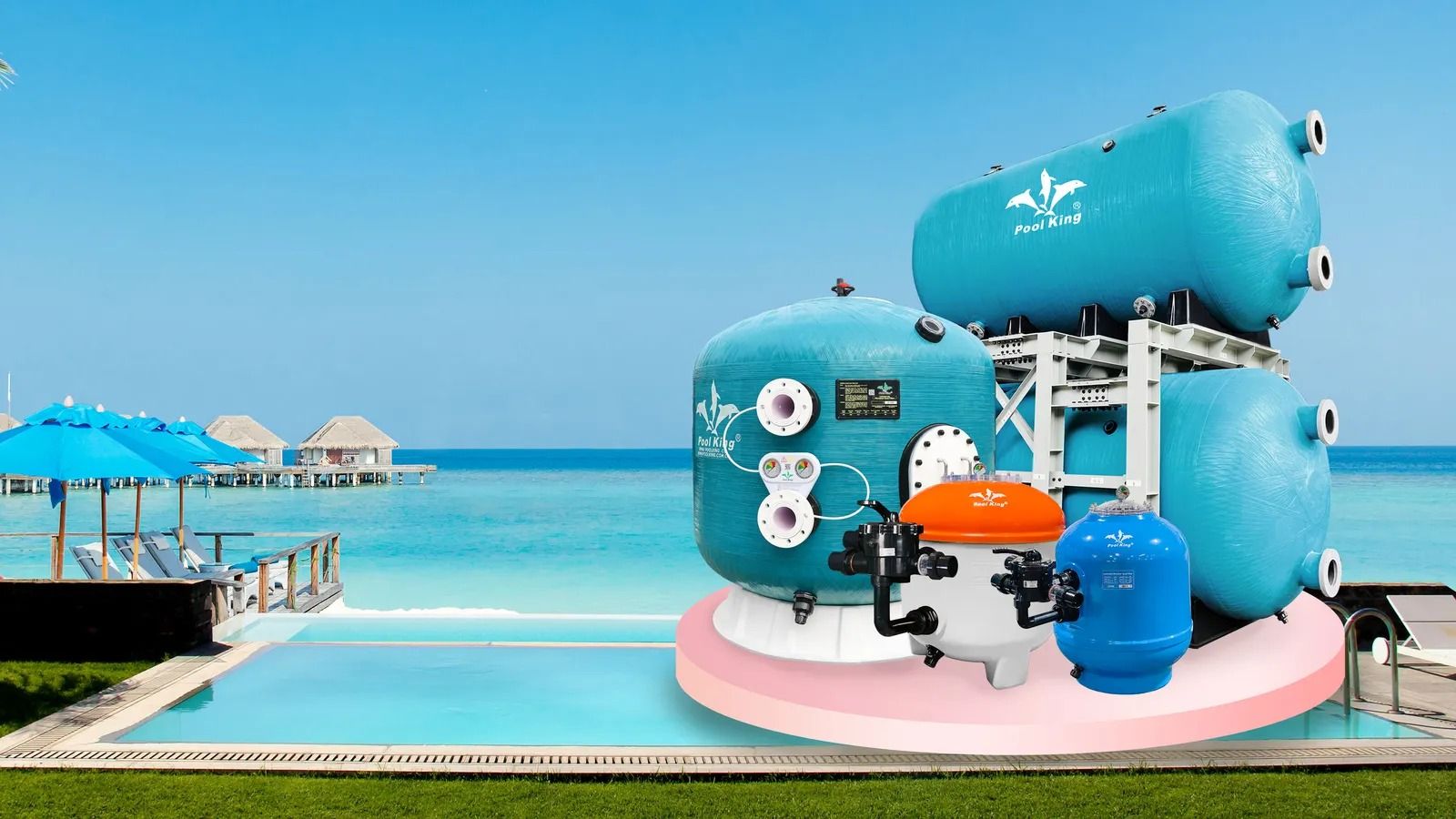
Pool Equipment Supplier Tips: Sand Filters vs Cartridge vs DE Filters
Choosing the right filtration type affects water clarity, maintenance workload, and long-term operating cost, yet many buyers default to whatever their previous pool used without comparing the actual trade-offs between the three main filter types available on the market today.
Sand filters are the most common choice for their simplicity and low maintenance demands across residential and light commercial use. Backwashing clears trapped debris in minutes, and sand media typically lasts five to seven years before replacement is needed. Filtration fineness is moderate, generally capturing particles down to 20 microns, which is adequate for most residential and many commercial applications with steady bather loads.
Cartridge filters offer finer filtration, typically capturing particles down to 10 to 15 microns, and use less water overall since they do not require backwashing at all. Maintenance involves periodically removing and rinsing the cartridge, which is straightforward but needs to happen more frequently than sand filter backwashing schedules. Any established pool equipment supplier can advise on cartridge sizing relative to your pool volume and bather load before you commit to a purchase.
DE, or diatomaceous earth, filters provide the finest filtration of the three, capturing particles down to 2 to 5 microns, making them the preferred choice for pools prioritising exceptional water clarity above all else. They require more hands-on maintenance, including periodic DE powder recharging after each backwash, and generate a filter cake that needs proper disposal according to local regulations.
Cost Comparison Over Time
Sand filters typically have the lowest upfront cost and lowest ongoing consumable expense over a multi-year period. Cartridge filters cost more upfront but save on water usage significantly. DE filters have the highest ongoing maintenance involvement but deliver the clearest water of the three options by a noticeable margin.
Matching Filter Type to Pool Use
High bather load commercial pools often benefit from DE filtration’s clarity during busy periods, while low-maintenance residential pools frequently favour sand filters for their simplicity and forgiving nature.
Environmental Considerations
Cartridge and DE systems use significantly less backwash water than sand filters over a season, which matters in regions facing water restrictions or unusually high water costs from the local utility.
Combining Filter Types in Larger Facilities
Some larger commercial facilities use different filter types across different pools or water features on the same site, matching each filtration method to that specific feature’s bather load and clarity requirements rather than standardising on one type site-wide.
This approach adds some complexity to maintenance planning but can optimise both cost and performance across a facility with genuinely different demands in different areas.
Retrofitting an Existing Filtration System
Pools originally built with one filter type can sometimes be retrofitted to a different system, though the practicality depends heavily on existing plumbing, pump sizing, and available equipment pad space.
Retrofitting is usually more cost-effective when replacing an ageing system anyway, since the labour required to swap plumbing connections is largely unavoidable regardless of timing. Planning a filter type change to coincide with a scheduled pump replacement often makes the most financial sense for budget-conscious owners.
This planning approach applies equally well to new pool construction, where filter type should be decided early alongside pump and plumbing sizing.
Conclusion
There is no universally superior filter type, only the right choice for a given pool’s bather load, maintenance preference, and water clarity priorities. Weighing these trade-offs carefully in 2026 leads to a filtration decision that fits the pool’s actual operating conditions.
Visit: https://www.poolking.co
Appreciate the creator