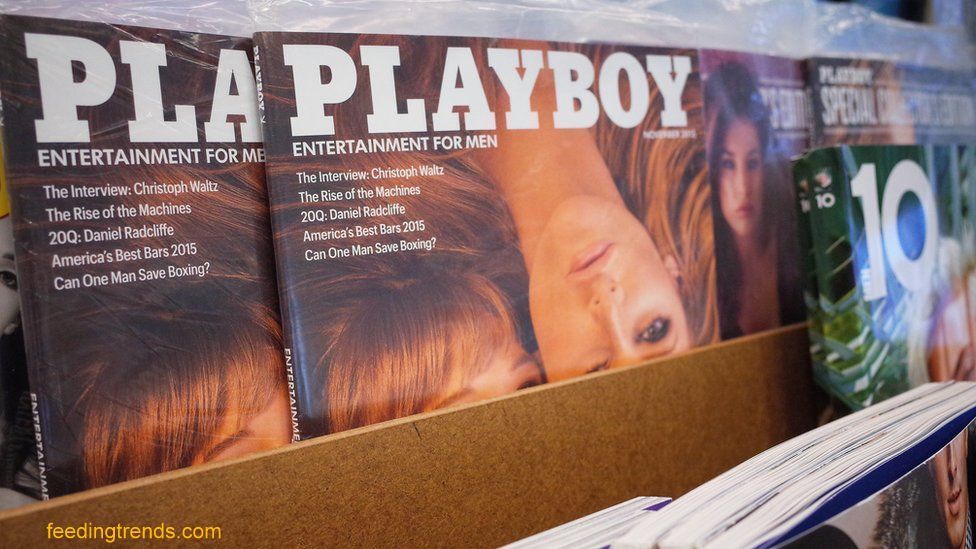
Playboy - Hugh Hefner'S Dream
Few people today remember just how big of a game-changer Playboy was during the 1960s. That’s why, in honor of Hugh Hefner’s, passing we’ll be exploring the spectacular rise of Playboy.
1. Hugh Hefner Early Life
Hugh Hefner was born in Prohibition-era Chicago to a Protestant family. His parents were extremely conservative to the point where they not only prevented him from drinking smoking and swearing but also did not allow him to go to the movies on Sundays. The subject of sex was complete anathema to them, and, unsurprisingly, Hefner grew up to be a very introverted young man. To escape from his conservative reality. He would often turn to drawing comics and creative writing. After graduating from college, with a psychology major, he landed an advertising job at Esquire magazine. While working there. He got very involved with the content and this let him understand what made Esquire successful.
As more and more young Americans graduated from college and got well-paying jobs. The demand for a higher-quality lifestyle became apparent. Esquire tapped into this new demand, exceptionally well by painting a picture of what the modern educated American should look like. According to them, he should be sophisticated yet worldly with an interest in fancy sports cars, good food, expensive, clothing, and, of course, good-looking women. Hefner realized how successful this formula was, and so he was eager to try applying it on his own. When his boss at Esquire, refused to give him a five-dollar raise in 1952 Hefner quit and set about creating his magazine.
2. Hefner Started his own Magazine of Beautiful Naked Woman
Right off the bat, he wanted to take Esquire’s concept to the next level, and what better way to do that than by adding naked women into the mix. Now that in and of itself wasn’t, particularly revolutionary there’d been plenty of “dirty” magazines in the States by that point all of them, however, very shoddy items. They were printed on the lowest quality paper possible and were generally not something you’d, be proud to show to your neighbors.
What made Hugh Hefner’s idea unique was to combine the high-quality content of a lifestyle magazine with the sexual liberty of showing beautiful naked women. To get his idea rolling he invested almost all of his life savings and when they ran out, he ended up selling $ 8000 worth of stock to investors and getting $ 1000 from his mother. He also hired his dad to be his accountant, but despite their involvement, neither of his parents read a single issue of the magazine. Initially, he wanted to call it Stag Party, but due to a copyright dispute, he ended up, naming it Playboy. For the first issue, he bought the famous Nude calendar pictures of Marilyn Monroe for $ 200 and added quite a lot of spicy cartoons and jokes.
He published the first issue of Playboy in December of 1953, but he was so uncertain of its future that he didn’t even put a publishing date on it. He was afraid nobody would buy it, but in fact, Playboy’s very first issue sold 55,000 copies at 50 cents apiece. The gem of Hefner’s magazine from the very beginning, was the “Sweetheart of the Month”, the concept which eventually evolved into the Playmate we know today.
3. Hefner himself Became the Image of Playboy
Marilyn Monroe was a very fitting choice for Playboy’s first issue, but that’s not the only reason for its success. The content itself was very interesting and featured articles and stories from some of the best writers and critics of the time. Stephen King, for example, would often submit his short stories at Playboy, as did Ray Bradbury, Ernest Hemingway, and many others. All these authors made Playboy a very high-quality publication, but of course, the real money didn’t come from selling the magazines themselves, but from the advertisements in them. Thanks to his time in Esquire, Hefner knew how to sign the best possible advertisers for Playboy. He wanted the ads in Playboy to reflect the ideal lifestyle of its readers and in a way, the ads helped Hefner establish Playboy’s reputation. Of course, they also carried quite a hefty paycheck and by the time Hefner had published Playboy’s fourth issue. He had made enough money to rent a proper office in downtown Chicago. It’s worth noting that the pictures published in the magazine’s first 15 years are quite tame by today’s standards.
It wouldn’t be until 1972 that Playboy would dabble in full frontal Nudity. Hefner divorced his first wife in 1959 and this left him in a rather weird position. The line between his private and professional life dissolved almost entirely to the point where he took on the persona of the sophisticated, successful bachelor that was idealized by Playboy. He essentially became the face of Playboy and he would remain so for the rest of his life. By 1960 the Playboy magazine had become one of the most successful publications in the States boasting a circulation of over a million.
4. Hefner opened several Playboy Clubs across the Country
Using some of the 2.3 million dollars Playboy earned that year Hefner opened a Playboy Club in Chicago, where you’d get served food and drink by the iconic Playboy Bunnies. The club was an instant success and attracted over a hundred thousand visitors. Just in the last three months of 1961. Before long Hefner had opened Playboy clubs across the country and was also buying up various other real estate, including hotels and casinos.
At the end of the 1960s, Playboy boasted 127 million dollars in sales and by that point its content alone was exceptional. The magazine became well known for its upfront and in-depth interviews with some of the most high-profile public figures of the time. Playboy Journalists interviewed Malcolm X, Miles Davis, the Beatles, and many other famous people. The early 1970s became the golden age of Playboy, as America experienced the full force of the sexual revolution. Hugh Hefner further cemented his bachelor persona by purchasing what is now known as the Playboy Mansion for $ 1.1 million in 1971. Located near Beverly Hills, Hefner would frequently Host lavish parties there is a very Great Gatsbyesque fashion. Just a year later, Playboy recorded its highest ever circulation at 7.2 million readers, and it was now a publicly-traded company. Despite that, Hugh Hefner’s hectic leadership was dragging the company down. While revenues had never been higher. Actual profit was down to just $ 2 million in 1975.
5. Finally Hefner’s Daughter Christie Hefner took over as CEO of Playboy
Hefner’s real estate investments and brief partnership with Columbia Pictures to make movies and tv shows were unprofitable and were eating away at the company’s revenues. This trend continued until the 1980s when the company lost a record $ 69 million over two years. The number of Playboy clubs went down from 22 to just 3 and the likes of Hustler and Penthouse were challenging the Playboy magazine. Finally, in 1982, Hugh Hefner’s daughter, Christie Hefner was made president of Playboy and was put in charge of restoring the declining business. Two years later, she had sold off Playboy’s casinos and was working hard to bring the magazine in line with the times. Just as breaking the sexual taboos of the 1950s gave Playboy its initial kick now. It needed a new direction. For Christie, this meant becoming a champion of social issues, things like freedom of speech, and supporting gay rights and AIDS. Research became the hallmark of Playboy. The magazine still featured Nude women, but it also became a platform for activists and political dissidents, while the move did bring in a more diverse audience it also attracted the unwanted attention of the government.
In 1986, the Reagan administration, labeled Playboy as pornographic, which immediately caused sales to plummet. Just four years later, the magazine was down to just 3.4 million readers and its only lifeline was its newly promoted subscription service. Christie directed her sights outwards and that paid off. She licensed 14 international editions across Asia and Europe, which collectively had over a million and a half readers by 1990. Her next move was to meet Hustler and Penthouse. On the media’s latest battlefield the internet Playboy became one of the first national magazines to have its Web site and within its first year, it had recorded a peak of half a million visitors in a single day. By the end of 1997. It was generating 7 million visits per day and was bringing in significant income from online advertising. But in the years after 2000, competition quickly brought Playboy down to its knees.
6. Playboy’s Downfall
Other publications dropped the heavy thought-intensive articles in favor of shorter content that could be read more quickly. Another trend of newer publications was to feature celebrities photographed as close to Nude as possible, without actually being nude. In this way, they could be shown next to regular magazines, unlike Playboy, which had to be kept to the side. The company struggled through the early 2000s and finally posted a loss of $ 160 million in 2008. After failing to re-enter the TV and casino businesses. Christie resigned the same year and since then the company has been mostly going downhill. Hefner took Playboy private in 2011, with the help of a company called Rizvi Traverse upon the condition that they would purchase Hefner’s 33 % stake within a year of his death.
Hefner then passed the day-to-day operations of Playboy to his youngest son Cooper. Who at 26 is already living life as wild as his father’s. But while he seems eager to restore Playboy’s popularity, some insiders are questioning whether the company should even continue to exist in light of Hugh Hefner’s passing.
Just one of the many signs of its declining image is the fact that Hugh Hefner sold the Playboy Mansion for only half the amount he wanted in early 2016. Now that he’s gone, the future of Playboy looks increasingly uncertain. The magazine has failed to distinguish itself from its competitors in an already declining industry, thanks to the sheer availability of online nudes. Whether Cooper will be able to save Playboy and whether he’ll even be given the chance to do so remains to be seen. Now, looking back at Playboy’s website from 1996 makes me wonder just how much money they spent on it.
Appreciate the creator