Patient Portals and Better Patient Engagement: What You Need to Know
Digital healthcare is changing how patients interact with hospitals, clinics, physicians, and care teams. People increasingly expect convenient access to appointments, health information, and communication tools without depending only on phone calls or physical visits. This shift has made patient engagement a key priority for healthcare organizations.
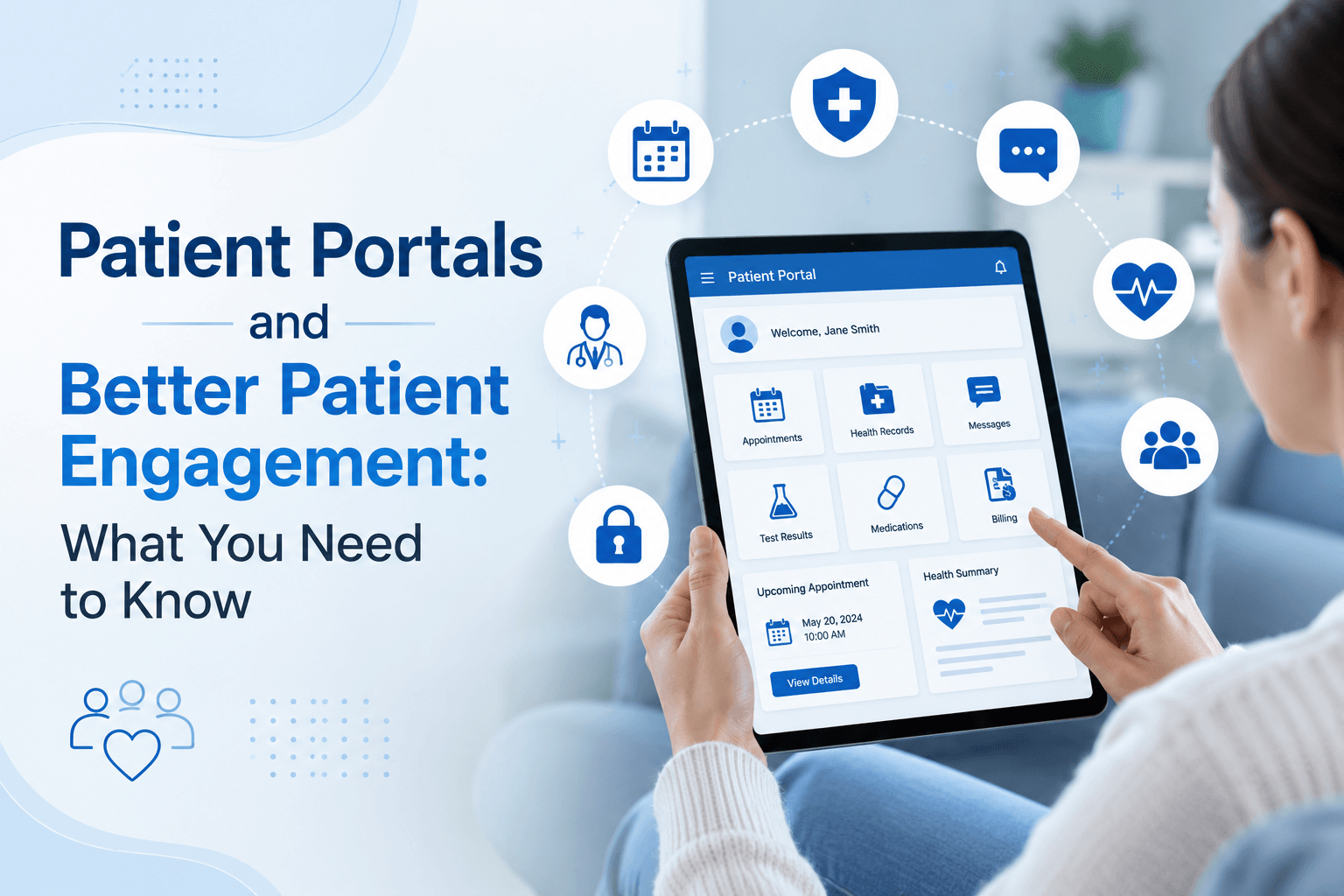
One technology supporting this change is Patient Portals. These secure digital platforms can give authorized users access to selected medical information, test results, appointment details, medication records, and communication features. When designed around real patient needs, portals can create more connected and accessible healthcare experiences.
Why Patient Engagement Matters in Modern Healthcare
Patient engagement refers to how actively individuals participate in appropriate aspects of their healthcare journey. Better engagement can involve understanding care instructions, preparing questions, managing appointments, reviewing available information, and communicating with healthcare professionals.
Technology alone cannot create meaningful engagement. Healthcare organizations need digital tools that are easy to use, accessible, secure, and connected with existing workflows. A portal becomes valuable when it reduces friction and helps patients complete relevant tasks with greater clarity.
Digital Access Can Support Greater Participation
Patients often receive information across multiple visits, providers, and care settings. Without a convenient access point, keeping track of appointments, medication details, and care instructions can become difficult.
A digital portal can organize selected information in one authorized environment. This may help patients review relevant details before or after visits and become better prepared for conversations with qualified healthcare professionals.
Easier Access to Health Information
Access to personal health information is one of the main reasons healthcare organizations implement portals. Depending on system capabilities, users may view laboratory results, allergies, medication lists, immunization records, clinical summaries, and discharge instructions.
This access can reduce repeated requests for routine records and make information more convenient to find. However, clinical data should be presented carefully because medical terminology and test values may require professional interpretation.
Helping Patients Prepare for Healthcare Conversations
When patients can review relevant information before an appointment, they may identify questions or concerns they want to discuss. After a visit, access to selected summaries and instructions can help them revisit important information.
Portals should not replace medical advice or professional interpretation. Instead, they should support clearer access while providing appropriate pathways for patients to contact their care teams when clarification is needed.
Improving Communication With Care Teams
Communication is central to patient engagement. Traditional channels such as phone calls remain essential, but they may be inefficient for some routine or non-urgent interactions.
Secure portal messaging can provide an additional communication channel. Depending on provider policies, patients may use it for administrative requests, follow-up questions, or clarification of instructions. Clear response expectations are important because portal messages are generally not intended for emergencies.
Creating Better Messaging Workflows
A messaging feature is useful only when healthcare organizations manage it effectively. Different requests may need to reach physicians, nurses, scheduling teams, billing departments, or other authorized staff.
Organizations should define message ownership, routing rules, expected response times, and escalation procedures. Without these processes, digital messaging can increase workloads rather than improve communication.
Making Appointment Management More Convenient
Scheduling is a common source of friction in healthcare. Patients may need to call during office hours, wait for assistance, or manage appointment information through separate communication channels.
A patient portal can support appointment requests, reminders, visit details, and selected pre-visit forms. When connected with scheduling systems, these capabilities can make routine appointment management easier for both patients and administrative teams.
Reducing Missed Information Before Visits
Patients often need details about appointment times, locations, preparation requirements, or required documents. If this information is scattered across calls and messages, confusion can occur.
A portal can provide a consistent place for selected visit information. Notifications and reminders may also help patients stay aware of upcoming appointments, although organizations should design these features around privacy and communication preferences.
Connecting Portals With Electronic Health Records
Electronic Health Records, or EHRs, are central to many healthcare environments. These systems may contain diagnoses, clinical notes, medication information, allergies, laboratory results, and treatment histories.
A portal can provide an authorized patient-facing layer for selected information connected with an EHR. Effective integration can reduce fragmented experiences and help ensure that digital access aligns with established healthcare workflows.
Supporting Accurate and Connected Workflows
EHR integration requires careful attention to data synchronization, user permissions, identity verification, consent, and result-release policies. Different categories of information may require different access rules.
Healthcare organizations should also consider how portal activities affect staff workflows. Appointment requests, messages, and information updates should reach the correct systems and teams instead of creating disconnected manual processes.
Security and Privacy Build Patient Trust
Healthcare portals may process Protected Health Information (PHI), personally identifiable information, authentication data, and private communications. Security is therefore a fundamental requirement rather than an optional feature.
In the United States, the Health Insurance Portability and Accountability Act (HIPAA) may apply depending on the organization and its role. Healthcare providers must evaluate relevant privacy, security, and regulatory obligations for their operating environment.
Strong Authentication Protects Sensitive Access
Identity and Access Management helps healthcare organizations control who can view sensitive information. Authentication verifies identity, while authorization determines which records and functions a user may access.
Relevant controls may include multi-factor authentication, secure account recovery, session management, role-based permissions, and suspicious activity monitoring. Organizations may also need controlled proxy access for authorized caregivers, parents, or guardians.
Interoperability Creates More Connected Experiences
Healthcare information may exist across hospitals, clinics, laboratories, pharmacies, and specialized applications. Fragmented systems can make it difficult to create a consistent patient experience.
Interoperability helps different healthcare systems exchange and use information more effectively. For portals, this can support better connectivity with EHR platforms, mobile applications, scheduling tools, and other authorized services.
Understanding the Role of FHIR and HL7
Fast Healthcare Interoperability Resources (FHIR) is a healthcare data exchange standard developed by Health Level Seven International (HL7). It supports structured electronic information exchange using standardized resources and modern web technologies.
FHIR-based APIs can help connect healthcare applications and services. However, these interfaces still require strong authentication, authorization, validation, logging, monitoring, and appropriate data governance.
Mobile-Friendly Design Can Increase Accessibility
Many people rely on smartphones as their primary way to access digital services. A patient portal that performs poorly on mobile devices may create barriers for users who rarely use desktop computers.
Responsive design should keep navigation, forms, authentication, notifications, and information readable across screen sizes. Mobile usability can directly influence whether patients continue using a digital healthcare platform.
Accessibility Should Be a Core Requirement
Healthcare organizations serve people with different abilities, languages, digital skills, and levels of health literacy. Accessible design may include keyboard navigation, screen-reader support, readable contrast, scalable text, and clear labels.
Organizations should also consider older adults and users with limited technology experience. A feature-rich portal has limited value if significant parts of the intended population cannot use it confidently.
Supporting Telehealth and Hybrid Care Models
Telehealth has increased the need for connected patient experiences. A portal can provide access to virtual visit details, pre-visit forms, appointment information, and selected follow-up resources.
This is particularly useful in hybrid care models where patients move between virtual and in-person services. Connected workflows can help reduce fragmentation and make different stages of care easier to manage.
Creating Continuity Across Care Channels
Patients may receive reminders, complete forms, join virtual workflows, and review follow-up information through related digital processes. This can create a more consistent experience across care settings.
Effective hybrid care still requires coordination between scheduling, identity verification, clinical documentation, and communication. Portals can support this coordination when integrated with broader healthcare systems.
Reducing Administrative Friction
Healthcare staff frequently handle routine requests involving appointments, forms, records, and general information. Some of these tasks can be supported through secure self-service capabilities.
The operational benefit depends on integration. If staff must manually copy every portal request into another system, the technology may create more work. Digital workflows should connect with relevant clinical and administrative processes where practical.
Automation Should Solve Real Workflow Problems
Appointment requests, reminders, digital intake forms, and selected profile updates may benefit from automation. Properly connected workflows can reduce duplicate data entry and improve consistency.
Healthcare organizations should define ownership and escalation rules before automating tasks. Technology should simplify a process rather than move the same inefficiency from one channel to another.
Why Custom Patient Portal Development Matters
Healthcare organizations have different patient populations, workflows, integration requirements, and security needs. A hospital network may need different portal capabilities from a specialty clinic, diagnostic provider, or digital health company.
Custom development can support specialized workflows, EHR connectivity, healthcare APIs, branded experiences, and specific operational requirements. The decision should be based on measurable patient and business needs rather than unnecessary customization.
Aligning Technology With Real Patient Needs
Successful portal development begins with understanding how patients and staff interact with healthcare services. Teams should evaluate registration, scheduling, records access, messaging, billing interactions, and integration dependencies.
Organizations exploring digital healthcare solutions should assess technology partners based on architecture expertise, security practices, interoperability knowledge, and long-term support. Businesses evaluating Patient Portals can consider SynergyTop when exploring digital development capabilities for healthcare-focused initiatives.
Measuring Patient Engagement and Portal Value
Healthcare organizations should define measurable goals instead of judging success only by the number of features launched. Relevant measures may include active usage, registration completion, appointment self-service, task completion, message response times, and patient feedback.
These metrics can identify barriers in the digital journey. For example, low registration completion may indicate a complicated onboarding process, while repeated support requests may reveal confusing navigation or unclear instructions.
Continuous Improvement Supports Better Engagement
A portal should not be treated as a one-time development project. Patient expectations, cybersecurity threats, interoperability standards, and healthcare workflows continue to evolve.
Ongoing maintenance, accessibility reviews, security assessments, usability testing, and user research can help organizations improve performance. Continuous improvement keeps the platform aligned with real patient behavior and changing operational needs.
The Future of Patient Portals and Engagement
Patient portals are likely to become more connected with telehealth, remote patient monitoring, mobile health applications, wearable technologies, and care management systems. These connections may create more integrated digital healthcare experiences.
Artificial intelligence may also support navigation and administrative assistance. However, healthcare organizations must evaluate AI carefully, considering accuracy, privacy, bias, explainability, clinical oversight, and applicable regulatory requirements.
Moving Toward Connected Digital Health Platforms
Earlier portals often focused on basic appointment or record access. Modern organizations increasingly need platforms that connect registration, scheduling, communication, virtual care, payments, and follow-up.
Building these experiences requires scalable architecture, secure APIs, interoperability standards, identity management, and strong data governance. The broader goal is to create digital systems that support patient engagement without adding unnecessary complexity.
Conclusion
Patient portals can support better engagement by improving access to selected health information, appointment tools, secure communication, and digital care workflows. Their value depends on usability, security, accessibility, and integration with existing healthcare systems.
Healthcare organizations should consider EHR connectivity, HIPAA obligations where applicable, FHIR-based interoperability, mobile design, identity management, and patient trust. A portal should solve real problems for both patients and providers rather than simply add another technology layer.
As healthcare becomes more connected, secure and user-centered portals can play an important role in digital engagement. Organizations that align technology with real workflows and patient needs can create more accessible, coordinated, and sustainable healthcare experiences.
Appreciate the creator