Patient Claims Wrong Diagnosis After Consulting Multiple Doctors: Understanding Legal Responsibility
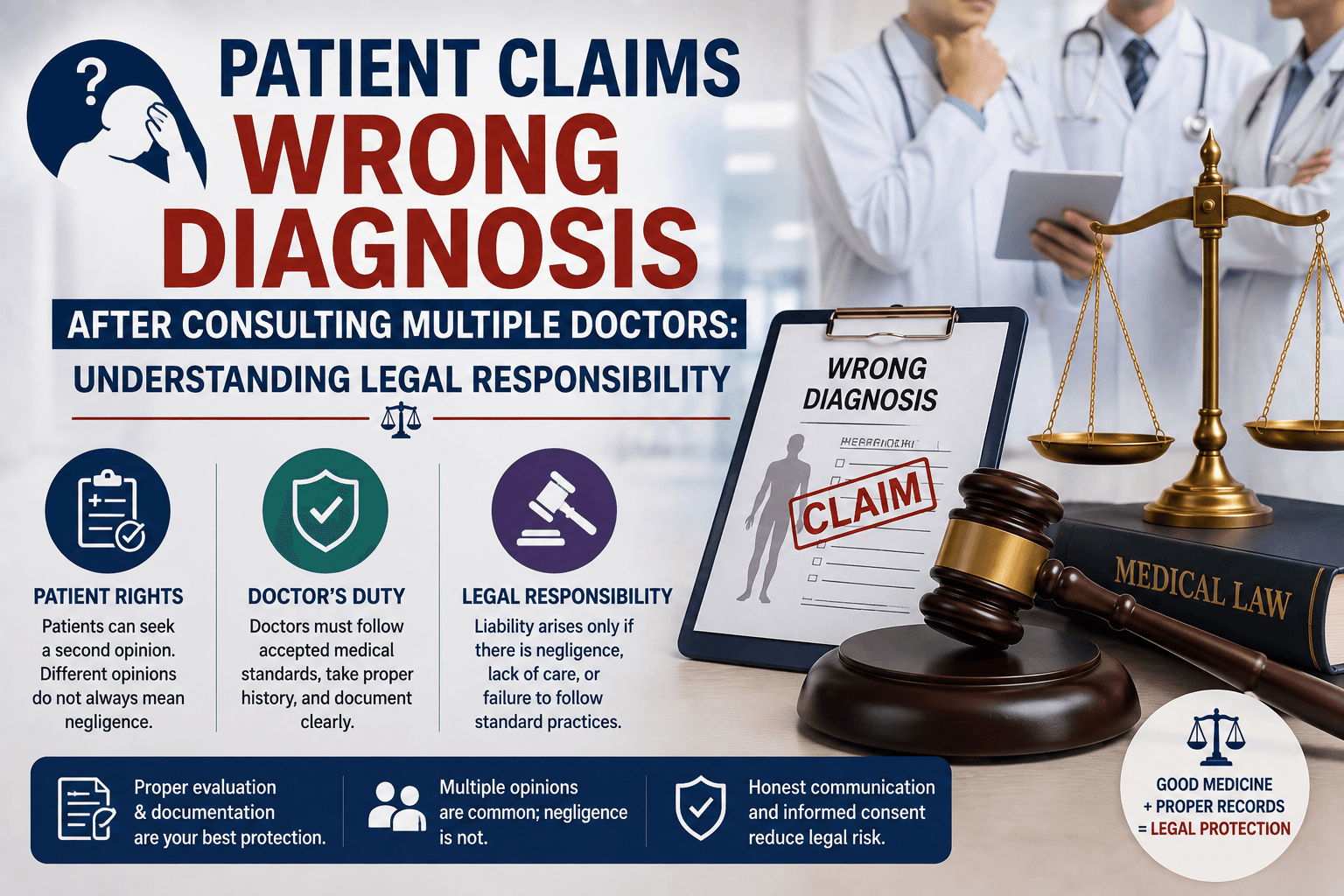
A patient walks into a clinic holding three different prescriptions from three different doctors, each pointing to a slightly different diagnosis. By the time the real problem is identified, weeks have passed, and the patient wants to know who got it wrong. This is one of the trickiest situations a doctor can face, and it's usually the moment someone starts searching for the best medico legal expert in Delhi (https://drvimalkantgoyal.com/best-medicolegal-consultant-in-delhi.php) to understand where responsibility actually sits.
Start With the Real Problem
Diagnostic disagreement between doctors isn't automatically a sign that someone was negligent. Medicine often involves evolving symptoms, incomplete early information, and conditions that only become clear over time. But when a patient has seen multiple doctors, figuring out who is responsible for what becomes genuinely complicated, and that complexity is exactly where a medico legal expert in Delhi is usually consulted first.
What a Diagnosis Actually Represents at Each Stage
A diagnosis isn't a single fixed conclusion. It's a working opinion based on the information available at that particular visit — the symptoms reported, the examination findings, and the investigations done up to that point. A diagnosis made on day one, with limited information, can reasonably differ from one made on day ten with more test results.
What Happens When the Patient's Story Gets Fragmented
When a patient sees multiple doctors without a clear thread connecting each visit, every doctor is essentially working with a partial picture. If earlier notes, investigation reports, or previous impressions aren't shared or reviewed properly, it becomes harder to establish whether a later diagnosis was a reasonable evolution or something that should have been caught sooner.
How Diagnostic Responsibility Actually Works Across Multiple Doctors
Responsibility in these cases is rarely about a single doctor being "right" or "wrong." It tends to depend on what information was available at each stage of care.
Judging Decisions Against What Was Known at the Time
A doctor's diagnostic decision is generally assessed against the information reasonably available to them at that visit, not against what became clear later with hindsight. This distinction matters enormously in cases involving several doctors, because it separates a reasonable clinical judgment from an actual gap in care.
Where Standard Clinical Protocols Come Into the Picture
Following standard clinical protocols for the presenting symptoms — appropriate examination, relevant investigations, and a documented reasoning process — can help show that a decision was sound even if the diagnosis later changed. Skipping expected steps without recording why can make the same decision much harder to explain later.
Small Documentation and Communication Gaps That Complicate These Cases
Most disputes in multi-doctor cases don't come from dramatic errors. They come from small gaps that make the full picture harder to reconstruct.
Common Gaps Worth Watching For
An investigation report ordered but never reviewed before the next consultation. A referral letter that doesn't mention what was already tried. A phone follow-up about worsening symptoms that was never logged. An unclear prescription that the next doctor has to guess about. Each of these seems minor individually, but together they blur the timeline of the patient's care.
Why These Gaps Complicate Legal Review
When records from different doctors don't connect clearly, it becomes difficult to demonstrate that each doctor's decision was reasonable given what they knew. This is often when families or patients approach a medico legal expert in Delhi (https://drvimalkantgoyal.com/), not necessarily because care was poor, but because the documentation doesn't tell a coherent story.
A Practical Approach for Doctors Managing Multi-Doctor Cases
Doctors treating a patient who has already seen someone else can take a few concrete steps to protect both the patient and their own position.
What to Ask, Document, and Confirm
Ask the patient directly about prior consultations, tests, and treatments, and record what they share, even if it's incomplete. Document your own reasoning for agreeing with, revising, or ruling out an earlier diagnosis. If you're referring the patient onward, include what's already been tried and why, so the next doctor isn't starting from zero.
Reviewing Handoffs as Part of Routine Practice
Building a quick habit of reviewing prior reports before finalising a new diagnosis, and documenting that review, can reduce avoidable risk considerably. This single habit often does more to protect a doctor's position than any lengthy note written after a complaint has already been raised.
Why Clear Referral and Handover Records Matter for Hospitals
When multiple doctors are involved within the same hospital or across referrals, the hospital's own systems play a big role in how clearly the story holds together.
Supporting Continuity Between Departments
Hospitals that maintain accessible, well-organised patient records across departments make it far easier for the next doctor to pick up an accurate picture. This isn't just useful for legal review — it directly supports patient safety, since gaps in continuity are often where diagnostic delays actually happen.
Working With a Top Medicolegal Advisor Delhi Hospitals Can Rely On
Many hospitals now involve a top medicolegal advisor Delhi (https://drvimalkantgoyal.com/best-medicolegal-consultant-in-delhi.php) administrators trust, not just after a complaint, but as part of reviewing how referral and handover documentation is structured across departments. This proactive review can reduce avoidable risk and highlight gaps in the underlying documentation habit long before a patient raises a concern.
What Doctors Should Do Before a Diagnosis Dispute Escalates
Most diagnosis-related disputes don't start as legal complaints. They start as confused, frustrated patients trying to understand what happened.
A Short Practical Checklist
Record your clinical reasoning at each visit, not just the conclusion. Note what prior information you reviewed and what you didn't have access to. Document conversations where a patient raises concerns about an earlier diagnosis. Keep referral notes specific about what's already been tried, and confirm investigation reports were actually reviewed before acting on them.
When to Seek Professional Guidance Early
If a patient's case involves several doctors, conflicting impressions, or a diagnosis that changed significantly over time, it's often worth speaking with the best medico legal expert in Delhi early, while records and recollections are still fresh, rather than waiting until a formal complaint is filed. Appropriate documentation can support a doctor's account of care, depending on the circumstances, but that support only holds up if the reasoning behind each decision was recorded clearly in the first place.
Appreciate the creator