
7 Myths You Should Know About Breast Cancer
Breast cancer, or cancer in general, is rarely discussed. But when it's discussed, it's not necessarily backed up by evidence. Can the usage of bras contribute to breast cancer? OR Breast cancer mainly affects women; men do not develop it.
One type of cancer that affects the breast cells is breast cancer.
It is the second most prevalent type of cancer found in women after skin cancer. While this cancer can affect men as well, it affects women much more frequently.

Significant investment in breast cancer research and awareness campaigns has contributed to improvements in the detection and management of cancer. Because of things like earlier identification, a new customized approach to therapy, and a better knowledge of the disease, breast cancer survival rates have grown and the number of fatalities linked to the disease is continuously reducing. So, this is our list of 7 Myths You Should Know About Breast Cancer.
1. MYTH: Breast cancer is not a concern if you keep a healthy weight, engage in regular exercise, consume a nutritious diet, and drink in moderation.
There is proof that each of these actions can help reduce risk. They cannot, however, promise that you won't develop the illness. There are countless instances of people who follow all the appropriate guidelines yet nevertheless develop breast cancer.
2. MYTH: The usage of bras contributes to breast cancer.
The idea that wearing a bra can increase the risk of breast cancer has occasionally been spread through the media and the internet. According to the notion, wearing a bra, especially one with an underwire, could obstruct the lymph fluid's ability to leave the breast, leading to a buildup of poisonous compounds there. This claim, however, is unsupported by any evidence. A 2014 investigation including almost 1,500 breast cancer survivors revealed no connection between bra use and the disease.
3. MYTH: Excessive sugar intake leads to cancer in the breast.

It's a widely held misconception that sugar can feed cancer and hasten its growth, and this is true of all cancers, not only breast cancer. All cells, whether malignant or healthy, require blood sugar, or glucose, as fuel. Cancer cells indeed metabolize sugar more quickly than healthy cells, but there isn't any proof that consuming too much sugar leads to the disease.
4. Myth: Breast cancer mainly affects women; men do not develop it.
On the contrary, it's predicted that 2,190 males will receive cancer in the breast diagnosis each year, and 410 of them will pass away. Men should check themselves regularly by performing a breast self-exam in the shower and informing their doctors of any changes, even if this percentage is still rather low.
Typically, men with cancer in the breast will have a firm bump beneath their nipples and areola.
Men have a mortality rate that is 25% greater than that of women, partly due to men's lower levels of awareness and propensity to delay seeking medical attention when they discover a lump.
5. MYTH: Breast cancer mainly affects women who are middle-aged or older.
The two main risk factors for getting cancer in the breast are indeed gender and advancing age. Invasive cancers affected 4% of women under the age of 40 in 2017, 23% of women in their 50s, and 27% of women between the ages of 60 and 69. 6 4% may seem insignificant, yet it is not zero: Given this ratio, one in every twenty-five instances of invasive breast cancer in women under the age of forty involved young women.
6. MYTH: You can no longer have breast cancer after treatment.
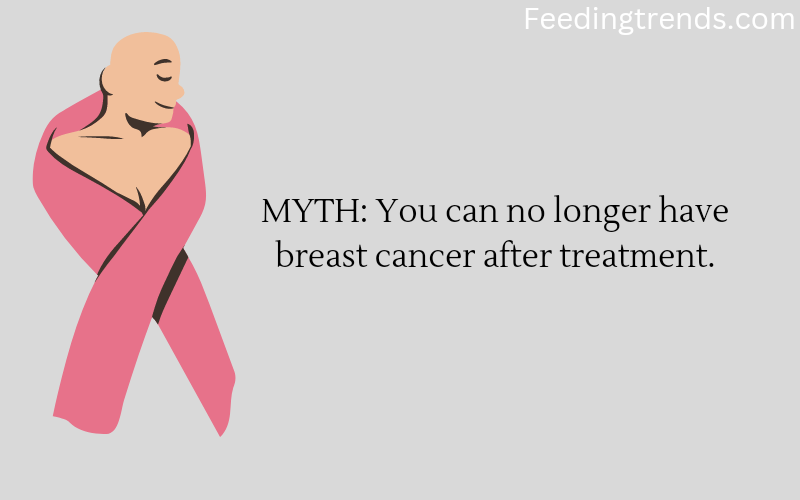
Breast cancer patients frequently say that after undergoing treatments including surgery, radiation therapy, and chemotherapy, their loved ones anticipate that they will be prepared to move on. Targeted treatments like Herceptin (chemical name: trastuzumab), may be recommended for a year or longer. Tamoxifen and aromatase inhibitors are two examples of hormonal treatments that are frequently administered for up to 10 years. If a woman decides to have her breasts reconstructed, this may need numerous procedures spread out over some time. Additionally, treatment will continue for the remainder of the patients' lives if they have metastatic or stage IV breast cancer.
7. MYTH: Every instance of breast cancer results in a palpable lump.

Sometimes, people believe that breast cancer always manifests as a lump that can be felt when performing a self-exam. They may use this as an excuse to avoid getting mammograms because they believe they will be able to feel any changes that might be problematic. However, a lump is not usually the result of cancer in the breast. By either point it does, cancer can have spread to the lymph nodes from the breast. Although completing breast self-exams is undoubtedly a good practice, mammography screenings should still be done regularly.
Here we end our list but remember there are many more myths regarding this issue on the internet, instead of hunting for information online, you should see your doctor if you have any doubts or symptoms.
Appreciate the creator